 EN
EN
Unmatched Abrasion Resistance: How CCO Overlay Outperforms All Alternatives
ASTM G-65 Data Confirms 3.2 Longer Wear Life vs. AR400 in Grinding Applications
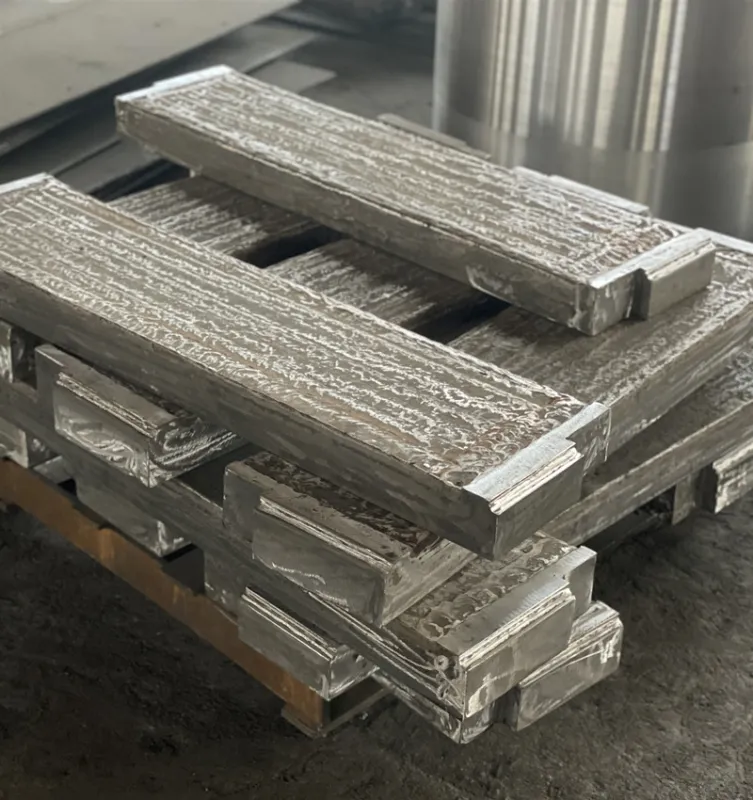
ASTM G-65 tests have shown that CCO overlay lasts about three and a half times longer than regular AR400 steel when used for grinding tasks. The reason? Its unique composite structure combines hard chromium carbide particles (around 60 to 68 HRC hardness) with a tough steel base material. This combination stands up much better against abrasion compared to plain old AR400 steel. When dealing with materials like silica-rich ores or cement clinker, standard AR400 gets worn down through micro-cutting effects. But surfaces coated with CCO maintain their shape and function over time. Looking at actual field results from various mineral processing operations, most facilities find they need to replace their AR400 grinding tables roughly every six months. Meanwhile, tables protected with CCO coating often go well beyond 19 months between necessary repairs, which cuts down on maintenance expenses by nearly 60 percent annually.
Chromium Carbide Eutectic Networks Resist Micro-Cutting and Grooving Under Sustained Abrasion
CCO overlay’s superior abrasion resistance originates in its metallurgical architecture: a continuous, interconnected network of chromium carbides (Cr7C3) formed through eutectic solidification. These colonies act as micro-barriers that fracture abrasive particles rather than yielding to them. Under sustained grinding pressure, this structure:
- Deflects micro-cutting attempts by hard silica particles
- Prevents grooving via the hardness differential between carbides and abrasives
- Minimizes subsurface deformation through effective load distribution
- Preserves surface geometry three times longer than monolithic steels
The surrounding ductile steel matrix absorbs impact energy, preventing spalling common in brittle materials. This synergy enables CCO overlay to sustain over 10,000 hours of abrasive service with less than 5% thickness loss—a benchmark unattainable by conventional wear plates.
Impact-Abrasion Synergy: Why Toughness + Hardness Makes CCO Overlay Ideal for Grinding Tables
The Critical Balance: 66–68 HRC Hardness Coupled with Controlled Crack Propagation Resistance
The CCO overlay offers excellent protection for grinding tables because it balances different metal properties just right. With a surface hardness around 66 to 68 HRC, it stands up well against abrasive wear, and the way the metal is structured actually helps control how cracks spread. Traditional single piece plates don't compare. The chromium carbide network in CCO makes up about 40 to 50% of the material volume, and this special arrangement stops tiny cracks from spreading when they hit the boundary between the carbide and matrix material. That means no sudden failures even after repeated impacts. Grinding mills put materials through some serious punishment, with collision forces sometimes reaching over 1500 MPa in certain spots. For these harsh conditions, the two phase design really matters. Regular abrasion resistant plates just aren't built the same way. They depend entirely on being uniformly hard throughout, which leaves them vulnerable since they don't have those built in crack stopping features.
Why Monolithic AR Plates Fail Under Repeated Impact—Delamination, Spalling, and Loss of Bond Integrity
Repeated impact in grinding operations exposes critical weaknesses in AR plate technology:
- Delamination: Homogeneous structures develop subsurface cracks that propagate parallel to the surface
- Spalling: Brittle fracture mechanics cause chunks of material to detach under impact-abrasion synergy
- Bond degradation: Adhesive failures occur between weld overlays and base plates after 5,000+ cycles
CCO overlay mitigates these failures through its composite architecture—the ductile substrate absorbs kinetic energy, while the carbide overlay (3.2× harder than AR400) dissipates abrasion forces. Field data from cement mills shows AR plates require replacement every 4 months versus 14+ months for optimized CCO solutions, reducing downtime by 65%.
Metallurgical Design Essentials: Selecting the Right CCO Overlay for Maximum Grinding Table Longevity
Optimal Carbide Volume Fraction (40–50%) and Interfacial Bond Strength as Key Performance Drivers
How long a grinding table lasts really hinges on getting the CCO overlay design right. Studies have shown that when the carbide volume fraction lands somewhere between 40 to 50 percent, things work out best. At these levels, there's enough chromium carbide packed in to fight off wear and tear, but still plenty of matrix material left to handle those inevitable impacts without breaking down. Go below 40% and the surface just wears away too fast. Push past 50%, though, and the whole thing becomes too brittle, making cracks much more likely to form and spread through the material over time.
Interfacial bond strength between overlay and substrate is equally vital. Weak bonding leads to delamination under cyclical loading, exposing the base metal to accelerated wear. Advanced processing ensures bond strength exceeds 450 MPa—effectively preventing micro-fractures at the fusion line.
Performance trade-offs across CVF ranges:
| Carbide Volume Fraction | Hardness (HRC) | Toughness | Delamination Risk |
|---|---|---|---|
| <40% | <60 | High | Low |
| 40–50% (Optimal) | 66–68 | Balanced | Controlled |
| >50% | >70 | Low | High |
This synergy extends grinding table service life by 200–300% in cement mill case studies, outperforming monolithic alternatives where structural integrity degrades rapidly.
Proven Field Performance: CCO Overlay Success Across Cement, Mining, and Power Generation
Vertical Roller Mill Case Study: Grinding Table Life Extended from 4 to 14 Months Using Dual-Layer CCO Overlay
In a real-world setting at a cement plant, engineers saw how dual layer CCO overlays changed things for vertical roller mills. When installed on grinding tables dealing with really tough raw materials, these coatings pushed the life expectancy way beyond normal expectations—from just 4 months all the way to 14 months, that's almost triple what they used to get. What makes this work so well is the two part construction: a super hard outer layer (around 66-68 HRC) that resists wear, paired with a base material that absorbs shocks. Together they fight off both the constant scraping and sudden impacts that usually wreck equipment. This matters big time in industries like cement making, mineral processing, and coal fired power plants where regular materials simply can't stand up to the abuse. Looking at actual operations, companies reported cutting their yearly maintenance bills by nearly two thirds thanks to fewer replacements needed and no unexpected shutdowns. The secret sauce? About 40-50% carbides mixed in plus strong bonds between layers that stop them from peeling apart even when machines run nonstop for weeks on end.
FAQ
What is CCO overlay?
Certain applications require hard surfacing for abrasion resistance, and CCO overlay involves applying a composite of chromium carbide and steel to metal surfaces to enhance their durability.
How does CCO overlay compare to AR400 steel?
CCO overlay offers superior abrasion resistance, outlasting AR400 steel approximately 3.2 times longer according to ASTM G-65 testing.
Why is chromium carbide eutectic network crucial in CCO overlay?
The chromium carbide network forms interconnected colonies that act as micro-barriers, resisting micro-cutting and grooving under sustained abrasion.
What conditions make CCO overlay a better option than regular AR plates?
CCO overlay is ideal for scenarios involving high abrasion and impact, providing longer service life and reducing maintenance costs.
Table of Contents
- Unmatched Abrasion Resistance: How CCO Overlay Outperforms All Alternatives
- Impact-Abrasion Synergy: Why Toughness + Hardness Makes CCO Overlay Ideal for Grinding Tables
- Metallurgical Design Essentials: Selecting the Right CCO Overlay for Maximum Grinding Table Longevity
- Proven Field Performance: CCO Overlay Success Across Cement, Mining, and Power Generation
- FAQ