
 EN
EN
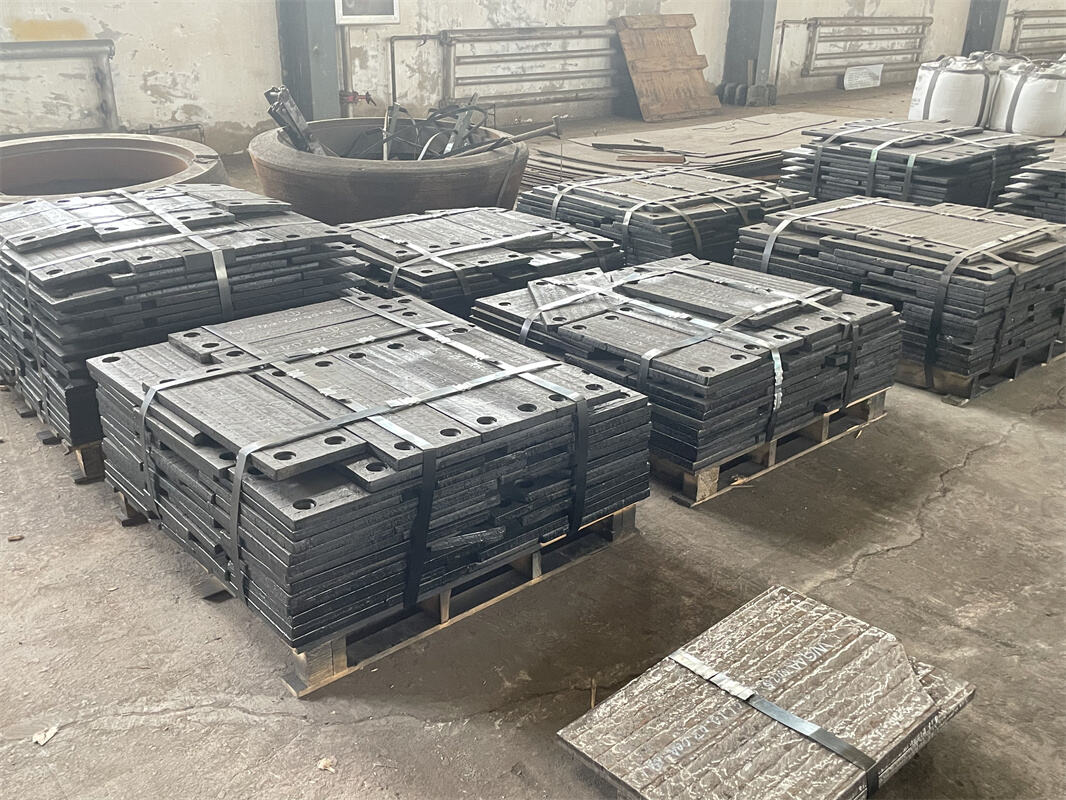
Chrome Carbide Plate Composition and Manufacturing Process
Why Chromium Carbide Hardness (HRC 60–70) Is Critical for Wear Resistance
Chrome carbide plate performance hinges on surface hardness—measured on the Rockwell C scale (HRC)—with optimal wear resistance achieved between HRC 60 and 70. This range corresponds to a carbide micro-hardness exceeding HV1800, enabling effective resistance to abrasive wear. At these levels, chromium primarily forms the Cr₇C₃ phase, which delivers superior wear resistance compared to other carbide structures. Plates falling below HRC 58 show markedly accelerated degradation in high-wear environments like mining slurries or cement chutes.
Achieving this hardness requires precise compositional control:
- Chromium Content (17–37%): Drives carbide formation and enhances corrosion resistance
- Carbon Ratio (3–5%): Balances carbide volume against matrix toughness
- Carbide Volume Fraction (>45%): Ensures a dense, interconnected network essential for sustained abrasion resistance
Materials science research confirms that higher carbide volume fractions directly reduce metal loss rates under abrasive conditions—making this metric a stronger predictor of field performance than hardness alone.
Cladding, Fusion Bonding, and Sintering: Comparing Bond Strength and Application Fit
Three primary methods bond chromium carbide overlays to steel substrates—each suited to distinct engineering requirements:
| Method | Shear Strength | Industrial Applications | Limitations |
|---|---|---|---|
| Submerged Arc Cladding | ≥240 MPa | Large slurry pipelines, hoppers | Thickness variation (±10%) |
| Fusion Bonding | 180–200 MPa | Chutes, screw conveyors | Reduced impact toughness |
| Sintering | ≥210 MPa | High-temperature wear parts | Longer cycle time; requires post-grinding (±3 mm/m flatness) |
Fusion bonding delivers strong metallurgical adhesion but limits achievable overlay thickness. Sintering excels in uniform carbide distribution—ideal for complex geometries—but adds processing steps. Advanced open-arc welding minimizes dilution into the base metal, improving both bond integrity and impact resistance while remaining cost-effective for high-volume production.
Performance Validation: Testing Standards and Real-World Metrics
ASTM G65 and Taber Abraser Tests: Interpreting Abrasion Resistance Data
Abrasion resistance is the core performance indicator for chrome carbide plate—and standardized testing provides objective validation. The ASTM G65 dry sand/rubber wheel test quantifies volume loss under controlled sliding abrasion; plates losing less than 10 mm³ per 1000 revolutions meet industry benchmarks for demanding applications such as mill liners or transfer chutes.
The Taber Abraser test complements ASTM G65 by simulating scuffing and scratching wear from rotating abrasive media. While ASTM G65 reflects resistance to coarse, sliding abrasion, Taber results better predict performance in fine-particle or low-angle impact scenarios.
Always request both certified test reports from suppliers—and verify consistency across multiple samples—to confirm manufacturing repeatability and real-world suitability.
Impact Toughness Requirements: Why ≥12 ft-lb/in² Matters for Dynamic Loads
Hardness alone is insufficient where dynamic loading occurs. In chutes, hoppers, crusher liners, and feeders, sudden impacts demand adequate toughness to prevent cracking or spalling. The Charpy V-notch impact test measures energy absorption before fracture, with a minimum value of 12 ft·lb/in² widely recognized as the threshold for reliable service under moderate impact conditions.
Plates below this benchmark risk brittle failure under repeated shock loading—leading to unplanned downtime, safety hazards, and costly repairs. Higher toughness also mitigates carbide layer spalling when subjected to heavy, free-falling material. When specifying chrome carbide plate, require certified Charpy test data aligned with your operational loading profile.
How to Verify Authentic Chrome Carbide Plate Quality On-Site
Reading Surface Cracks: Distinguishing Beneficial Micro-Cracking from Failure Signs
Surface cracking is an expected and often beneficial feature of chrome carbide overlays. During thermal cycling in cladding or welding, controlled micro-cracking relieves residual stress—enhancing long-term wear resistance. These desirable cracks are fine (typically <0.1 mm wide), evenly spaced, and oriented perpendicular to the weld direction.
In contrast, failure-related cracking appears as wide, branching, or longitudinal fissures extending beyond the overlay into the base metal. Use a 10× magnifier on-site to assess crack pattern and width: irregular spacing, excessive width, or propagation into the substrate signals poor fusion, excessive heat input, or inadequate post-weld cooling—all red flags for premature failure.
Assessing Carbide Distribution—Uniformity, Size (2–5 µm), and Volume Fraction (>45%)
Consistent carbide distribution is foundational to predictable wear life. Authentic high-performance chrome carbide plates exhibit carbide particles sized 2–5 µm with a volume fraction exceeding 45%—and ideally approaching 50%—to ensure continuous wear resistance across the surface.
Field verification is feasible using a portable metallurgical microscope or digital magnifier: inspect multiple zones (center, edge, weld interface) for clustering, voids, or inconsistent grain size. Non-uniform distribution creates weak paths for abrasive penetration and accelerates localized wear.
For definitive validation, request the supplier’s certified chemical analysis and metallographic report—including volume fraction measurement per ASTM E1245. These documents provide objective evidence of microstructural quality directly tied to real-world service life.
Selecting the Right Chrome Carbide Plate for Your Application
Selecting the optimal chrome carbide plate starts with a systematic assessment of your wear environment—not just material specs. First, identify the dominant wear mechanism: sliding abrasion favors high-carbide-volume, fine-grained overlays; impact-dominated applications require enhanced matrix toughness (≥12 ft·lb/in²); combined wear demands balanced microstructure design.
Next, evaluate abrasive characteristics—coarser or sharper particles necessitate deeper, more robust carbide layers. Operating temperature matters too: standard grades perform reliably up to ~350°C; elevated-temperature variants use alloyed matrices for thermal stability beyond 500°C.
Budget considerations remain practical: chrome carbide delivers exceptional value versus tungsten carbide in moderate-to-severe wear settings—especially where weldability, repairability, and integration into existing steel structures are required.
Finally, factor in installation logistics—welded overlays offer seamless coverage but require skilled labor; bolted systems simplify replacement but introduce potential delamination points at edges. Always specify protected edges (e.g., beveling, capping, or secondary hardfacing) to prevent undercutting and premature failure.
By aligning these criteria with your specific operating conditions, you secure not only extended service life—but also measurable reductions in maintenance costs and operational risk.
FAQ
What is the ideal hardness range for chrome carbide plates?
The optimal hardness for chrome carbide plates falls between HRC 60 and 70. This ensures superior wear resistance, especially under high-abrasion conditions.
How can I validate the quality of chrome carbide plates on-site?
You can inspect surface cracks with a 10× magnifier to distinguish beneficial micro-cracking from failure signs. Additionally, portable microscopes can confirm carbide distribution and consistency.
What makes carbide volume fraction critical?
A carbide volume fraction exceeding 45% ensures a dense, interconnected network that delivers sustained abrasion resistance and reduces metal loss rates.
Which testing standards validate abrasion resistance?
The ASTM G65 and Taber Abraser tests are commonly used to measure abrasion resistance. Low volume loss during these tests signifies high performance.
What applications benefit most from chrome carbide plates?
Chrome carbide plates are ideal for applications like mining slurries, cement chutes, and crusher liners, where wear resistance and durability are essential.