
 EN
EN
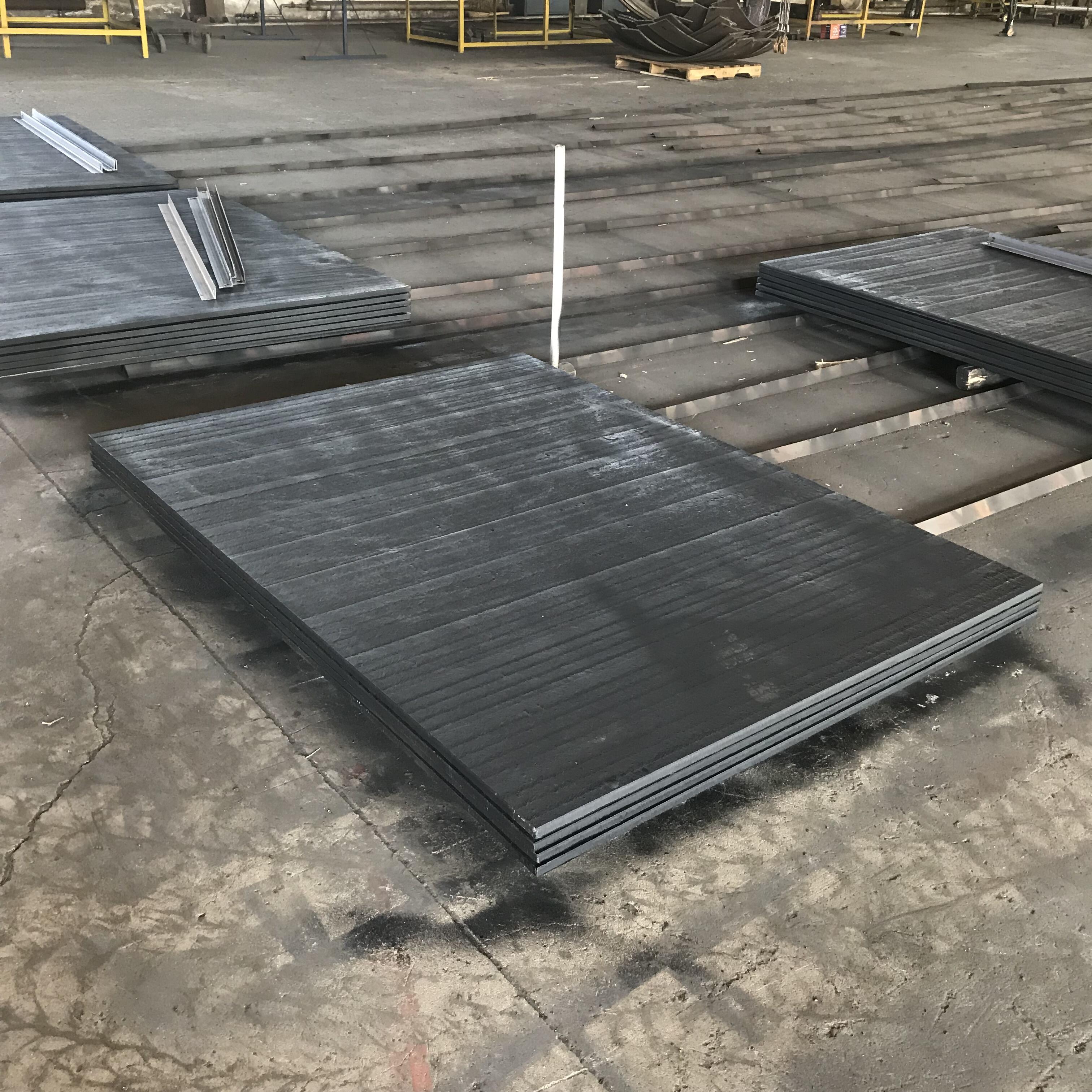
Why Chrome Carbide Plate Delivers Superior Wear Resistance
Hardness and Microstructure: Chromium Carbides as the Core Wear-Resistant Phase
Chrome carbide plate achieves exceptional wear resistance through its engineered microstructure. During manufacturing, a controlled overlay process produces a hypereutectic alloy where primary chromium carbides (M₇C₃) form as discrete, ultra-hard particles embedded in a ductile steel matrix. These carbides measure 57–64 HRC—significantly harder than standard abrasion-resistant steels—and constitute the principal barrier against abrasive wear. Their discontinuous distribution creates a micro-duplex architecture that balances hardness with fracture toughness, effectively resisting cutting, gouging, and micro-ploughing mechanisms common in high-stress applications like chutes, hoppers, and crushers.
ASTM G65 Abrasion Testing: Outperforming AR400 and Hardox® Steel
Standardized laboratory testing confirms chrome carbide plate’s field-proven advantage. Under ASTM G65 dry sand-rubber wheel testing—which simulates low-stress abrasion—the material delivers 2.8–3.5× greater wear resistance than AR400 steel and extends service life by 2.1–2.5× over Hardox® 450 when exposed to silica abrasives. This performance stems not from uniform hardness alone, but from the heterogeneous microstructure: chromium carbides deflect abrasive particles and limit subsurface deformation, while the ductile steel matrix absorbs impact energy and prevents catastrophic failure.
How Chrome Carbide Plate Reduces Downtime and Extends Equipment Life
Unplanned downtime costs heavy-industry facilities $200k–$500k per hour, according to industry analysts. Chrome carbide plate directly mitigates this risk by extending component lifespans, compressing maintenance cycles, and eliminating unscheduled stoppages—particularly in mining, cement, and bulk material handling operations.
Field Evidence: 3–5× Longer Liner Life in Cement Mill Chutes vs. Manganese Steel
In high-abrasion cement mill transfer chutes operating at >150 t/h throughput, manganese steel liners typically last just 4–6 months—requiring ~36 hours of annual downtime per chute for replacement. After switching to chrome carbide overlay plates, liner service life extended to 18–30 months. The composite design—combining a tough steel backing with a wear-resistant hardfacing layer—delivers measurable operational gains:
| Material | Service Life | Annual Downtime |
|---|---|---|
| Manganese Steel | 4–6 months | ±36 hours |
| Chrome Carbide Plate | 18–30 months | ≈12 hours |
This represents a 200–400% reduction in liner changeouts and a 67% decrease in related downtime expenses across multi-chute installations.
Case Study: 42% Less Scheduled Maintenance in Power Plant Coal Handling Systems
At a coal-fired power station processing 10,000 tons daily, conveyors originally fitted with HARDOX® 600 wear plates required quarterly shutdowns for liner replacement and structural repairs—totaling 168 annual man-hours per line. Retrofitting impact zones with chrome carbide plates extended maintenance intervals to bi-annual schedules. The robust metallurgical bond between the carbide layer and steel substrate prevented the delamination issues commonly seen with thinner coatings. As verified by plant reliability engineers (2019–2023), results included:
- 42% drop in scheduled maintenance frequency (from 4x/year to 2x/year)
- 78 fewer maintenance hours per conveyor line annually
- Elimination of emergency welding repairs for coating separation
These improvements increased equipment availability and delivered calculated annual savings exceeding $740k per facility—aligned with Ponemon Institute’s 2023 industrial downtime cost model.
Chrome Carbide Plate in High-Severity Applications: Mining and Bulk Handling
Mining and bulk handling environments subject equipment to extreme mechanical and abrasive stresses. Chrome carbide plate excels here due to its combination of high hardness, impact tolerance, and structural integrity under sustained loading.
Crusher Liner Performance: Iron Ore Processing Wear Rate (0.08 mm/hr vs. 0.32 mm/hr for AR450)
In iron ore crushing applications, chrome carbide plate wears at just 0.08 mm per hour—four times slower than AR450 steel (0.32 mm/hr). This differential reflects the dominance of chromium carbides in resisting particle-induced micro-cutting and surface fatigue. With hardness values consistently ranging from 57–63 HRC, the material sustains performance even under repeated impact loads exceeding 450 J/cm²—making it ideal for crusher liners, feeders, and transfer points where both abrasion and impact coexist.
Total Cost of Ownership Benefits of Chrome Carbide Plate
Evaluating wear-resistant materials solely on initial cost is misleading: chrome carbide plate carries a 300–500% premium over conventional steel, yet delivers compelling long-term value. In abrasive systems, it extends service life by four to eight times—reducing annualized ownership costs by up to 60%. Savings accrue across three key areas: a 75% reduction in unplanned downtime, 40% fewer part replacements, and elimination of secondary containment repairs caused by premature liner failure.
A 10-year analysis of cement plant transfer chutes illustrates the financial advantage:
| Cost Factor | AR400 Steel | Chrome Carbide Plate |
|---|---|---|
| Material Cost | $120/m² | $520/m² |
| Annual Replacements | 3.7× | 1× |
| Downtime Losses | $2,310/m² | $490/m² |
| Maintenance Labor | 12.5 hrs/m² | 4 hrs/m² |
Over five years, cumulative cost savings reach 30%, with ROI accelerating 28% faster than ceramic alternatives—while maintaining structural resilience under high-energy impact conditions.
FAQ
What is chrome carbide plate?
Chrome carbide plate is a wear-resistant material made by overlaying ultra-hard chromium carbide particles onto a steel backing, designed for applications with high abrasion and impact stresses.
How does chrome carbide plate compare to AR400 steel?
Chrome carbide plate offers 2.8–3.5× greater wear resistance than AR400 steel, lasting significantly longer in high-abrasion environments.
What industries benefit from using chrome carbide plate?
Industries like mining, cement, power generation, and bulk material handling benefit the most due to chrome carbide’s ability to extend equipment lifespans and reduce downtime.
Is chrome carbide plate cost-effective?
While its initial cost is higher, chrome carbide plate reduces long-term costs by extending service life, cutting replacements, and minimizing downtime, achieving up to 60% in savings over time.
Where is chrome carbide plate typically used?
Applications include chutes, hoppers, crushers, and transfer points, particularly in environments prone to high abrasion and impact.