
 EN
EN
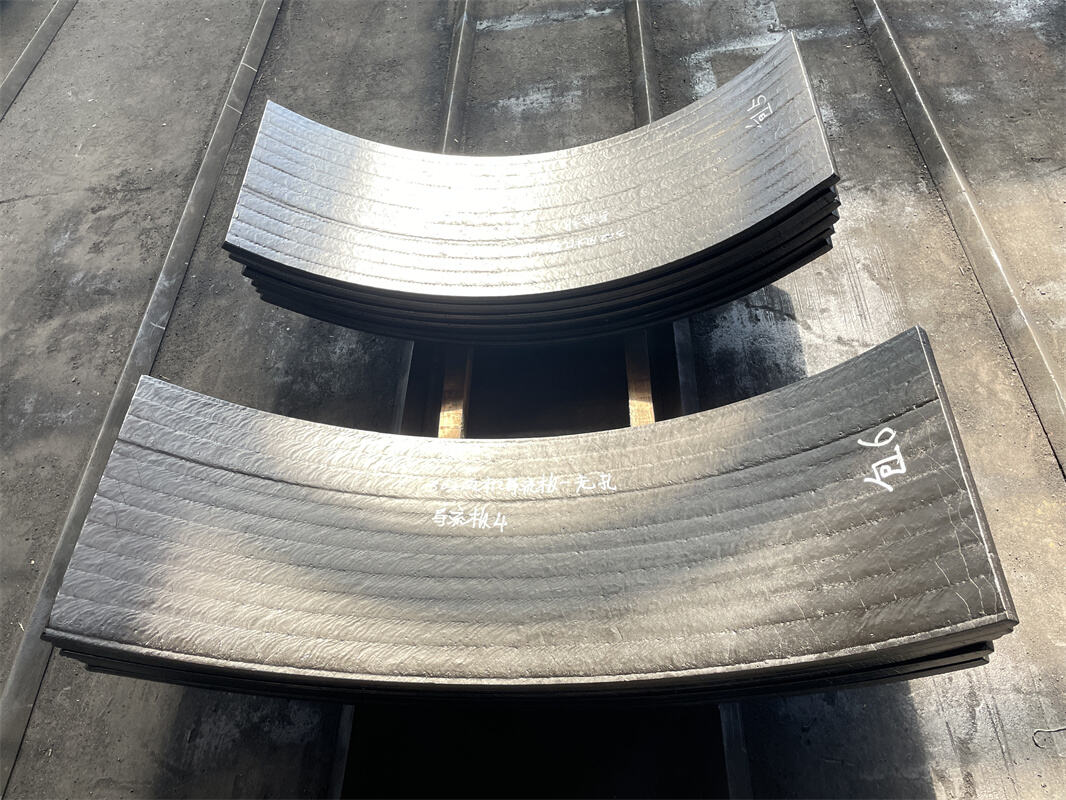
What Is Chromium Carbide Overlay and How Is It Manufactured?
Definition, Purpose, and Core Applications in Heavy Industry
Chromium carbide overlay (CCO) is a wear-resistant composite material consisting of a carbon steel substrate fused with a surface layer densely populated with chromium carbides—primarily Cr₇C₃. Engineered for extreme abrasion, it delivers exceptional protection to critical components in mining, power generation, cement processing, and bulk handling systems. Its purpose is to extend service life where sliding, gouging, and impact wear rapidly degrade conventional steels. Stress relief cracks—intentionally formed during controlled cooling—are a signature feature that enhances fracture toughness without compromising substrate integrity. In practice, CCO liners are widely deployed in chute systems, transfer points, screw conveyors, and slurry pump housings. Compared to ceramic alternatives, CCO offers superior impact resistance and weldability—making it the preferred solution for dynamic, high-energy material flow environments.
Manufacturing Process: Weld Overlay vs. Cladding Methods and Key Process Controls
CCO is predominantly applied via automated weld overlay processes, with submerged arc welding (SAW) favored for large-area surfacing due to its high deposition rates and deep penetration control. For precision applications—such as thin-section components or complex geometries—plasma-transferred arc (PTA) and laser cladding offer tighter thermal input management and finer microstructural control. Regardless of method, consistent performance hinges on three interdependent process controls:
- Cr/C ratio: Maintained between 6:1 and 8:1 to promote primary M₇C₃ carbide formation while minimizing brittle eutectic phases.
- Cooling rate: Regulated through preheat, interpass temperature control, and post-weld cooling protocols to limit dilution and preserve carbide morphology.
- Surface preparation: Rigorous abrasive blasting and cleaning are mandatory—contaminants like oil, rust, or mill scale cause interfacial porosity or lack-of-fusion defects.
Unlike stock plate retrofitting, weld-overlay fabrication enables custom geometry integration and seamless fit-up, reducing field welding and improving installation flexibility. Modern CNC-controlled systems ensure minimal thickness variation across the deposit—typically ±0.5 mm—supporting predictable wear-life modeling and dimensional repeatability.
Chromium Carbide Overlay Microstructure: The Foundation of Wear Resistance
Hypereutectic Fe–Cr–C Matrix and M₇C₃ Carbide Dominance
The wear resistance of CCO arises from its hypereutectic Fe–Cr–C microstructure—characterized by carbon content (3.0–5.0%) and chromium levels (25–40%) exceeding eutectic composition. During solidification, this excess drives the nucleation and growth of primary M₇C₃ (Cr₇C₃) carbides: hexagonal, needle-like particles with microhardness exceeding 1800 HV. These ultra-hard phases embed within a ductile eutectic matrix—typically austenitic or martensitic—creating a natural composite architecture. The M₇C₃ carbides act as discrete, load-bearing barriers against abrasive particles; their volume fraction, aspect ratio, and spatial distribution directly govern resistance to sliding wear, low-angle gouging, and particle impingement. Without this hypereutectic design—and the resulting high carbide density—the overlay would lack the structural hierarchy needed to sustain performance under severe industrial wear conditions.
How Cr/C Ratio and Cooling Rate Govern Carbide Size, Distribution, and Orientation
Microstructural optimization in CCO is achieved by precisely balancing chromium-to-carbon ratio and thermal history. A Cr/C ratio of 6:1 to 8:1 maximizes primary M₇C₃ formation while suppressing secondary carbides and excessive eutectic, which can compromise toughness. Deviations outside this range reduce carbide volume fraction or encourage undesirable phase segregation. Cooling rate further refines the structure: rapid cooling yields finer, more uniformly dispersed carbides—ideal for high-frequency, low-stress abrasion—while slower cooling promotes coarser, higher-volume carbides better suited for high-load, low-velocity applications. Crucially, travel speed and heat input also influence carbide orientation: directional solidification often aligns M₇C₃ needles perpendicular to the weld pass, enhancing resistance to normal-impact wear. This tunable microstructure allows manufacturers to tailor CCO performance to specific service demands—from fine-particle slurry erosion to coarse rock impact.
How Chromium Carbide Overlay Delivers Exceptional Wear Resistance
Abrasion Resistance: Hard M₇C₃ Carbides (>1800 HV) Under Sliding, Gouging, and Impact Loading
CCO resists abrasion through the synergistic action of its ultra-hard M₇C₃ carbides and tough metallic matrix. With hardness values surpassing 1800 HV, these carbides blunt or fracture incoming abrasive particles before they penetrate the underlying matrix—effectively transforming sliding wear into particle-on-particle interaction. Under high-stress gouging—typical in loader buckets, feed chutes, and crusher liners—the carbides resist deep plowing and micro-cutting, maintaining surface integrity far longer than quenched steels or tungsten carbide overlays. In impact-dominant scenarios—such as falling ore or repeated hammering—the ductile matrix absorbs kinetic energy while the carbides retain load-bearing rigidity. Field data from mining and aggregate operations consistently show CCO outperforming standard hardfacing alloys by 2–4× in service life under combined abrasion-impact loading.
Erosion and Corrosion–Wear Synergy Mitigation in Wet or Fine-Particle Environments
In wet, chemically aggressive, or fine-particle environments—like slurry pipelines, dredge pumps, and coal-handling systems—erosion accelerates when abrasive particles strike surfaces at high velocity, and corrosion–wear synergy compounds damage: electrochemical degradation weakens the matrix, exposing carbides to preferential removal. CCO counters this dual threat through two key features: the inherent chemical stability of Cr₇C₃ carbides—which resist oxidation, acid attack, and chloride-induced pitting—and a matrix formulation that can include nickel or elevated chromium to boost passive film formation. This dual-phase resilience disrupts the corrosion–wear feedback loop, enabling up to three times longer service life compared to standard abrasion-resistant steels in such environments. As a result, operators achieve measurable reductions in unplanned downtime, spare-part inventory, and total cost of ownership.
FAQ Section
What is Chromium Carbide Overlay (CCO)?
Chromium carbide overlay is a wear-resistant composite material composed of a carbon steel substrate and a surface layer enriched with chromium carbides to combat extreme abrasion and extend component service life in heavy industries.
What are the key industries benefitting from CCO?
Industries like mining, power generation, cement processing, and bulk material handling use CCO to protect equipment from wear and extend its operational lifespan.
How is CCO typically manufactured?
CCO is predominantly applied via automated weld overlay processes, including submerged arc welding (SAW), plasma-transferred arc (PTA), and laser cladding, depending on the application requirements.
What makes Chromium Carbide Overlay wear-resistant?
Its hypereutectic Fe–Cr–C microstructure and hard primary M₇C₃ carbides (>1800 HV) embedded within a ductile matrix provide superior resistance against sliding wear, impact, and erosion.
Can CCO withstand chemically aggressive environments?
Yes. CCO's Cr₇C₃ carbides are chemically stable and resistant to oxidation, acid, and chloride-induced pitting, making it ideal for wet or corrosive environments.