
 EN
EN
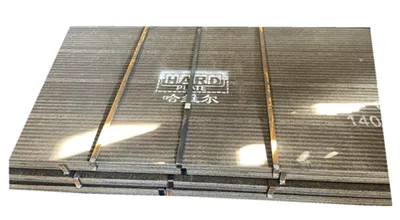
The Thickness-Durability Myth: Why Wear Plate Thickness Alone Is Misleading
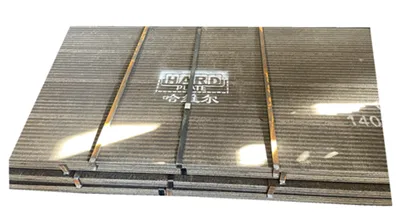
How 'thicker = longer life' became an industry heuristic
Many people still believe thicker wear plates automatically mean longer service life, but this idea comes from old school cost benefit studies back in the day. Back then, engineers basically thought more metal meant better lasting parts, completely missing out on all sorts of complicated wear factors such as tiny abrasive particles wearing away surfaces or cracks forming over time from repeated stress. Despite going against what tribology actually tells us about how materials behave under load, these outdated beliefs somehow stuck around in purchasing specs for years. What we've seen in real world applications is that after reaching certain thickness levels, adding even more material just makes things worse. The extra weight puts unnecessary strain on structures while giving absolutely no real boost to how long the part will last before needing replacement.
Empirical evidence disproving linear thickness–service life correlation in real-world Wear Plate applications
Studies over recent years show that simply doubling the thickness of wear plates doesn't really double their lifespan. Take for example a mining equipment report from 2023 which looked at liner performance. The findings indicated that 40mm thick liners actually only lasted about 17% longer than their 30mm counterparts when exposed to those tough impact-abrasion conditions. Going too thick can backfire too. We've seen issues with brittle fractures increasing significantly. Some tests on AR400 plates revealed that going all the way to 50mm thickness resulted in cracking problems rising by around 40% in conveyor systems. Getting good results means finding the sweet spot between plate thickness, how tough and hard the material is, what kind of forces are at work during operation, and how components fit together. Experience from bulk handling operations tells us something interesting too. Sometimes thinner plates, when properly selected based on actual wear patterns, actually perform better than their thicker siblings.
Material Science Reality: Wear Resistance, Toughness, and the AR Wear Plate Trade-Off
Microstructural consequences of excessive hardness and thickness in abrasion-resistant Wear Plate grades
Pushing for maximum hardness in abrasion resistant (AR) wear plates can actually lead to problems with their internal structure. Once these AR materials go past around 500 HBW hardness level, the carbides start forming big, connected networks that create weak spots in the material. At the same time, when plates get too thick - usually anything over about 40 mm - there's a bigger build up of stress during the quenching process. According to research published last year in the Journal of Materials Processing Technology, this double whammy can cut fracture toughness down by nearly 30%. That makes the plates much more likely to crack catastrophically when subjected to repeated loads. What's interesting is that after reaching about 450 HBW hardness, most industrial applications don't see much improvement in wear resistance anyway, but the material keeps getting tougher to work with as it loses strength.
Case study: Cracking failure in 50 mm AR400 Wear Plate under impact-abrasion cycling
The thick plate’s low Charpy impact toughness (14 J at –20°C vs. the recommended minimum of 27 J) accelerated crack propagation from embedded carbides. This highlights how thickness exacerbates microstructural weaknesses in high-stress applications—and underscores why “thicker equals longer-lasting” is a misleading oversimplification.
Application-Driven Optimization: Matching Wear Plate Geometry, Grade, and Thickness to Operational Demands
How edge geometry and mounting design accelerate spalling—even with thick Wear Plate
A thicker wear plate won't stop spalling if the edge shape or how it's mounted creates stress points. The problem is those sharp corners where impact forces gather, leading to early wear in weak spots. When mounting is too rigid, it actually makes things worse because the material can't flex naturally during repeated impacts and abrasion. Real world testing has found that beveling edges at around 30 to 45 degrees cuts down on spalling by about 40 percent in areas subjected to heavy pounding such as crusher liner applications. Getting the bolt pattern right matters too. Using proper spacing combined with rubber buffers lets for small movements that help absorb shock instead of letting it crack through the hardened surface material.
Field-validated optimal Wear Plate thickness ranges: Conveyor chutes vs. dump truck liners
Mining operations report 50% longer service life when matching conveyor chutes to 32 mm mid-hardness plates (400–450 HB) for consistent wear, while dump trucks require 40 mm high-toughness grades (AR500-T) to withstand rock impacts. Exceeding 50 mm thickness increases cracking risk by 60% in mobile equipment due to weight-induced structural fatigue.
FAQ
Why isn't thicker wear plate the same as longer-lasting wear plate?
Thicker wear plate does not automatically mean longer-lasting because increased thickness can lead to structural stress, microfractures, and cracking, particularly if the material is too hard.
How can organizations optimize wear plate performance?
Organizations can optimize performance by determining the right thickness based on specific application wear patterns, leveraging materials with balanced toughness and wear resistance, and considering edge geometry and mounting design.
Table of Contents
- The Thickness-Durability Myth: Why Wear Plate Thickness Alone Is Misleading
- Material Science Reality: Wear Resistance, Toughness, and the AR Wear Plate Trade-Off
-
Application-Driven Optimization: Matching Wear Plate Geometry, Grade, and Thickness to Operational Demands
- How edge geometry and mounting design accelerate spalling—even with thick Wear Plate
- Field-validated optimal Wear Plate thickness ranges: Conveyor chutes vs. dump truck liners
- FAQ
- Why isn't thicker wear plate the same as longer-lasting wear plate?
- How can organizations optimize wear plate performance?