
 EN
EN
What Are Chromium Carbide Overlay Microstructures?
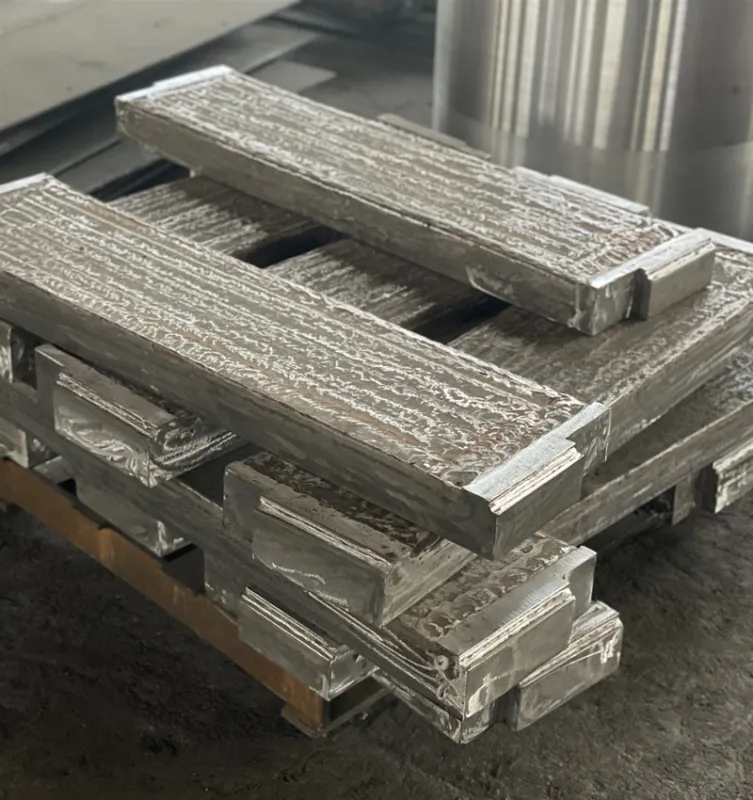
Atomic Foundation: How Cr₇C₃ and Cr₂₃C₆ Carbides Form in the Iron Matrix
The microstructure of chromium carbide overlays comes about when certain atoms interact during the welding process. Take those high chromium alloys with around 25 to 35 percent chromium content and mix them with about 4 to 5 percent carbon. What happens next is pretty interesting - the material goes through what's called hypereutectic solidification. This causes specific types of chromium carbides to form first. The Cr₇C₃ variant appears initially because chromium bonds more strongly with carbon than iron does. Then later on, we see the formation of Cr₂₃C₆. The primary Cr₇C₃ creates these hexagonal shaped crystals that actually get in the way of how dislocations move through the material. Meanwhile, the secondary Cr₂₃C₆ tends to show up in the spaces between the iron rich parts of the structure. When everything cools down quickly but carefully, it maintains this two phase arrangement. The result? Microhardness values above 600 BHN while still keeping good resistance against cracking thanks to how well these different phases fit together at the atomic level.
Key Microstructural Features: Primary Carbides, Eutectic Networks, and Tough Martensitic Matrix
Three interdependent features define CCO’s exceptional abrasion resistance:
- Primary carbides: Blocky Cr₇C₃ particles (20–50 µm) serve as rigid, wear-resistant barriers against gouging and ploughing
- Eutectic networks: Interconnected Cr₂₃C₆/Cr₇C₃ boundaries absorb impact energy and deflect propagating microcracks
- Martensitic matrix: A tempered high-chromium steel base delivers 40–50 HRC toughness, anchoring carbides and preventing pull-out
This integrated structure enables CCO to outperform conventional alloys under severe sliding abrasion. Research indicates optimal performance occurs at a carbide volume fraction of 30–45%, where wear resistance and structural integrity are best balanced.
How Solidification Dynamics Shape Chromium Carbide Overlay Microstructures
Hypereutectic vs. Hypoeutectic Pathways: Impact on Primary Carbide Size, Shape, and Distribution
The way CCO microstructures develop depends on whether the carbon content is above or below around 4.3%, which marks the eutectic point in these materials. When there's more carbon than this threshold (hypereutectic), big chunks of primary chromium carbides start forming right away during cooling. These create those coarse, blocky structures we see in many wear-resistant applications where material needs to stand up against severe abrasion without breaking down. On the flip side, when carbon levels fall short of 4.3% (hypoeutectic), what happens first is actually the formation of austenite dendrites. Then later on, smaller chromium carbides appear in the spaces between these dendrites. While this results in a much more even distribution throughout the material, it does come at the cost of reduced maximum hardness compared to the other approach. Choosing one route over another makes all the difference in how the final product performs under real world conditions, affecting everything from tool life expectancy to maintenance requirements across different industrial settings.
Cooling Rate Control: Optimizing Inter-Carbide Spacing and Matrix Hardness Without Cracking
The cooling rate plays a major role in determining microstructure characteristics and how reliable the material will be mechanically. When cooling happens at around 50 to 100 degrees Celsius per second, this reduces the space between carbides down to about 5 to 10 micrometers while boosting matrix hardness up to 58 to 62 HRC which makes the material much more resistant to wear. But if we push things too far beyond 150°C/s, thermal stresses start developing that can actually break apart those carbides or create tiny cracks in the material. On the flip side, slower cooling rates between 10 and 30°C/s allow stresses to relax through controlled martensite formation, which helps maintain good toughness properties. Industry data shows that incorrect cooling practices are responsible for roughly 23% of overlay failures in the field, costing plants an estimated $740,000 each year on average according to Ponemon Institute research from 2023. For this reason, smart manufacturing protocols focus on finding the right balance rather than chasing maximum cooling speeds at all costs.
Chemical Composition and Process Factors That Define Chromium Carbide Overlay Microstructures
Cr/C Ratio and Mo Additions: Balancing Carbide Volume Fraction with Matrix Toughness
The chromium to carbon ratio remains one of the key factors when adjusting the microstructure of CCO materials. When ratios hover around 6 parts chromium to 1 part carbon, we see plenty of primary Cr₇C₃ forming, which hits that sweet spot of about 30 to 50 percent carbide content. This level gives good hardness without making the material too brittle. Going overboard with carbon above 5 percent leads to carbide clusters and starts creating those tiny cracks we don't want. On the flip side, if chromium drops below 25 percent, the carbides just aren't stable enough and their overall volume decreases. Adding molybdenum between 1 and 3 percent improves how the base material performs. It doesn't create new carbides mind you, but it does boost hardenability and makes the martensitic phase resist tempering better. What this means practically is manufacturers can pack more carbides into the material while still keeping it tough enough to handle fractures, particularly important during repeated heating cycles or when subjected to moderate impacts in real world applications.
Dilution Effects: How Base Metal Mixing Alters Local Chemistry and Microstructural Homogeneity
When base metal mixes unintentionally into the molten overlay during welding, it throws off the local chemistry and messes with the microstructure. If too much iron gets mixed in (over 10%), this tends to bring down chromium levels below 20% and carbon below 3%. What happens then? The way the material solidifies changes from hypereutectic to hypoeutectic in certain areas. This creates problems like soft spots made of ferrite, irregular networks dominated by Cr₂₃C₆, and poor continuity of Cr₇C₃ phases. To fight against this dilution issue, many shops turn to pulsed welding methods and keep cooling rates at or below 30 degrees Celsius per second. These approaches help control iron migration to under 15%, which maintains better alloy composition throughout the weld and allows for more consistent distribution of those important eutectic carbides across the entire overlay section.
Frequently Asked Questions
What is the primary purpose of chromium carbide overlay?
Chromium carbide overlays are primarily used to enhance abrasion resistance and extend the longevity of materials subject to severe wear conditions, such as in industrial applications.
Why is the cooling rate significant in CCO production?
The cooling rate is crucial because it affects the spacing between carbides and matrix hardness, which in turn influences the wear resistance and mechanical reliability of the overlay.
What challenges can arise due to base metal mixing during welding?
Base metal mixing can alter the local chemistry, disrupt the desired microstructure, and lead to issues such as soft spots and reduced structural integrity.
What impact does molybdenum have on CCO materials?
Adding molybdenum can improve the hardenability of the base material, enhancing its resistance to tempering and allowing the material to remain tough under stress or heat cycles.