
 EN
EN
The Core Trade-Off in Wear Protection
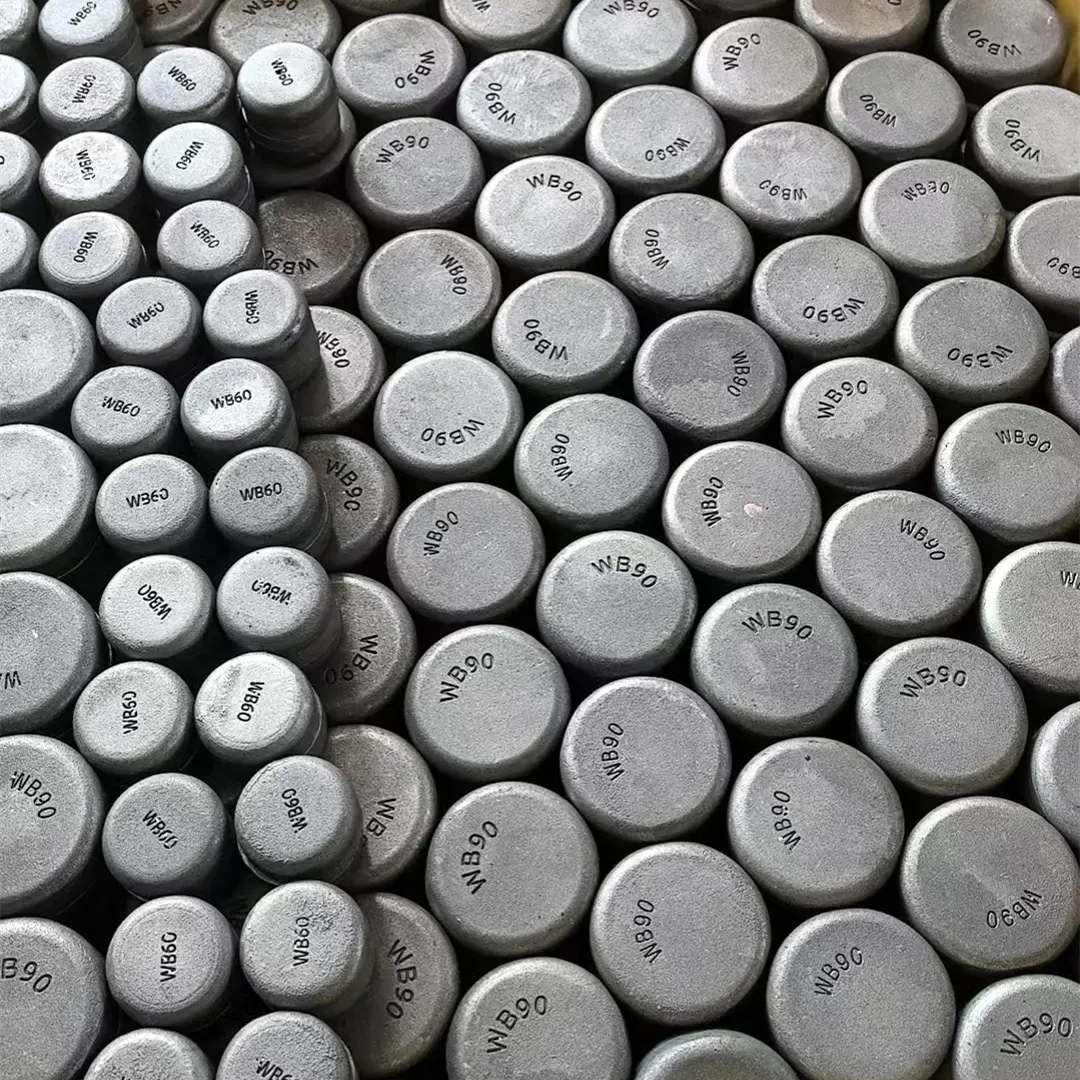
Why hardness alone fails under combined abrasion and impact loading
Materials that are really hard tend to crack when hit, even though they stand up well to wear and tear. The problem is that being too hard actually makes them less able to soak up energy before breaking apart. Look at mining machinery as an example. Pure abrasion resistant steel used in these machines tends to break down early right where rocks hit hardest. According to data from the recent Wear Analysis Report released last year, parts harder than 600 HV on the Vickers scale failed almost twice as fast when subjected to both scraping and pounding compared to components designed with a better balance between hardness and other characteristics. What happens is that super hard surfaces lose their flexibility, so small cracks start forming at impact spots and then spread throughout the material over time.
Microstructural roots: martensite morphology, carbide dispersion, and phase stability constraints
Three interrelated microstructural factors govern wear protection performance:
- Martensite morphology: Lath martensite resists crack propagation more effectively than plate martensite
- Carbide dispersion: Clustered carbides act as stress concentrators; uniform distribution enhances durability
- Phase stability: Retained austenite transforms under mechanical stress, absorbing energy but reducing hardness
Excessive carbide volume (>12%) accelerates spalling under impact, while unstable phases cause undesirable dimensional changes. Optimal wear protection requires co-engineering these elements—not maximizing any single property in isolation.
Strategic Material Selection for Optimal Wear Protection
Matching AR grades (AR200–AR600+) to application severity and structural load requirements
Choosing the correct abrasion resistant (AR) steel grade really comes down to finding the sweet spot between how much wear something will take and what kind of strength it needs to hold up. Get this wrong and parts just fail too soon. For situations where there's only moderate wear and not much force involved, like those conveyor liners used in grain handling operations, the AR200 through AR400 range usually works well enough. These grades still let manufacturers work with the material and weld it without too many headaches. But when things get serious, say in mining operations where chutes handle jagged ores, we need to step up to AR500 plus grades. These tougher steels give that needed surface hardness, though they do require thicker walls or some smart reinforcement strategies because otherwise they crack easily when hit hard repeatedly. And here's something important about real world applications: when there's lots of impact involved, pure hardness isn't everything. We've seen AR600 plates actually break apart under heavy impacts even though they resist wear better than most. Cement plant operators report that getting the steel grade right makes a huge difference. Components last around three times longer and unexpected breakdowns drop by almost half each year according to their maintenance records.
Alloy design levers: carbon, chromium, vanadium, and molybdenum roles in tuning wear protection balance
The carbon content typically ranges from 0.15 to 0.30 percent and sets the foundation for hardness via martensite formation. Chromium levels between 12 and 30 percent significantly boost both hardenability and resistance to corrosion. Vanadium, when present at around 0.05 to 0.20 percent, creates those fine stable carbides that stop grain growth during heat treatment processes, which actually increases toughness without sacrificing wear resistance properties. Molybdenum concentrations from 0.20 to 1.0 percent play their part too, enhancing strength at high temperatures and preventing temper embrittlement issues, making them essential for applications like kiln liners where extreme heat and wear conditions exist. When all these elements work together, they allow for very precise control over microstructure characteristics. The chromium carbides provide excellent abrasion resistance, while the martensite stabilized by vanadium maintains necessary ductility. Practical tests show that well balanced formulations can reach Brinell hardness above 550 units, along with Charpy V-notch impact values exceeding 27 joules even at minus 40 degrees Celsius. These results clearly demonstrate that achieving both high hardness and good low temperature toughness isn't just possible, but actually quite achievable with proper material design.
Advancing Wear Protection Through Microstructural Engineering
Heat treatment pathways—quenching, tempering, and cryogenic processing—to co-optimize hardness and toughness
Heat treatment remains one of the main ways manufacturers reshape metal structures to get both hardness and toughness at once. When we quench alloyed steel quickly, it forms martensite but makes the material pretty brittle afterwards. That's where tempering comes in handy around 200 to 600 degrees Celsius. This step takes care of internal stresses while keeping most of the hardness intact. Take high chromium cast iron as an example - when tempered properly at about 450 degrees, these materials can handle impacts 60% better than their untempered versions. Going even colder with cryogenic processing below minus 150 degrees for anywhere from 12 to 48 hours gives another boost. The extreme cold converts leftover austenite into martensite and kicks off those tiny carbide formations. Real world results? Typically sees hardness gains of 1 to 3 HRC points and fracture toughness improvements reaching 20%. Get the sequence right - first quench, then temper, followed by cryogenics - and all these steps work together to balance out carbide spread, maintain stable phases, and distribute stress evenly throughout the material. What happens? We end up with a microstructure that does two jobs at once: tough outer layer fights wear and tear, while the inner part stays flexible enough to soak up shocks without breaking apart. Pretty much gets rid of that old problem where making something harder always meant sacrificing toughness somewhere else.
Emerging Synergies: Breaking the Trade-Off in Modern Wear Protection
For decades, traditional methods of protecting against wear meant engineers had to choose between having tough materials or ones that resisted abrasion, but not both at once. Now things are changing thanks to advances in how we engineer materials at the microscopic level. When manufacturers combine computer models like Thermo-Calc with precise heat treatment techniques such as controlled austempering, multiple stages of tempering, and even cooling parts down to extremely low temperatures, they gain remarkable control over tiny details like carbide size, spacing between particles, and how different phases distribute throughout the metal. What happens is pretty amazing actually – these new methods help maintain useful retained austenite, create finer structures in the martensite, and stop those pesky carbides from clumping together which causes brittleness while still keeping good wear properties intact. Field tests conducted in quarries and thermal processing plants have shown components lasting anywhere from 40 to 60 percent longer compared to standard AR steels when exposed to harsh impacts and abrasive conditions. At heart, what makes this possible is manipulating the way martensite forms at the nanoscale level, resulting in microstructures that naturally reinforce themselves by redirecting and stopping cracks before they spread. This combination of computer modeling, material science knowledge, and careful manufacturing processes has solved one of the biggest headaches in wear protection, allowing modern components to handle both severe abrasion and heavy impacts all within one solid design solution.
FAQ
What is the main trade-off in wear protection for materials?
The main trade-off in wear protection is between hardness and impact resistance. Materials that are too hard tend to crack under impact despite being abrasion-resistant, leading to premature failure.
How does microstructure influence wear protection?
Microstructure plays a crucial role in wear protection. Factors like martensite morphology, carbide dispersion, and phase stability determine how well a material can withstand wear. Properly engineered microstructures balance these elements to optimize both hardness and toughness.
What is the importance of selecting the right AR steel grade?
Choosing the correct AR steel grade is vital as it must match the severity of wear and the structural load requirements. Using the wrong grade can lead to premature part failure, while the right grade can significantly prolong the lifespan of components.
How do heat treatment processes enhance wear protection?
Heat treatment processes like quenching, tempering, and cryogenic processing can optimize hardness and toughness. Proper sequencing of these processes helps maintain a balanced microstructure, enhancing both wear resistance and impact strength.
How are modern materials engineered to overcome traditional wear protection limitations?
Modern materials are engineered using advanced techniques such as computer modeling and precise heat treatments to control microstructural aspects like carbide size and phase distribution. This allows for materials that effectively resist both abrasion and impact, overcoming traditional limitations.
Table of Contents
- The Core Trade-Off in Wear Protection
- Strategic Material Selection for Optimal Wear Protection
- Advancing Wear Protection Through Microstructural Engineering
- Emerging Synergies: Breaking the Trade-Off in Modern Wear Protection
-
FAQ
- What is the main trade-off in wear protection for materials?
- How does microstructure influence wear protection?
- What is the importance of selecting the right AR steel grade?
- How do heat treatment processes enhance wear protection?
- How are modern materials engineered to overcome traditional wear protection limitations?