
 EN
EN
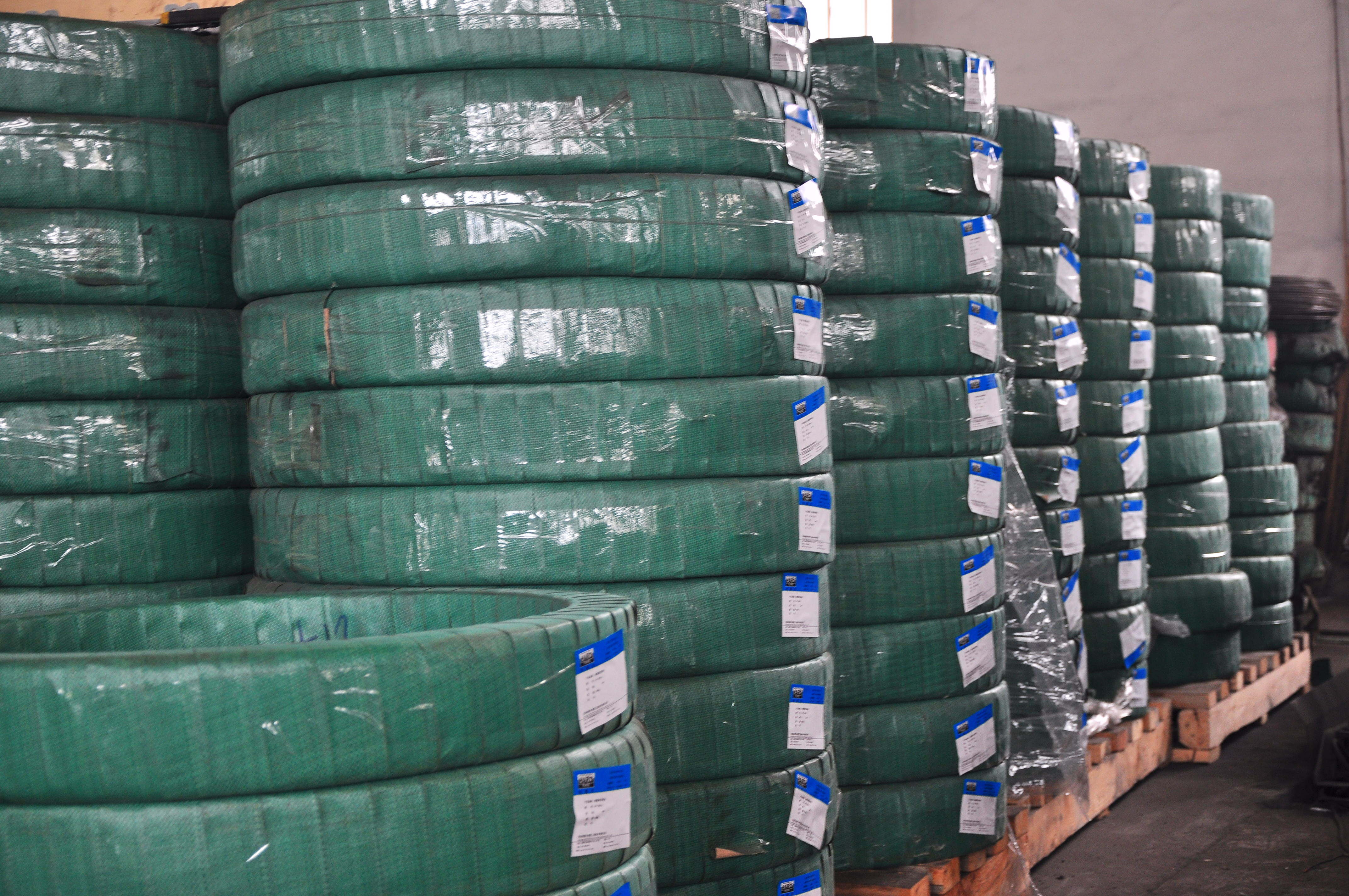
Why Hardfacing Welding Wire Is Essential for Cement and Mining Equipment Longevity
Extreme Abrasion and Impact Wear in Rotary Kilns, Crushers, and Mill Liners
Equipment in cement plants and mines faces relentless degradation. Rotary kilns endure material sliding at temperatures exceeding 1400°C; crushers absorb repeated high-force compression from abrasive rocks like granite—capable of withstanding 20,000 PSI; and mill liners resist cyclic impact from grinding media. This harsh environment rapidly consumes untreated surfaces. Abrasion alone costs facilities up to $740k annually in unplanned downtime (Ponemon Institute, 2023). Crusher mantles, for example, develop microfractures within months without protection—directly reducing throughput by 18–24%.
How Hardfacing Welding Wire Extends Component Life by 3–5× Through Controlled Carbide Formation
Hardfacing welding wire combats wear by depositing specialized, wear-resistant alloys precisely where needed. Its core mechanism is the formation of engineered microstructures—primarily chromium carbide—within the overlay. These carbides deliver superior hardness (60–66 HRC) compared to base metal (20–30 HRC), while retaining the impact resistance essential for mining shock loads.
Optimized ratios of carbon, chromium, and boron produce stable, non-dynamic carbides that resist spalling under repeated stress cycles. Modern flux-cored wire formulations enable this precision, offering distinct performance advantages:
| Feature | Standard Equipment | FCAW-Hardfaced | Benefit |
|---|---|---|---|
| Service Life | 6 months | 24–36 months | 3–5× lifespan extension |
| Operational Downtime | 100 hours/year | 18–22 hours/year | Reduced maintenance frequency |
| Carbide Density | N/A | 45–60% by volume | Consistent wear resistance |
Wire chemistry can be tailored: crusher teeth gain toughness for impact resilience, while conveyor pulleys prioritize abrasion resistance. Field studies at copper mines using this approach demonstrate a 345% increase in lifetime for loader buckets. As the Institute of Materials explains, controlled carbide formation via specialized flux is critical for scalable, durable performance under harsh mineral contact.
FCAW Hardfacing Welding Wire vs. Traditional Methods: Performance, Efficiency, and Reliability
Limitations of SMAW and GTAW for High-Volume Wear Surfaces
Shielded metal arc welding (SMAW) and gas tungsten arc welding (GTAW) are poorly suited for high-volume wear applications. SMAW requires frequent electrode changes, slowing deposition on large surfaces like crusher mantles or mill liners. GTAW offers precision but delivers low deposition rates—making it impractical for thick overlays. Both methods demand highly skilled operators, increasing labor costs. More critically, they risk porosity and cracking when building multi-pass chromium carbide layers. In continuous cement or mining operations, such inefficiencies translate directly into costly downtime. They simply cannot achieve the 3–5× life extension that modern hardfacing welding wire enables.
Advantages of Flux-Cored Arc Welding: High Deposition Rates, Slag Protection, and Crack-Resistant Chromium Carbide Overlays
Flux-cored arc welding (FCAW) overcomes these limitations. Using a continuous flux-cored wire, FCAW achieves deposition rates up to four times higher than SMAW. The flux generates protective slag that shields the molten weld pool from atmospheric contamination and moderates cooling—significantly reducing crack formation. For wear-resistant overlays, FCAW consistently produces chromium carbide structures with balanced hardness and toughness. Its semi-automatic operation improves repeatability while cutting labor time. In cement plants, FCAW enables rapid rebuilding of rotary kiln tyres and conveyor pulleys; in mining, it handles thick sections on gyratory crushers without preheat delays. The result is a durable, crack-resistant overlay optimized for extreme abrasion and impact.
Selecting the Optimal Hardfacing Welding Wire for Mining Applications
Chromium Carbide vs. High-Chromium Cast Iron Wires: Matching Hardness, Toughness, and Impact Resistance to Equipment Duty Cycles
Selecting the right hardfacing welding wire begins with matching alloy behavior to equipment demands. Chromium carbide wires deliver exceptional abrasion resistance through dense, hard carbide networks—ideal for low-impact, high-wear components like conveyor pulleys and chute liners. In contrast, high-chromium cast iron (HCCI) wires offer greater toughness and impact absorption—critical for crusher mantles and grizzly bars subjected to repeated heavy blows. Misalignment between wire properties and duty cycle risks premature cracking or accelerated wear. Industry data confirms that proper selection—guided by wear mode, load profile, and thermal exposure—enables the full 3–5× service life extension hardfacing promises.
Self-Shielded FCAW Hardfacing Welding Wire for Remote Open-Pit Operations
For remote open-pit mines where shielding gas logistics are impractical, self-shielded FCAW hardfacing welding wire is the proven solution. These wires generate their own protective atmosphere through flux decomposition—eliminating dependence on external gas cylinders and simplifying field setups. Despite the absence of external shielding, they maintain high deposition rates and produce slag-protected overlays that resist cracking, even under rapid cooling conditions common in outdoor repairs. Operators achieve consistent weld quality across thousands of meters of wear surface without sacrificing portability. This makes self-shielded FCAW the preferred choice for on-site hardfacing of dragline buckets, shovel teeth, and haul truck beds.
Real-World Hardfacing Welding Wire Applications Across Cement and Mining Equipment
Hardfacing welding wire delivers measurable uptime gains across both sectors—when applied with purpose-built strategies aligned to each machine’s failure modes.
Rotary Kiln Tyres, Crusher Mantles, and Conveyor Pulleys: Layered Overlay Strategies Using Multi-Pass FCAW
Multi-pass FCAW builds resilient, functionally graded overlays tailored to specific mechanical stresses. On rotary kiln tyres—subject to thermal cycling and sliding abrasion—successive passes create a scalloped carbide structure that impedes crack propagation. Crusher mantles benefit from alternating layers: a chromium carbide top layer for abrasion resistance, backed by a high-chromium iron interlayer for impact energy absorption. Conveyor pulleys, exposed to fine dust and constant sliding, receive a thin, crack-resistant initial pass followed by a thicker, abrasion-optimized final layer. This layered strategy extends service life up to fivefold—without compromising structural integrity or requiring component replacement.
FAQ Section
What is hardfacing welding wire, and what does it do?
Hardfacing welding wire is a consumable material used to deposit wear-resistant alloys onto surfaces to protect them against abrasion, impact, and other mechanical stresses. It significantly extends the lifespan of equipment in cement and mining industries.
How does FCAW outperform traditional welding methods for wear resistance?
Flux-cored arc welding (FCAW) offers higher deposition rates, better slag protection, and superior crack resistance compared to traditional methods like SMAW and GTAW. It is particularly effective for creating durable overlays that resist extreme wear and impact.
Why is self-shielded FCAW suitable for remote mining applications?
Self-shielded FCAW eliminates the need for external gas cylinders by generating its own shielding atmosphere through flux decomposition. This makes it highly portable and reliable for use in remote open-pit mines.
What influences the choice of hardfacing welding wire for specific equipment?
The choice depends on wear mode, impact resistance needs, and thermal exposure. Chromium carbide wires are ideal for abrasion-prone components, while high-chromium cast iron wires excel in high-impact scenarios.
How can hardfacing welding wire extend equipment life up to five times?
Through tailored alloy composition and precise application techniques, hardfacing creates microstructures like chromium carbide that resist wear and impact effectively, thereby extending the service life of components by 3–5 times.
Table of Contents
- Why Hardfacing Welding Wire Is Essential for Cement and Mining Equipment Longevity
- FCAW Hardfacing Welding Wire vs. Traditional Methods: Performance, Efficiency, and Reliability
- Selecting the Optimal Hardfacing Welding Wire for Mining Applications
- Real-World Hardfacing Welding Wire Applications Across Cement and Mining Equipment
-
FAQ Section
- What is hardfacing welding wire, and what does it do?
- How does FCAW outperform traditional welding methods for wear resistance?
- Why is self-shielded FCAW suitable for remote mining applications?
- What influences the choice of hardfacing welding wire for specific equipment?
- How can hardfacing welding wire extend equipment life up to five times?