
 EN
EN
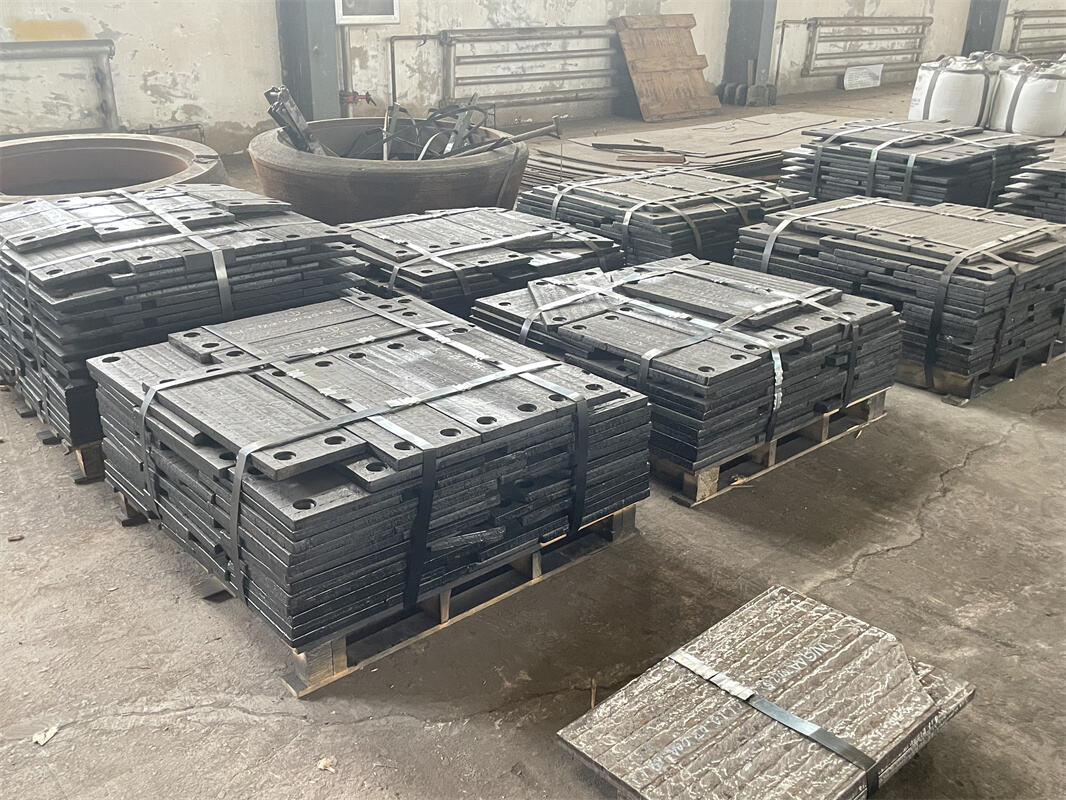
Chromium Carbide Wear Plate Fabrication Methods and Material Science Fundamentals
Alloy Design Principles: Balancing Chromium Carbide Volume Fraction, Matrix Toughness, and Interfacial Bond Strength
A successful chromium carbide wear plate hinges on three interrelated material properties: the volume fraction of hard chromium carbide particles (typically 40–70%), the toughness of the surrounding metal matrix, and the strength of the interfacial bond between them. Higher carbide content enhances abrasion resistance but increases brittleness—reducing impact tolerance. A ductile matrix—such as low-carbon steel or nickel-based alloys—absorbs energy and arrests crack propagation. Meanwhile, a robust metallurgical interface prevents delamination under high shear or thermal cycling. Precise alloy design enables this balance: additions of molybdenum or tungsten improve high-temperature stability without compromising weldability, while controlled carbon and chromium levels govern carbide morphology and distribution. Crucially, composition must be matched to the dominant wear mechanism—sliding abrasion, erosion, or impact—since optimizing for one can undermine performance in another.
Weld Overlay vs. Roll Bond vs. Cast Chromium Carbide Wear Plate: Performance, Cost, and Application Fit
Three primary fabrication methods define the chromium carbide wear plate landscape—each with distinct trade-offs in performance, cost, and suitability.
Weld overlay deposits a molten, carbide-rich layer onto a structural steel substrate via automated arc or laser cladding, forming a metallurgical bond that resists peeling and thermal mismatch. Its flexibility in deposit thickness (3–25 mm) and contouring makes it ideal for complex geometries like chutes, hoppers, and crusher liners—especially where high-impact loading is expected.
Roll bonding uses heat and pressure to fuse a pre-fabricated chromium carbide sheet to a backing plate. It delivers consistent thickness, excellent flatness, and lower unit cost—making it optimal for large, planar surfaces such as conveyor idler guards and hopper skirts.
Cast chromium carbide plates, produced by centrifugal or static casting, embed carbides uniformly throughout a monolithic section. While offering exceptional wear life in severe abrasive service, they are more brittle, less weldable, and significantly more expensive—reserved for applications where replacement downtime justifies upfront cost, such as mill liners or slurry pump casings.
Selection should prioritize functional fit over fabrication method alone: weld overlay for dynamic, high-impact environments; roll bond for cost-sensitive, large-area applications; and cast plates where extreme abrasion dominates and geometry permits.
Application-Driven Customization of Chromium Carbide Wear Plates
Matching Geometry, Thickness, and Hardness Profile to Wear Mechanisms in Mining, Cement, and Oil & Gas Environments
Effective customization begins with understanding how wear manifests across industries—and aligning plate design accordingly.
In mining, transfer points subject plates to high-energy impact from oversized ore. Here, thick weld overlays (12–20 mm) paired with ductile mild steel backing absorb shock while resisting deep gouging. Edge reinforcement and tapered transitions further mitigate stress concentration at critical wear zones.
Cement plants, by contrast, face fine-particle erosion at high velocity—particularly in cyclones, air slides, and kiln inlet liners. Thinner overlays (6–12 mm) with smooth, polished finishes reduce drag and maintain material flow. Surface integrity—free of micro-cracks or porosity—is more critical than maximum hardness.
In oil & gas, especially hydraulic fracturing operations, plates endure dual threats: proppant-induced erosion and hydrogen sulfide (H₂S)-assisted stress corrosion cracking. This demands tightly controlled weld dilution, ultra-low hydrogen procedures, and carbide distributions optimized for density—not just volume—to prevent preferential attack along interfacial boundaries. Laser-cut and cold-formed geometries allow precise integration into pipe spools, valve bodies, and sand-handling manifolds.
Ultimately, geometry, thickness, and microstructure must respond to mechanical load paths and chemical exposure—not generic specs.
Beyond HRC: Why Impact-Abrasion Synergy Demands Tailored Microstructure—Not Just Maximum Hardness
Relying solely on Rockwell C hardness (HRC) is misleading—and potentially costly—in dynamic wear environments. High HRC values (e.g., 65–75) often reflect excessive carbide formation at the expense of matrix ductility, leading to brittle fracture under combined impact and abrasion. Real-world failure rarely stems from pure abrasion; instead, it arises from the synergy: impact opens microcracks, which abrasives then exploit to accelerate material removal.
The engineering solution lies in microstructural tailoring. By adjusting carbon content, cooling rate, and post-weld heat treatment, manufacturers can optimize the matrix’s yield strength and fracture toughness—while maintaining a targeted, evenly distributed carbide volume (e.g., 55–65%). This balanced structure absorbs impact energy without cracking, resists abrasive penetration, and avoids the self-perpetuating cycle of crack initiation → particle entrapment → accelerated wear. Field data consistently shows that plates engineered for this synergy deliver 2–3× longer service life than those specified by hardness alone.
Validating Performance: Testing, Analysis, and Real-World Feedback Loops
Microstructural Characterization and Field Failure Correlation: Linking Carbide Distribution to Service Life
Hardness testing provides only a surface-level metric—it cannot reveal why a plate failed prematurely. True validation requires microstructural analysis: scanning electron microscopy (SEM) quantifies carbide size, spacing, and clustering; energy-dispersive X-ray spectroscopy (EDS) maps elemental segregation; and metallography assesses matrix continuity and interfacial integrity. These features directly correlate with observed field failures—for example, carbide clusters act as stress concentrators, initiating microcracks under impact; irregular carbide distribution leads to localized wear “hot spots” in high-velocity erosion zones.
Integrating this lab data with real-world feedback—such as wear mapping from mining chute inspections or ultrasonic thickness scans from cement plant liners—creates a closed-loop improvement process. When spalling occurs near weld toes, engineers adjust travel speed and preheat to refine heat-affected zone (HAZ) microstructure. When edge wear outpaces center wear, they revise deposition strategy or add localized matrix toughening. This iterative correlation between microstructure and service behavior transforms empirical trial-and-error into predictive, application-specific optimization.
Partnering for Precision: The Role of Joint Application Engineering in Chromium Carbide Wear Plate Deployment
Joint application engineering elevates wear plate deployment from component replacement to system-level reliability enhancement. It starts with on-site assessment: engineers document actual wear patterns, material flow dynamics, temperature gradients, and maintenance constraints—not just equipment drawings. That data informs a tailored specification: selecting carbide volume fraction, matrix alloy, overlay thickness, and even bend radius—all calibrated to the unique mechanical and chemical environment.
This collaboration extends beyond design. During commissioning, application engineers monitor early-life performance—capturing anomalies like unexpected edge wear, weld-zone cracking, or flow-induced vibration—and feed insights directly back to fabrication teams. Over time, these learnings standardize best practices across fleets: identifying which geometries perform reliably across similar duty cycles, reducing SKU proliferation while improving inventory turnover and spare-part readiness.
Ultimately, the most advanced chromium carbide chemistry delivers little value without deep operational context. The strongest EEAT signal comes not from material certifications alone—but from documented, repeatable improvements in uptime, maintenance frequency, and total cost of ownership achieved through sustained engineering partnership.
FAQ
What is the role of chromium carbide in wear plates?
Chromium carbide enhances wear resistance in plates by providing hard particles that mitigate abrasion and erosion. Its high hardness and chemical stability make it an ideal component for wear-intensive environments.
Which fabrication method is best for chromium carbide wear plates?
The best fabrication method depends on the application. Weld overlay suits high-impact environments, roll bonding is cost-effective for large surfaces, and cast plates are ideal for applications requiring extreme abrasion resistance.
How does microstructure affect the performance of chromium carbide plates?
A well-designed microstructure balances hardness and ductility, enhancing the plate's ability to absorb impact without cracking while resisting abrasive wear. This increases the durability and lifespan of the plates.
Can wear plates be customized for specific industries?
Yes, wear plates can be customized for industries like mining, cement, and oil & gas by varying geometry, thickness, hardness, and microstructure to match specific wear mechanisms.
Why is joint application engineering important in chromium carbide wear plates?
Joint application engineering ensures that wear plate specifications align with real-world operational conditions, minimizing downtime, maintenance frequency, and overall cost of ownership while maximizing performance.
Table of Contents
- Chromium Carbide Wear Plate Fabrication Methods and Material Science Fundamentals
- Application-Driven Customization of Chromium Carbide Wear Plates
- Validating Performance: Testing, Analysis, and Real-World Feedback Loops
- Partnering for Precision: The Role of Joint Application Engineering in Chromium Carbide Wear Plate Deployment
- FAQ