
 EN
EN
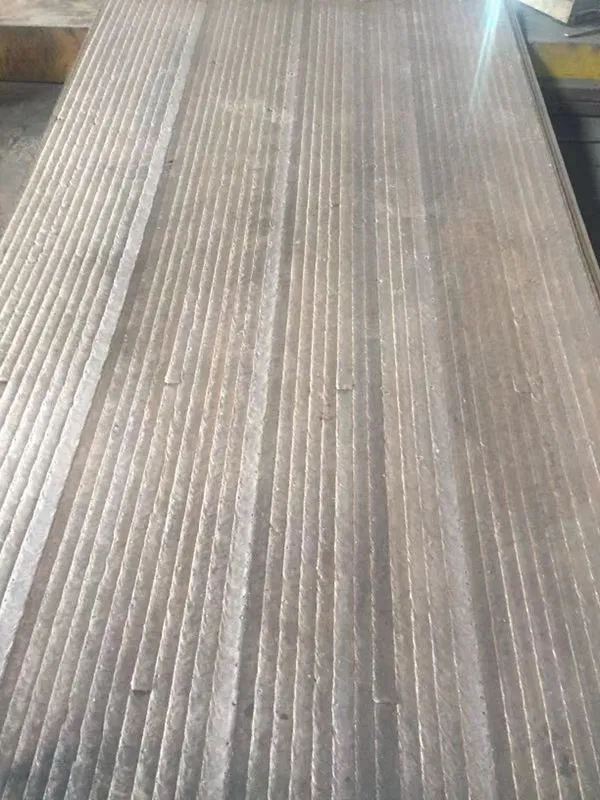
Why Abrasion Resistant Plate Is Essential for Mining Equipment Durability
The Wear Challenge: High-velocity, high-impact ore handling accelerates component failure
The harsh conditions in mining operations really take a toll on equipment. High speed ore flows combined with impacts from big rock chunks create serious wear issues for machinery. Regular steel parts tend to wear down anywhere from three to five times quicker than what's normal in other industries, which leads to those frustrating unplanned shutdowns that nobody wants. According to research from the Ponemon Institute back in 2023, every single hour that production grinds to a halt costs around $740,000. That's why many mines are turning to abrasion resistant plates these days. These special materials help soak up all that destructive force exactly where it matters most – right at those critical spots where materials move around like chutes, hoppers, and areas feeding into crushers.
Material Science Advantage: How NM400–NM500 grades balance hardness, toughness, and weldability
Advanced AR plates like NM400 and NM500 overcome traditional material trade-offs through precision quenching and tempering. Unlike monoproperty steels, these grades simultaneously optimize hardness, impact toughness, and weldability—enabling reliable performance across diverse mining conditions.
| Property | NM400 | NM500 | Operational Benefit |
|---|---|---|---|
| Hardness (HBW) | 370–430 | 470–530 | Resists scratching, gouging, and sliding abrasion from abrasive ores |
| Impact Toughness | ≥80 J at −20°C | ≥40 J at −20°C | Withstands repeated rock impacts without brittle fracture |
| Weldability | Excellent | Good | Supports field repairs with minimal preheat requirements |
The way these materials are balanced helps maintain surface quality even when subjected to wear and tear, all while keeping their strength intact during heavy loads. Take NM400 for instance it works really well in areas where there's constant impact, think loader buckets or those big feeder pans at processing plants. Then there's NM500 which lasts much longer in situations where things slide against each other and cause abrasion, like conveyor belt liners or inside those crusher chambers we see at quarries. When companies choose the appropriate material grade according to what they need, parts don't have to be replaced as often maybe cutting down replacements by somewhere between 40% and 60%. That means lower costs overall for maintenance and operations in the long run.
Key Applications of Abrasion Resistant Plate Across Heavy Machinery Systems
Strategic use of AR plate extends equipment lifespan by protecting high-wear zones from accelerated degradation—cutting unplanned downtime and replacement costs by up to 60% across major mining systems.
Conveyor chutes, feeders, and scrapers: Reducing downtime with wear-resistant liners
Switching out standard components for NM400 to NM500 grade plates makes a big difference in how reliable the whole system stays over time. The liners can handle those constant material flows ranging from 50 to 100 tons per hour without wearing down too quickly. Feeder pans stand up much better against the abrasive slurry that normally eats through them, and scraper blades keep working effectively even when dealing with materials containing high silica content. Putting all these improvements together cuts down on maintenance stoppages by around 30% each year, which means less lost production time. Plus, everything stays properly aligned and structurally sound for longer periods between replacements.
Excavator buckets, crusher liners, and dragline components: Field-proven performance by ore type
Performance gains vary by ore characteristics and loading mode—making grade selection critical:
| Ore Type | Critical Component | Performance Gain |
|---|---|---|
| Iron ore (180–250 HB) | Crusher liners | 2.5× longer service life vs. mild steel |
| Copper (high-silica) | Dragline tubs | 50% less material loss per cycle |
| Coal (abrasive fines) | Excavator buckets | 70% fewer weld repairs annually |
The hardness-toughness synergy in NM400–NM500 prevents crack initiation and propagation under cyclic impact—a key factor confirmed in multi-site field deployments across North American and Australian iron and copper operations.
Strategic Selection of Abrasion Resistant Plate to Optimize Total Cost of Ownership
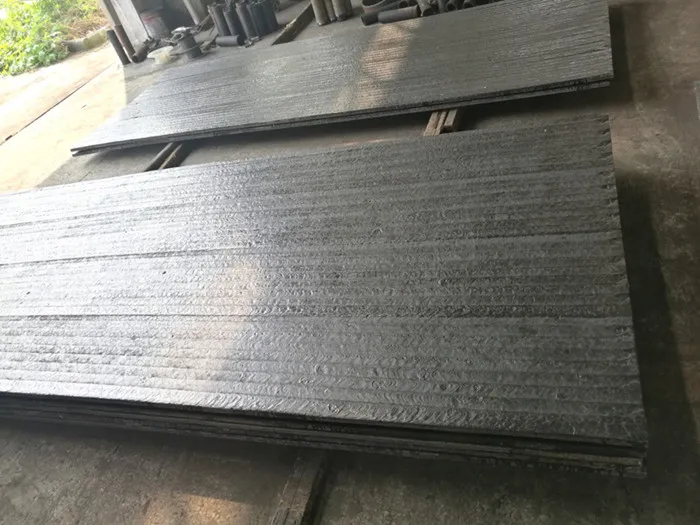
Lifecycle cost analysis: Why NM400/NM500 plates deliver ROI despite higher upfront cost
Though NM400–NM500 plate carries a higher initial investment than mild steel ($120/m²), its lifecycle advantages drive rapid payback—28% faster than chrome carbide overlays priced at $520/m². Three verified benefits underpin this ROI:
- Extended service intervals — NM500 withstands 3.7× more operational cycles before replacement than conventional steel
- Dramatically lower downtime costs — Annual operational losses fall from $2,310/m² to $490/m²
- Reduced labor demand — Maintenance hours drop from 12.5 to just 4 per square meter
These outcomes stem from metallurgical design: Brinell hardness in the 400–500 range resists gouging wear, while controlled carbon and alloy content preserve weld integrity and impact resistance exceeding 450 J/cm² (Industry Analysis, 2024).
Matching abrasion resistant plate grade to operational severity—impact load, particle size, and moisture content
Selecting the optimal grade requires evaluating real-world operating variables—not just ore hardness. The table below reflects field-validated application guidelines:
| Parameter | NM400 Application | NM500 Application |
|---|---|---|
| Impact Load | Moderate impact zones | High-impact transfer points |
| Particle Size | <50 mm screened ore | >100 mm coarse aggregates |
| Moisture Level | Dry handling systems | Slurry or saturated material |
When dealing with high speed coarse ore larger than 100mm mixed with moisture, wear happens roughly four times faster than it does with dry fine material. This is why many operations face serious equipment issues under these harsh conditions. That's where NM500 comes into play with its increased hardness characteristics that actually stand up better over time despite costing around 18 percent more upfront. On the flip side, NM400 makes more sense economically for applications where impact isn't so severe and particle sizes are smaller. The material simply works better here because too much hardness can make parts brittle and prone to cracking when fabricated, especially during colder weather conditions that manufacturers often encounter.
FAQ
What is abrasion resistant plate used for in mining equipment?
Abrasion resistant plates are used to protect high-wear zones in mining machinery, such as chutes, hoppers, and crusher areas, from accelerated wear due to high-velocity and high-impact ore handling.
What are the advantages of NM400 and NM500 plates?
NM400 and NM500 plates provide a balance of hardness, impact toughness, and weldability, offering reliable performance in challenging mining conditions. NM400 is great for impact-heavy areas, while NM500 excels in abrasion-prone scenarios.
How does abrasion resistant plate affect mining equipment costs?
While abrasion resistant plates like NM400/NM500 have a higher upfront cost, they extend equipment lifespan, reduce downtime, and lower maintenance costs, resulting in significant long-term savings.