
 EN
EN
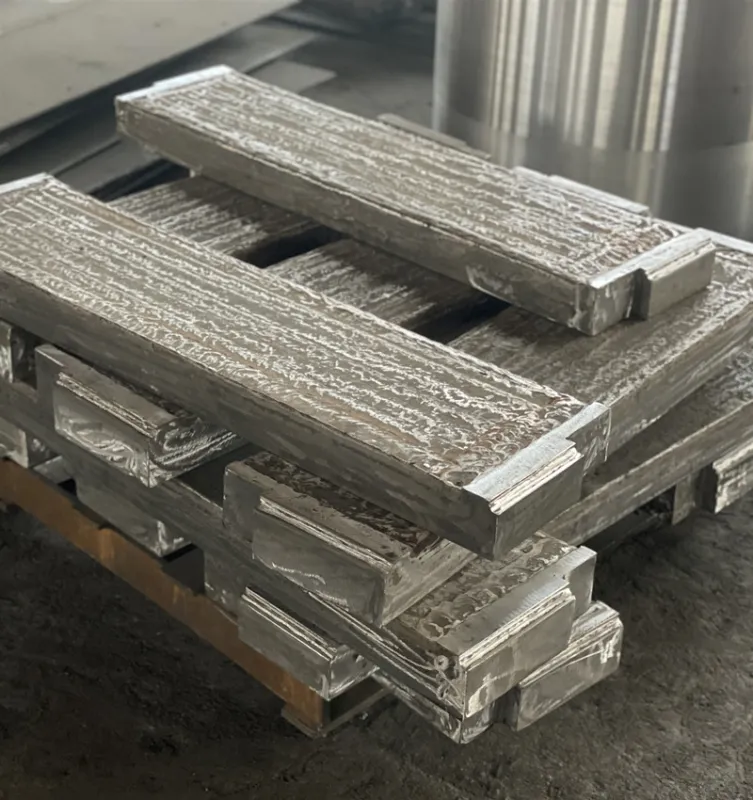
Understanding Chromium Carbide Overlay (CCO) Plates and Their Role in Quarry Operations
What Are CCO Plates and How Do They Work?
Chromium Carbide Overlay (CCO) plates consist of a composite material where a 3 to 5 mm thick layer of chromium carbide alloy, which has hardness above 60 HRC, is welded onto mild steel. The two part construction gives these plates both the strength of regular steel and the incredible ability to resist wearing down even when exposed to harsh conditions. These plates find their way into quarries all over the place, acting like armor plating on things like crusher liners, conveyor chutes, and those big excavator buckets. They protect important parts from constant damage caused by rocks grinding against metal surfaces day after day.
How CCO Plates Combat Abrasive Wear in Quarry Equipment
What makes CCO plates so effective? Well, it all comes down to how they're built at the metal level. When we look closely, those tiny chromium carbides actually create this tight web inside the weld overlay. These little structures act like shields against wear and tear, cutting down on erosion problems. Some tests have shown reductions of around 300 to 400 percent when compared with regular untreated steel. Real world evidence from limestone quarries tells another story too. Operators report that chutes lined with CCO can keep going for more than 14 months straight without needing replacement. That's pretty impressive considering standard AR400 steel would typically need replacing every four or five months under the same tough conditions.
Advantages of CCO Plates Over Traditional Wear Materials
- Longer Lifespan: A 2023 abrasion study found CCO plates reduce replacement frequency by 63% versus high-carbon steel, lowering material costs by $15–$20 per ton processed.
- Simpler Maintenance: Unlike heat-treated steels prone to warping, CCO plates maintain dimensional stability even under thermal cycling.
- Cost Efficiency: Operators report a 22:1 ROI over three years, with annual downtime savings exceeding $740k.
For cone crushers and transfer points, CCO plates outperform conventional materials by balancing high hardness (1,500–1,800 HV) with fracture toughness—a benefit validated in field trials at granite quarries.
The Cost of Downtime: Why Wear Failure Hurts Quarry Productivity
Measuring the Financial Impact of Equipment Downtime
Quarry operators face serious financial hits when unexpected downtime occurs, with costs ranging from around $15k to as much as $40k every single hour spent dealing with lost production time and costly emergency fixes, based on recent industry research from 2024. Take those big limestone quarries running at full capacity for instance. When a conveyor belt breaks down, the consequences multiply fast. The losses pile up past the $2 million mark pretty quickly, covering wasted labor hours, delayed shipments that clients aren't happy about, plus extra damage to other machinery caught in the chain reaction. Looking at the bigger picture across all global quarry operations, these unplanned shutdowns drain well over $50 billion each year. That's actually 12% of what the entire industry brings in annually, according to Forbes reporting last year.
Common Causes of Liner and Conveyor System Failures
Regular liners tend to break down around twelve times quicker compared to those specialized overlays such as CCO when dealing with the rough limestone particles. When conveyor rollers aren't aligned properly, this actually triples the rate at which components wear out, and according to industry reports, something like seven out of ten material handling problems stem from this issue alone. The old school manganese steel liners frequently give up the ghost much sooner than expected because their welds just can't hold up against all that constant stress and movement, so most plants end up replacing them roughly every six to eight weeks or so. Field observations suggest that nearly half of all conveyor system failures come down to bad sealing on those skirtboards, letting tiny abrasive particles sneak into the bearings where they cause serious damage over time.
Implementing CCO plates mitigates both mechanical and financial risks, reducing unplanned downtime by up to 62% in documented case studies.
Case Study: Implementing CCO Plates in a High-Volume Limestone Quarry
Operational Challenges Before CCO Plate Installation
Prior to retrofitting, the quarry faced 320 hours of monthly downtime due to rapid wear in crusher liners and conveyor systems. Conveyor flights wore out every 6–8 weeks, while primary crusher liners required replacement every 45 days. Maintenance consumed 35% of shift time, resulting in $740k in annual labor and production losses (Ponemon 2023).
Root Cause Analysis of Previous Liner Failures
Metallurgical evaluation identified three key weaknesses in the original manganese steel liners:
- Microstructural instability: Hardness dropped 25% after 200 hours
- Impact fatigue: Crack propagation accelerated by 300% under repeated loading
- Abrasion mismatch: Surface hardness (350 BHN) insufficient against limestone quartz (7 Mohs)
These factors led to a wear rate of 0.12 mm/hour in high-stress zones.
Installation Process and Integration with Crusher Systems
The retrofit followed a structured approach:
- Pre-machining: Laser-cut CCO plates to ±0.5mm tolerance for HP500 cone crusher geometry
- Welding protocol: Applied 32mm overlay using shielded metal arc welding (SMAW) with EDCOR65 electrodes
- Stress management: Utilized staggered joint patterns to evenly distribute mechanical loads
The full conversion was completed in 72 hours, with crushers back online and within operational tolerances by hour 12.
Performance Results: Downtime Reduced from 30% to 8%
Post-installation results demonstrated dramatic improvements:
| Metric | Pre-CCO | Post-CCO | Improvement |
|---|---|---|---|
| Monthly downtime | 320h | 85h | 73% reduction |
| Conveyor flight life | 55 days | 210 days | 282% increase |
| Throughput capacity | 580tph | 720tph | 24% gain |
Extending Maintenance Intervals from 2 to 14 Weeks
CCO plates significantly extended service intervals across all monitored components:
- Primary crusher liners: Service life increased from 2 to 14 weeks
- Transfer chutes: Operated 980 hours before measurable wear (up from 220 hours)
- Screw conveyors: Flight tips showed â¤1mm deformation after 1,200 hours
Cost-Benefit Analysis: ROI of Switching to CCO Plates
The $220k investment delivered returns within 14 months:
- Direct savings: $58k/month from reduced liner replacements
- Productivity gains: $142k/month due to higher throughput
- Labor optimization: 68% reduction in maintenance hours ($27k/month saved)
First-year ROI reached 214%, with projected five-year savings surpassing $4.2 million.
Why CCO Plates Deliver Superior Wear Resistance: The Science Behind Performance
Metallurgical Structure and Hardness of CCO Plates
The secret behind CCO plates' impressive durability lies in their unique construction. They have this dense arrangement of chromium carbide crystals sitting inside a tough steel base material. The carbides themselves are super hard too, hitting around 60 to 65 on the HRC scale. That's actually almost three times harder than regular AR400 steel according to some recent metallurgy research from 2024. What makes them work so well is how these tiny carbide particles spread out evenly across the plate surface. Think of it like a mosaic pattern where cracks just can't easily spread through. Even when subjected to heavy impacts, the surface stays intact much longer than other materials would. This combination of hardness and structural integrity makes them stand out in demanding industrial applications.
Balancing Toughness and Microstructure Stability Under Stress
CCO plates overcome the traditional hardness-toughness trade-off via controlled carbide spacing (3–8 ¼m), enabling the base steel to absorb shock while the overlay resists abrasion. Independent tests confirm CCO retains 92% of its hardness at temperatures up to 600°C (Market Research Intellect, 2023), far exceeding polymer alternatives that degrade above 150°C.
| Property | CCO Plates | AR400 Steel |
|---|---|---|
| Hardness (HRC) | 60-65 | 45-50 |
| Impact Resistance | 18-22 J/cm² | 25-30 J/cm² |
| Operating Temp | â¤600°C | â¤250°C |
Optimizing CCO Plate Durability Through Advanced Welding
Service life is maximized by precise control of welding parameters such as heat input (1.2–1.6 kJ/mm) and interpass temperature (150–200°C). Argon shielding prevents carbide oxidation, while multi-pass techniques achieve 87–92% overlay density (Welding Journal, 2023). This stabilizes the carbide-steel interface, minimizing delamination risk in high-vibration crusher applications.
By integrating these principles, CCO plates extend component life 4–7x compared to manganese liners, as verified in iron ore processing operations.
Best Practices for Maximizing CCO Plate Efficiency in Quarry Applications
Selecting the Right CCO Plate for Specific Equipment Needs
Performance depends on chromium carbide content (optimal range: 20–30%) and baseplate thickness (10–50 mm). For limestone crusher liners, 25% carbide concentration and 30 mm thickness provide optimal balance between wear resistance and impact durability. A 2023 quarry materials study found proper selection reduced replacement frequency by 52% compared to generic alloys.
Proper Welding and Installation to Prevent Premature Failure
Improper installation causes 78% of premature CCO plate failures at weld joints (Wear Resistance Journal 2024). Adhere to surface preparation standards, including degreasing and activation, which improve adhesion by 34%. Maintain interpass temperatures below 300°C during arc welding to prevent carbide dissolution.
Monitoring Wear and Scheduling Replacements Proactively
Conduct laser scanning every 250 operating hours to track remaining overlay thickness. Quarries using predictive maintenance based on a 15% wear threshold achieved 40% lower repair costs (Aggregate Production Report 2023). Combine visual inspections with ultrasonic testing to detect subsurface cracks early and avoid catastrophic failure.
Frequently Asked Questions
What are CCO Plates made of?
CCO plates are made of a mild steel base with a welded overlay of chromium carbide alloy that is typically 3 to 5 mm thick.
Why are CCO Plates used in quarries?
CCO plates are used in quarries because of their exceptional ability to resist abrasion and wear, especially in challenging conditions involving the grinding action of rocks against metal surfaces.
How do CCO Plates improve quarry equipment lifespan?
CCO Plates improve the lifespan of quarry equipment by reducing wear and tear through their robust construction. They offer higher hardness levels than untreated steel, greatly extending the service life of components like crusher liners and conveyor systems.
What are the main benefits of using CCO Plates?
Main benefits include a longer lifespan, simpler maintenance, and high cost-efficiency, with returns on investment reaching up to 22:1 according to field reports.
What common issues do CCO Plates address in quarry operations?
CCO Plates address issues like rapid wear in crusher liners and conveyor systems, unplanned downtime, and financial losses due to equipment failure. They enhance operational stability and efficiency.
Table of Contents
- Understanding Chromium Carbide Overlay (CCO) Plates and Their Role in Quarry Operations
- The Cost of Downtime: Why Wear Failure Hurts Quarry Productivity
-
Case Study: Implementing CCO Plates in a High-Volume Limestone Quarry
- Operational Challenges Before CCO Plate Installation
- Root Cause Analysis of Previous Liner Failures
- Installation Process and Integration with Crusher Systems
- Performance Results: Downtime Reduced from 30% to 8%
- Extending Maintenance Intervals from 2 to 14 Weeks
- Cost-Benefit Analysis: ROI of Switching to CCO Plates
- Why CCO Plates Deliver Superior Wear Resistance: The Science Behind Performance
- Best Practices for Maximizing CCO Plate Efficiency in Quarry Applications
- Frequently Asked Questions