
 EN
EN
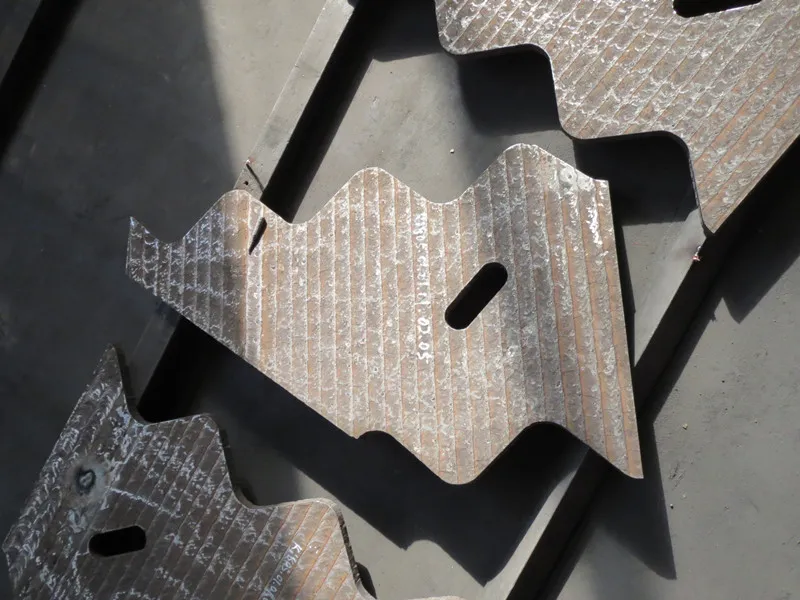
Inadequate Surface Preparation Before Weld Overlay Wear Plates Installation
Failure to Remove Old Wear Plates Before Installing New Weld Overlay Wear Plates
Installing new overlay plates over worn layers compromises bond integrity. Residual material from prior installations interferes with fusion, weakening the joint by up to 40% in high-abrasion environments. Complete removal of old wear plates is essential to ensure direct metallurgical bonding between the base metal and the new overlay.
Leaving Contaminants Like Rust, Oil, or Moisture on the Base Metal Surface
When it comes to welding, contaminants like oil, rust buildup, and moisture can really mess up the fusion process. The latest findings from the Welding Surface Integrity Report released in 2024 show just how bad things get when surfaces aren't clean enough. Oil contamination alone raises porosity issues by around 72 percent, and rusty metal causes incomplete welds in nearly 6 out of 10 situations according to their data. Before starting any weld job, most shops insist on thorough cleaning procedures. This usually means solvent wiping for light contamination, but heavier stuff requires wire brushing or even grinding down the surface until it looks almost new again. Some welders skip this step thinking they'll fix problems later, but experience shows that good prep work saves time and money in the long run.
Skipping Grinding or Profiling for Optimal Weld Adhesion
Surface profiling to SA 2.5 cleanliness standard creates a roughened texture that enhances mechanical interlocking. Without proper preparation, weld dilution drops below the critical 30% threshold, reducing crack resistance in impact-heavy applications. This step ensures consistent fusion and long-term durability of the weld overlay system.
Poor Welding Techniques and Incorrect Installation Practices
Using incorrect welding parameters for the overlay plate material composition
Mismatched voltage, amperage, or heat input causes 27% of early wear plate failures (2024 welding analysis). High-carbon overlays require controlled preheat (300–400°F) and interpass temperatures to avoid hydrogen-induced cracking. Adjusting parameters based on alloy grade prevents brittle microstructures that spall under operational stress.
Poor bead placement and inconsistent travel speed during the wear plate welding process
Overlapping beads create stress concentration points, increasing failure risk by 19%. Maintaining a 50–70° electrode angle and overlapping each pass by 30–40% ensures uniform coverage. Operator certification helps maintain travel speed within ±10%, which is vital for achieving consistent dilution rates below 15%.
Failing to hardface or cap structural and joining welds in Weld Overlay Wear Plates
Uncapped welds corrode 3.2× faster than protected ones. Applying chromium-carbide-rich filler metals (HRC 58–62) over seams shields against abrasion and corrosion. This practice extends service life by 40% in conveyor transfer points, as validated by 2023 abrasion testing.
Full-penetration vs. plug weld debate: Best practices for wear plate installation
Full-penetration welds offer 18% better fatigue resistance in high-vibration settings but take 35% longer to install. Plug welds are acceptable in non-critical zones when spaced no more than 6× the plate thickness apart. The American Welding Society (AWS D1.9) requires full penetration for primary load paths in mining equipment.
Improper Plug Weld Spacing and Lack of Structural Support
Insufficient number of plug welds leading to detachment under stress
Fewer than four plug welds per square foot significantly increases delamination risk—by 72% under impact loads. This often results from misapplied shear calculations or cost-cutting measures. Engineered designs must dictate weld density to ensure structural reliability.
Irregular spacing between plug welds compromising load distribution
Non-uniform spacing leads to uneven stress distribution, accelerating fatigue. A staggered 6-inch grid pattern optimizes force transfer to the backing structure. Deviations as small as ±1 inch from specifications can reduce service life by 18–34% in high-vibration applications.
Mounting wear plates without sufficient backing structure support
Even well-executed welds fail prematurely if the supporting structure is inadequate. A 2023 study found that 14-gauge backing steel improves retention by 41% versus unbraced setups. High-wear areas demand full perimeter support and intermediate stiffeners to resist deflection and cracking.
Real-world case study: Conveyor chute failure from unsupported Weld Overlay Wear Plates
A mining operation faced catastrophic liner separation after eight months due to insufficient structural support. Post-failure analysis revealed significant deviations from design:
| Failure Factor | Design Specification | As-Installed Condition |
|---|---|---|
| Backing Plate Thickness | ½" AR400 | ¼" Mild Steel |
| Plug Welds per Sq Ft | 6 | 3 |
| Support Beam Spacing | 12" Centers | 24" Centers |
The $287k repair could have been avoided by following engineered installation guidelines for load-bearing substructures.
Selecting the Wrong Material or Thickness for the Application
Mismatch Between Abrasive Environment and Overlay Plate Hardness (HRC Ratings)
Using wear plates with mismatched hardness leads to premature failure in 74% of industrial applications (2023 abrasion resistance study). High-impact environments require HRC >58, while sliding abrasion benefits from balanced toughness and hardness. Properly matched plates last 3–5 times longer, as shown in comparative mining operations.
Using Incorrect Wear Plate Thickness or Material for the Application
Thickness errors cause 32% of avoidable replacements, with 18% of installations using plates 50% too thin or too thick. Research confirms that following application-specific thickness guidelines reduces replacement frequency by 41% in bulk handling systems. Forged backing plates under 1" show 67% higher deformation in high-impact scenarios.
Cost-Driven Decisions Sacrificing Longevity: Industry Paradox in Wear Plate Selection
Sixty-eight percent of premature failures stem from initial cost-cutting, averaging $284,000 per incident in downtime losses (2023 data). A three-year cement plant study showed premium-grade plates delivered 217% greater cost efficiency despite 42% higher upfront costs. Maintenance teams should use certified service life prediction models to evaluate long-term ROI beyond purchase price.
Neglecting Post-Weld Treatment and Long-Term Maintenance Planning
Post-installation oversights account for 42% of premature failures. Addressing these key areas ensures maximum performance:
Skipping stress relief procedures after welding high-carbon overlay plates
Residual thermal stresses in high-carbon alloys initiate microcracks that grow under load. ASM International (2023) reports unrelieved welds fail 3.2x faster than stress-relieved joints in abrasive conditions. Post-weld heat treatment or vibratory stress relief is strongly recommended.
Failure to inspect for cracks or incomplete fusion post-weld
Visual inspection alone misses 60% of subsurface flaws (NACE standards). Mandatory dye penetrant testing identifies hidden defects before recommissioning, preventing early in-service failures.
The role of non-destructive testing in ensuring integrity
Ultrasonic thickness gauging and radiographic analysis establish baseline integrity metrics for predictive maintenance. Facilities using automated NDT report 28% longer service life compared to manual inspection methods.
Designing installations without considering accessibility for future removal and replacement
Accessibility directly affects lifecycle costs. Well-designed installations reduce downtime by 32% during replacements. Key considerations include:
- Minimum 18" service clearance around edges
- Standardized bolt patterns for quick disassembly
- Pre-marked cut lines for efficient torch removal
Proper post-weld protocols and forward-thinking maintenance planning ensure Weld Overlay Wear Plates perform reliably throughout their intended service life.
FAQ
Why is surface preparation important before installing weld overlay wear plates?
Surface preparation is crucial to ensure proper bonding between the base metal and the new overlay, preventing weakened joints and premature failure.
What are the consequences of incorrect welding parameters?
Incorrect welding parameters can lead to early wear plate failures due to mismatched voltage, amperage, or heat input, causing issues like hydrogen-induced cracking.
How does plug weld spacing affect wear plate installation?
Insufficient or irregular plug weld spacing can increase delamination risk and compromise load distribution, reducing the wear plate's effectiveness.
Why select the right material and thickness for wear plates?
Choosing the appropriate material and thickness for wear plates is essential to ensure they last longer and perform effectively, reducing replacement frequency and cost.
What post-weld treatments or inspections are vital for wear plate longevity?
Post-weld stress relief and non-destructive testing help identify defects and prevent microcracks, thereby extending the service life of weld overlay wear plates.
Table of Contents
- Inadequate Surface Preparation Before Weld Overlay Wear Plates Installation
-
Poor Welding Techniques and Incorrect Installation Practices
- Using incorrect welding parameters for the overlay plate material composition
- Poor bead placement and inconsistent travel speed during the wear plate welding process
- Failing to hardface or cap structural and joining welds in Weld Overlay Wear Plates
- Full-penetration vs. plug weld debate: Best practices for wear plate installation
- Improper Plug Weld Spacing and Lack of Structural Support
- Selecting the Wrong Material or Thickness for the Application
- Neglecting Post-Weld Treatment and Long-Term Maintenance Planning
-
FAQ
- Why is surface preparation important before installing weld overlay wear plates?
- What are the consequences of incorrect welding parameters?
- How does plug weld spacing affect wear plate installation?
- Why select the right material and thickness for wear plates?
- What post-weld treatments or inspections are vital for wear plate longevity?