
 EN
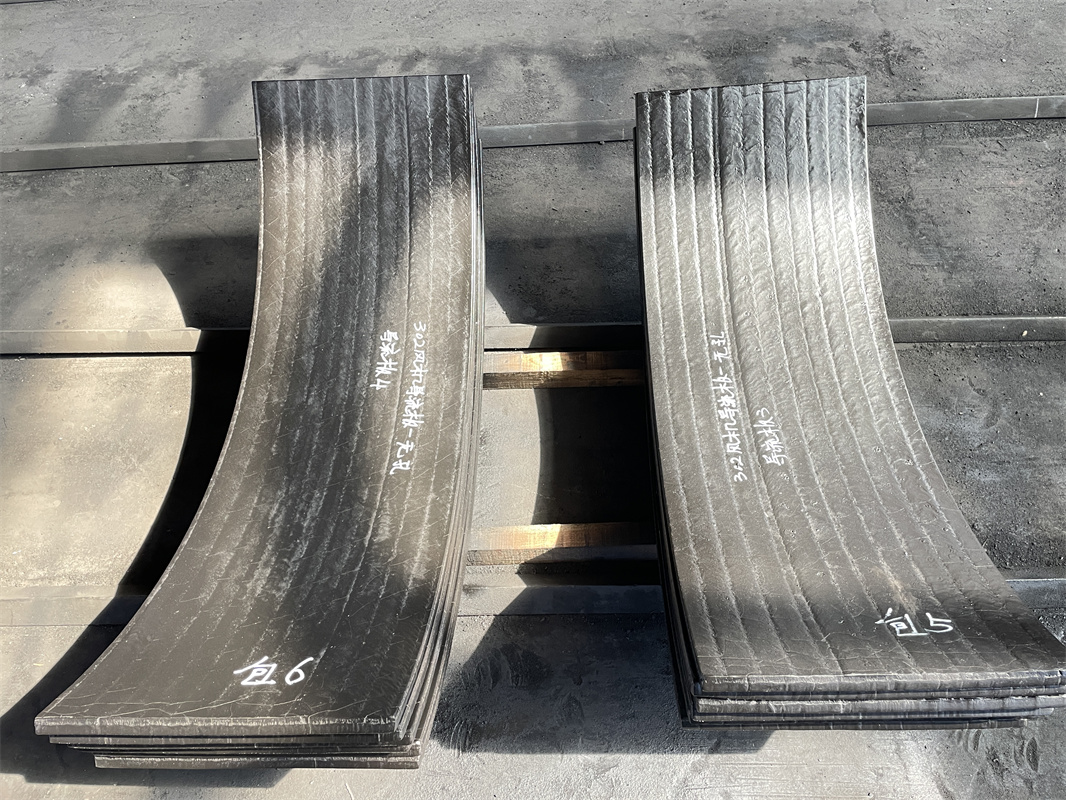
Mining equipment operates under some of the most demanding wear conditions in heavy industry. Rock, ore, mineral concentrates, and other abrasive materials continuously come into contact with chutes, hoppers, crushers, conveyors, bins, and other equipment surfaces. Repeated abrasion and impact can gradually reduce material thickness, shorten component service life, and increase maintenance requirements.
For mining operations, selecting the right chrome carbide overlay plate can provide targeted protection for areas exposed to severe abrasive wear. However, there is no single overlay plate configuration that is suitable for every mining application.
The right choice depends on the type of ore, particle size, impact intensity, material flow, operating temperature, equipment geometry, required service life, and installation method.
This guide explains the key factors mining companies, equipment manufacturers, engineers, and industrial buyers should consider when selecting a chrome carbide overlay plate.
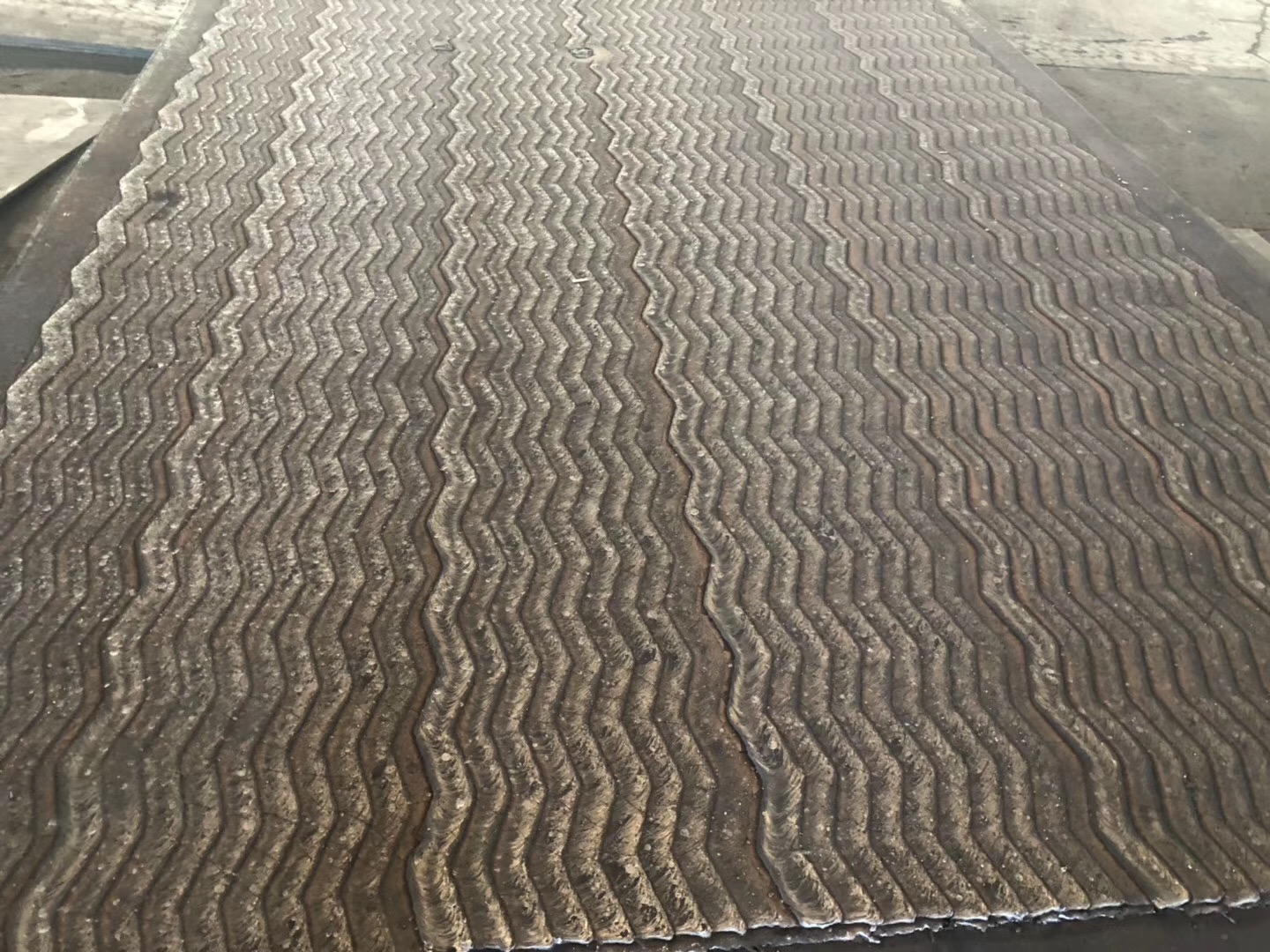
What Is a Chrome Carbide Overlay Plate?
A chrome carbide overlay plate is a composite wear-resistant plate consisting of a steel substrate and a hardfacing layer containing chromium carbide.
The two layers perform different functions.
The chromium carbide overlay provides the primary protection against severe abrasive wear. Its hard carbide-rich structure helps resist material loss when abrasive particles repeatedly contact or slide across the surface.
The steel substrate provides structural support and helps the component withstand mechanical loads during operation.
This combination makes chrome carbide overlay plates particularly useful for mining applications where severe abrasion is a major cause of equipment wear.
Hard-plate® specializes in metal-matrix hardfacing wear-resistant steel plates and provides CCO wear plates, wear liners, pipes, fittings, and customized wear-resistant components for demanding industrial applications. (hardfacingplate.com)
Why Chrome Carbide Overlay Plates Are Used in Mining
Mining equipment can experience continuous contact with abrasive materials throughout the production process.
Common causes of wear include:
-
Rock impact
-
Ore sliding
-
Mineral abrasion
-
Material transfer
-
High-volume material flow
-
Particle-to-metal contact
-
Material direction changes
-
Repeated loading and unloading
When conventional steel is used in a severe wear zone, the component may require frequent replacement.
A chrome carbide overlay plate provides a dedicated hardfacing surface in these high-wear areas. Instead of relying solely on the hardness of the base steel, the plate uses a carbide-rich overlay to provide additional abrasion protection.
This approach can help mining operators extend wear-component service intervals and reduce maintenance interruptions.
1. Identify the Type of Mining Wear
The first step in selecting a chrome carbide overlay plate is understanding how the equipment is actually wearing.
Sliding Abrasion
Sliding abrasion occurs when ore or other abrasive particles move across the surface of the plate.
This is common in:
-
Chutes
-
Hoppers
-
Bins
-
Conveyor liners
-
Transfer points
-
Material feeders
For these applications, resistance to continuous surface abrasion is usually a primary consideration.
Impact Abrasion
Mining equipment can also experience repeated impact when large rocks or ore particles strike the surface.
Examples include:
-
Crusher areas
-
Rock boxes
-
Dump points
-
Feed chutes
-
Heavy-duty hoppers
Where impact is significant, the complete plate structure needs to be considered. Selecting a wear layer solely based on maximum hardness may not provide the desired result if the application also requires substantial impact resistance.
Combined Abrasion and Impact
Many mining applications experience both mechanisms simultaneously.
For example, material may first strike a chute surface and then slide across it. In this situation, the selected chrome carbide overlay plate should provide an appropriate balance between abrasion resistance and resistance to the mechanical conditions created by impact.
Hard-plate® offers different CCO grades intended for different combinations of abrasive and impact conditions, including products designed for low-stress abrasion, medium-impact abrasion, and strong-impact abrasive wear.
2. Understand the Characteristics of the Ore
The type of material being processed has a major influence on wear.
Iron ore, copper ore, limestone, coal, granite, and other minerals can produce different wear patterns.
Before selecting a chrome carbide overlay plate, mining buyers should consider:
-
Material hardness
-
Particle size
-
Particle shape
-
Material density
-
Material velocity
-
Throughput
-
Moisture content
-
Loading method
Large and angular rocks can produce severe impact, while smaller hard particles moving continuously across a surface can create intense sliding abrasion.
A supplier can provide a more useful recommendation when these operating conditions are clearly defined.
3. Evaluate Particle Size and Impact Energy
Particle size is particularly important for mining equipment.
A system handling fine mineral particles may primarily experience sliding or erosive wear. A system receiving large rocks can experience substantially higher impact energy.
Consider the following questions:
What is the maximum particle size?
Large particles can create concentrated impact forces.
How high does the material fall before contacting the plate?
A greater drop height can increase impact energy.
How fast is the material moving?
Higher material velocity can increase the severity of the wear process.
Where does the material first contact the equipment?
The initial impact zone may require more robust protection than downstream areas.
This information can help determine whether the application should prioritize abrasion resistance, impact resistance, or a combination of both.
4. Select the Appropriate Overlay Thickness
Overlay thickness is another important specification.
A chrome carbide overlay plate gradually consumes its wear layer during service. The required overlay thickness should therefore correspond to the expected wear rate and desired maintenance interval.
However, simply selecting the thickest possible overlay is not always the most efficient approach.
An excessively thick plate can increase:
-
Material consumption
-
Component weight
-
Installation complexity
-
Fabrication requirements
-
Transportation costs
The appropriate thickness should be determined according to the actual wear environment.
Factors to consider include:
-
Expected wear rate
-
Required service life
-
Abrasive material
-
Impact intensity
-
Installation space
-
Equipment weight limitations
For customized mining projects, Hard-plate® provides wear-resistant plates in different thickness configurations and dimensions according to application requirements.
5. Consider the Steel Substrate
The overlay is not the only important part of a chrome carbide overlay plate.
The steel substrate supports the hardfacing layer and contributes to the overall structural performance of the component.
For mining equipment exposed to impact, vibration, or mechanical loads, substrate characteristics should therefore be evaluated together with the overlay.
A suitable plate should provide an appropriate balance between:
-
Wear resistance
-
Structural strength
-
Toughness
-
Overlay bonding
-
Resistance to deformation
This is especially important in applications where large rocks repeatedly strike the wear surface.
6. Evaluate Hardness and Carbide Structure
Hardness is often one of the first specifications buyers compare when purchasing CCO plates.
However, a higher hardness value alone does not guarantee better performance.
The actual wear behavior can also depend on:
-
Chromium content
-
Carbon content
-
Carbide formation
-
Carbide distribution
-
Overlay thickness
-
Matrix structure
-
Manufacturing consistency
The carbide-rich structure provides the primary protection against abrasive particles.
Therefore, industrial buyers should ask suppliers for complete technical specifications rather than comparing only a single hardness number.
Hard-plate® provides different CCO grades for different operating conditions, allowing buyers to select a product according to the expected combination of abrasion, impact, and temperature.
7. Identify the Highest-Wear Areas of the Equipment
Not every part of mining equipment experiences the same level of wear.
For example, a transfer chute may have one area where material initially impacts the surface and another area where material mainly slides.
Similarly, a hopper may wear more rapidly near its material entry point.
Instead of applying the same protection everywhere, engineers can identify the most severe wear zones and specify appropriate wear-resistant components for those locations.
Typical high-wear areas include:
-
Material impact points
-
Chute bottoms
-
Chute sidewalls
-
Hopper discharge areas
-
Conveyor transfer points
-
Crusher feed zones
-
Screen surfaces
-
Material direction changes
Targeted wear protection can help use the material more efficiently while protecting the areas that contribute most to maintenance requirements.
8. Consider Equipment Geometry
Mining equipment often includes complex shapes that cannot be protected efficiently with standard flat plates.
Examples include:
-
Curved chutes
-
Hopper walls
-
Pipe elbows
-
Conical sections
-
Crusher components
-
Wear bars
-
Custom liners
Equipment geometry can affect how abrasive material contacts the surface.
A change in material direction can concentrate wear in specific areas. A curved surface may also require a different installation or fabrication approach from a flat liner.
For this reason, customized chrome carbide overlay components can be useful when standard rectangular plates do not match the equipment.
Hard-plate® provides customized wear-resistant products in different dimensions, shapes, and thicknesses for specific industrial applications. Its customized product range includes liners, chutes, rotor blades, grizzly bars, roller teeth, pipes, fittings, and other wear components.
9. Check Cutting and Welding Requirements
Mining wear plates frequently need to be cut or installed directly onto existing equipment.
Before purchasing a chrome carbide overlay plate, buyers should determine how the material will be fabricated.
Potential requirements include:
-
Plasma cutting
-
Grinding
-
Air-arc gouging
-
Welding
-
Stud welding
-
Perimeter welding
-
Plug welding
-
Countersunk bolting
Because the overlay contains hard carbide structures, fabrication procedures can differ from those used for conventional mild steel.
Hard-plate® provides technical guidance for cutting and installation of its CCO wear plates, with installation methods selected according to the specific application and equipment design.
The fabrication method should therefore be considered during the initial material selection rather than after the plate has already been purchased.
10. Consider Operating Temperature
Although many mining applications operate at ambient temperatures, some mineral processing and associated industrial systems operate under elevated temperatures.
Temperature can affect the performance requirements of a wear-resistant material.
When selecting a chrome carbide overlay plate, confirm:
-
Normal operating temperature
-
Maximum operating temperature
-
Duration of exposure
-
Whether temperature fluctuates significantly
Hard-plate® offers different wear-resistant grades for specific operating environments, including CCO solutions intended for high-temperature abrasive conditions.
11. Compare Service Life Rather Than Purchase Price
For mining operations, material price is only one part of the purchasing decision.
A more useful comparison considers the total cost over the component's service life.
This can include:
Plate cost + fabrication + installation + maintenance labor + replacement + production downtime
For example, a lower-cost liner may initially reduce procurement costs but require replacement more frequently.
A more durable chrome carbide overlay plate may have a higher initial cost while reducing replacement frequency.
When comparing suppliers, buyers should therefore ask about expected service life under comparable operating conditions rather than comparing price alone.
Common Mining Applications for Chrome Carbide Overlay Plates
Chrome carbide overlay plates can be used in many areas of mining and mineral processing.
Mining Chutes
Chutes are continuously exposed to abrasive material sliding and, in some areas, direct impact.
CCO liners can be installed at the highest-wear locations to protect the underlying chute structure.
Hoppers and Bins
Large quantities of ore can create significant abrasion inside hoppers and storage bins.
Wear-resistant liners can help protect the walls, transition areas, and discharge sections.
Conveyor Transfer Points
Transfer points can experience a combination of impact and sliding abrasion as material moves between conveyor systems.
Wear plates can be strategically installed where material contacts the equipment.
Crushers
Crushing equipment handles large and hard materials and can experience severe impact and abrasion.
The appropriate wear solution depends on the specific crusher design, material being processed, and location of the wear component.
Screening Equipment
Screens and related components can experience continuous contact with abrasive mineral materials.
Wear-resistant components can help protect structural areas surrounding the screening process.
Mining Pipes and Elbows
When abrasive slurry or dry bulk material is transported through piping systems, internal surfaces can experience significant wear.
CCO technology can be incorporated into wear-resistant pipes and fittings for demanding material transportation applications.
Chrome Carbide Overlay Plate Selection Checklist
Before requesting a quotation, mining equipment buyers should prepare the following information:
| Parameter | Information to Provide |
|---|---|
| Application | Chute, hopper, crusher, conveyor, pipe, etc. |
| Material | Ore, rock, coal, limestone, etc. |
| Particle size | Minimum, average, and maximum size |
| Wear mechanism | Sliding, impact, erosion, or combined |
| Material velocity | Approximate flow or conveying speed |
| Throughput | Material handled per hour |
| Impact conditions | Drop height and impact intensity |
| Temperature | Normal and maximum operating temperature |
| Plate dimensions | Length, width, and thickness |
| Shape | Flat, curved, formed, or customized |
| Installation | Welding, bolting, studs, etc. |
| Service target | Required operating period between replacements |
Providing complete information can help the manufacturer recommend a more suitable CCO configuration.
Signs That Existing Wear Protection May Need Improvement
Mining operators can often identify an unsuitable wear protection strategy through maintenance records.
Potential warning signs include:
-
Frequent liner replacement
-
Rapid localized wear
-
Unexpected cracking
-
Excessive deformation
-
Uneven wear across the equipment
-
Increasing maintenance labor
-
Repeated production shutdowns
-
Shorter-than-expected service intervals
If these problems occur, simply replacing the existing liner with a thicker version may not solve the underlying issue.
The wear mechanism should first be analyzed to determine whether the material grade, overlay thickness, substrate, installation method, or equipment design needs to be reconsidered.
Why Work With a Specialized Wear Plate Manufacturer?
Mining applications require wear-resistant materials that are matched to specific operating conditions.
A specialized manufacturer can help evaluate:
-
Wear mechanism
-
Material characteristics
-
Required plate configuration
-
Overlay thickness
-
Substrate requirements
-
Fabrication method
-
Equipment dimensions
-
Customized wear components
This application-focused approach can be more effective than selecting a generic wear plate based only on hardness or price.
Hard-plate® focuses on metal-matrix hardfacing technology and provides CCO wear plates and customized wear-resistant products for mining and other heavy industries. Its solutions cover different levels of abrasion and impact, allowing the material configuration to be matched to specific operating environments.
Conclusion
Selecting the right chrome carbide overlay plate for mining equipment requires a detailed understanding of the operating environment.
The type of ore, particle size, material velocity, impact intensity, wear mechanism, overlay thickness, substrate, operating temperature, equipment geometry, and installation method can all influence plate performance.
For severe abrasive applications, CCO plates provide a hardfacing surface designed to protect equipment from continuous material wear. However, the best solution is not necessarily the hardest or thickest plate. It is the configuration that provides the right balance between abrasion resistance, impact performance, service life, fabrication requirements, and total cost of ownership.
Before placing an order, mining companies should provide detailed operating information and discuss the application with an experienced wear-resistant material manufacturer. This helps ensure that the selected plate is suited to the actual equipment rather than based solely on general product specifications.
For mining chutes, hoppers, crushers, conveyors, pipes, and other high-wear components, Hard-plate® provides chrome carbide overlay plates and customized hardfacing wear solutions designed for demanding industrial environments.
Table of Contents
- What Is a Chrome Carbide Overlay Plate?
- Why Chrome Carbide Overlay Plates Are Used in Mining
- 1. Identify the Type of Mining Wear
- 2. Understand the Characteristics of the Ore
- 3. Evaluate Particle Size and Impact Energy
- 4. Select the Appropriate Overlay Thickness
- 5. Consider the Steel Substrate
- 6. Evaluate Hardness and Carbide Structure
- 7. Identify the Highest-Wear Areas of the Equipment
- 8. Consider Equipment Geometry
- 9. Check Cutting and Welding Requirements
- 10. Consider Operating Temperature
- 11. Compare Service Life Rather Than Purchase Price
- Common Mining Applications for Chrome Carbide Overlay Plates
- Chrome Carbide Overlay Plate Selection Checklist
- Signs That Existing Wear Protection May Need Improvement
- Why Work With a Specialized Wear Plate Manufacturer?
- Conclusion