
 EN
Abrasion is one of the most common causes of premature wear in heavy industrial equipment. Mining, cement, power generation, metallurgy, quarrying, and bulk material handling systems all rely on components that must withstand continuous contact with abrasive materials.
When standard structural steel cannot provide sufficient service life, industrial buyers often consider two major wear-resistant solutions: chromium carbide overlay plate and abrasion resistant steel.
Both materials can improve wear protection, but they work in different ways and are suited to different operating conditions. Choosing between them should therefore be based on the actual wear mechanism, impact level, equipment design, fabrication requirements, and expected service life rather than simply comparing hardness or purchase price.
This practical comparison explains the major differences between chromium carbide overlay plate and abrasion resistant steel and provides a framework for selecting the appropriate solution.
What Is Chromium Carbide Overlay Plate?
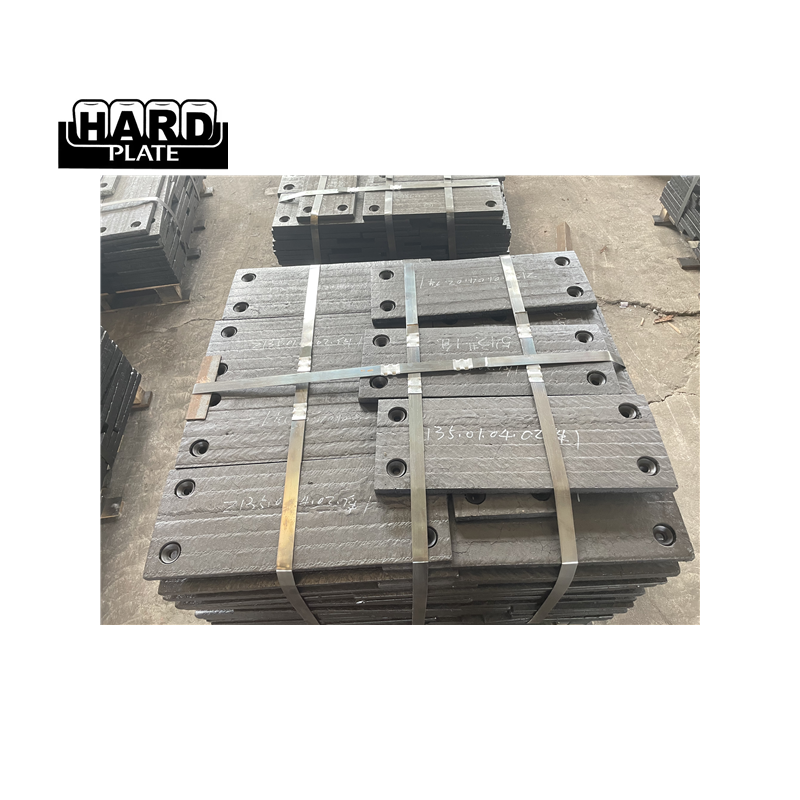
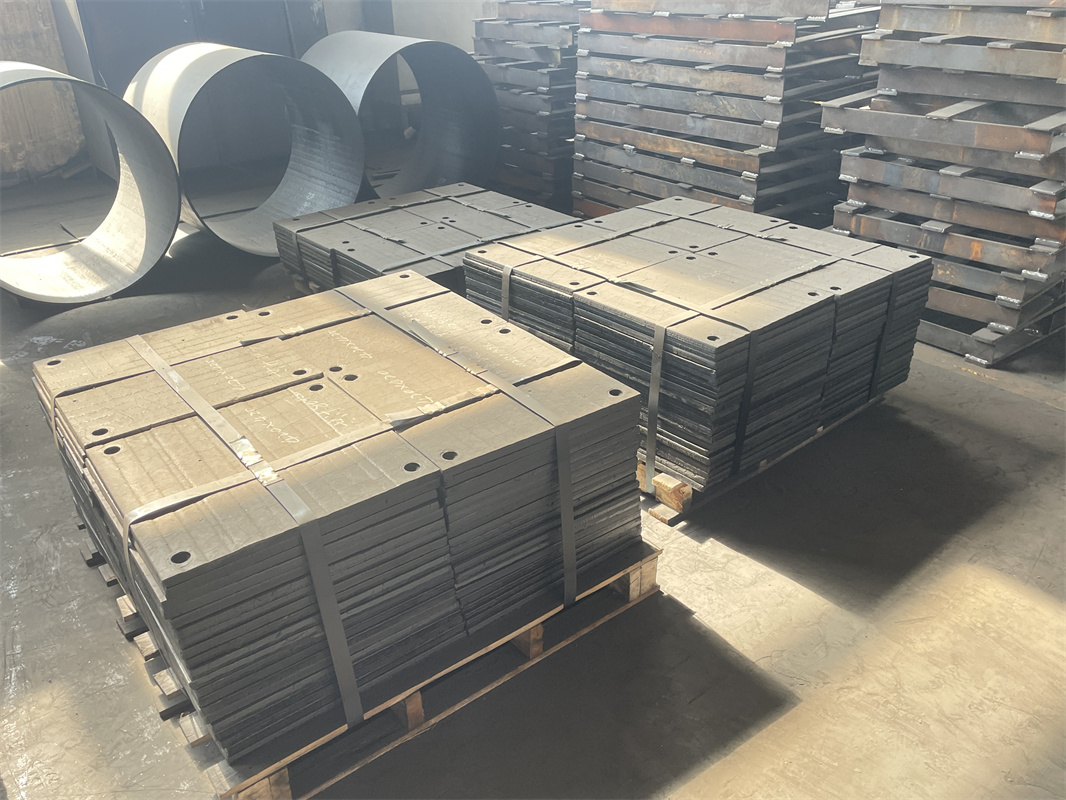
A chromium carbide overlay plate is a composite wear-resistant plate consisting of a steel substrate and a hardfacing overlay containing chromium carbides.
The two layers have different functions.
The chromium carbide overlay forms the primary wear-resistant surface. The hard carbide-rich structure is designed to resist severe abrasive wear caused by hard particles sliding or moving across the surface.
The steel substrate provides structural support and contributes to the overall toughness of the plate.
This layered structure allows the plate to provide concentrated wear protection where abrasion is particularly severe.
Hard-plate® specializes in metal-matrix hardfacing wear-resistant steel plates and provides CCO wear plates, wear liners, wear-resistant pipes and fittings, and customized hardfacing components for demanding industrial applications.
What Is Abrasion Resistant Steel?
Abrasion resistant steel is generally a hardened alloy steel designed to resist material loss caused by abrasive contact.
Unlike a chromium carbide overlay plate, abrasion resistant steel is primarily a steel plate with wear-resistant properties throughout its material thickness rather than a separate hardfacing layer deposited onto a steel substrate.
Different grades can provide different combinations of hardness, toughness, strength, and fabrication characteristics.
Abrasion resistant steel is commonly used for equipment exposed to moderate or severe wear, depending on the selected grade and application.
Key Structural Difference
The most fundamental difference between these two materials is their structure.
| Feature | Chromium Carbide Overlay Plate | Abrasion Resistant Steel |
|---|---|---|
| Basic structure | Hardfacing overlay + steel substrate | Hardened alloy steel |
| Wear-resistant surface | Chromium carbide-rich overlay | Hardened steel |
| Material properties | Different properties between overlay and substrate | Relatively consistent through thickness |
| Primary advantage | Specialized severe-wear surface | Balanced wear resistance and structural properties |
| Typical selection | Severe abrasive zones | General to heavy wear applications |
This difference affects how each material performs in practical industrial applications.
1. Abrasion Resistance
When severe sliding abrasion is the dominant failure mechanism, chromium carbide overlay plate can provide a significant advantage.
The hard carbide-rich overlay is specifically designed to resist abrasive material removal. This makes CCO plates particularly useful in applications involving hard minerals, rock, coal, and other abrasive materials.
Abrasion resistant steel also provides good wear resistance, but its performance depends heavily on the specific grade and operating conditions.
A simplified approach is:
Moderate to heavy abrasion → evaluate abrasion resistant steel
Severe sliding abrasion → consider chromium carbide overlay
However, the actual selection should always be based on application conditions rather than this rule alone.
2. Impact Resistance
Impact is an important consideration in mining and heavy material handling.
Large rocks or ore particles can strike a wear surface with considerable force. In such applications, the material needs sufficient toughness in addition to abrasion resistance.
Abrasion resistant steel grades can offer a useful balance between hardness and toughness for applications involving both abrasion and impact.
Chromium carbide overlay plates can also be used in impact-abrasion applications, but the appropriate CCO grade, overlay configuration, and substrate must be considered carefully.
Hard-plate® offers different CCO grades for different wear environments, including solutions designed for low-stress abrasion, medium-impact abrasion, and strong-impact abrasive wear.
Therefore, buyers should not assume that the material with the highest hardness will automatically provide the best performance under impact.
3. Hardness
Hardness is one of the most commonly compared specifications.
Abrasion resistant steel obtains its wear resistance partly through controlled alloying and heat treatment, which produces a hardened steel structure.
Chromium carbide overlay plates rely on hard carbide formations within the deposited overlay.
The important difference is that hardness represents only one aspect of wear performance.
A complete evaluation should also consider:
-
Carbide structure
-
Carbide distribution
-
Matrix properties
-
Substrate toughness
-
Overlay thickness
-
Bonding quality
-
Wear mechanism
-
Operating temperature
For industrial procurement, comparing hardness numbers alone can therefore lead to an incomplete material selection.
4. Service Life
Service life depends on the actual wear environment.
In severe abrasive applications, a chromium carbide overlay plate can provide a longer wear interval because the hardfacing layer is specifically designed to resist aggressive abrasion.
Abrasion resistant steel can also deliver long service life when the material grade is correctly matched to the operating conditions.
The practical question is not simply:
Which material lasts longer?
Instead, buyers should ask:
Which material provides sufficient service life for this particular application at an acceptable total cost?
For example, a moderately abrasive chute may not require a specialized CCO plate. Conversely, using standard abrasion resistant steel in an extremely abrasive transfer point may result in unnecessarily frequent replacement.
5. Plate Thickness
The way thickness is evaluated also differs between the two solutions.
With abrasion resistant steel, the plate's thickness consists primarily of the steel material itself.
With chromium carbide overlay plate, the total thickness generally includes both the steel substrate and the hardfacing overlay.
For CCO plates, buyers should therefore consider:
-
Base plate thickness
-
Overlay thickness
-
Total thickness
-
Expected wear allowance
-
Equipment clearance
Hard-plate® provides CCO products with different thickness configurations and can customize plate dimensions according to application requirements.
Selecting a thicker plate is not always the most economical solution. The required thickness should correspond to expected wear rate and target service life.
6. Fabrication and Machining
Fabrication requirements can be an important factor in the final decision.
Abrasion resistant steel is generally available in standard plate formats and can be processed using established cutting, welding, and fabrication procedures, subject to the grade and thickness.
Chromium carbide overlay plates can require more application-specific fabrication procedures because the overlay contains extremely hard carbide structures.
Depending on the plate and application, fabrication may involve:
-
Plasma cutting
-
Grinding
-
Air-arc gouging
-
Welding
-
Stud welding
-
Plug welding
-
Mechanical fastening
Hard-plate® provides cutting and installation guidance for its CCO wear-resistant plates, with installation methods selected according to equipment design and application requirements.
Therefore, fabrication should be considered before selecting the material rather than treated as a secondary issue.
7. Forming and Equipment Geometry
Equipment geometry can influence the suitability of a particular wear material.
Abrasion resistant steel may be preferable in applications where extensive forming, bending, or conventional fabrication is required, depending on the selected grade.
CCO plates are often more suitable for flat liners, wear panels, and customized wear components where severe abrasion is concentrated in specific areas.
However, CCO solutions can also be fabricated into various customized shapes and components.
Hard-plate® provides customized CCO wear products for applications including liners, chutes, rotor blades, grizzly bars, roller teeth, pipes, and fittings.
The equipment geometry should therefore be considered alongside the wear mechanism.
8. Application Areas
The two materials overlap in many industries, but their ideal applications can differ.
Mining
Mining equipment is exposed to rock, ore, and mineral abrasion.
Abrasion resistant steel can be used in:
-
Dump bodies
-
Structural wear components
-
Hoppers
-
Chutes
-
Conveyor components
Chromium carbide overlay plates are particularly useful in severe-wear zones such as:
-
Crusher areas
-
Transfer chutes
-
Impact zones
-
Hopper liners
-
Conveyor transfer points
-
Rock boxes
The actual application determines which solution is more appropriate.
Cement
Cement production involves abrasive raw materials throughout crushing, conveying, grinding, and processing.
Abrasion resistant steel can provide general wear protection for equipment components, while CCO plates can be used in areas experiencing particularly severe abrasion.
Power Generation
Coal handling systems can experience continuous sliding abrasion and impact.
Both material types can be considered for:
-
Coal chutes
-
Hoppers
-
Bunkers
-
Transfer points
-
Conveying systems
The appropriate choice depends on coal characteristics, material velocity, impact conditions, and expected service life.
Metallurgy
Metallurgical equipment can combine abrasion, impact, heavy loads, and elevated temperatures.
In these applications, the material needs to be evaluated according to the complete operating environment rather than simply categorized as a wear-resistant application.
9. Maintenance Requirements
Maintenance frequency is closely connected to wear rate.
A material that wears quickly may require frequent liner replacement. This can increase labor requirements and cause production interruptions.
Chromium carbide overlay plates can be advantageous in high-abrasion areas because the hardfacing layer can provide extended wear protection.
Abrasion resistant steel can be an effective choice where the wear rate is lower or where the application requires a greater balance between wear resistance, toughness, and fabrication.
The ideal solution is therefore the one that achieves the required maintenance interval without adding unnecessary material or fabrication costs.
10. Total Cost of Ownership
Purchase price should not be the only factor in a wear-material comparison.
A better approach is to calculate the total cost throughout the component's service life.
This can include:
Material cost + fabrication cost + installation + maintenance + replacement + downtime
A chromium carbide overlay plate may have a higher initial cost than a conventional abrasion resistant steel plate.
However, if the CCO plate lasts significantly longer in a severe wear application, the cost per operating hour may be lower.
Conversely, if the operating environment is relatively moderate, the additional cost of CCO may not provide sufficient value.
This is why industrial buyers should compare cost per service period, rather than simply cost per plate.
When Should You Choose Chromium Carbide Overlay Plate?
A chromium carbide overlay plate may be a suitable choice when:
-
Severe abrasion is the dominant wear mechanism.
-
Hard mineral particles continuously contact the surface.
-
Existing steel components wear too quickly.
-
A specific area experiences concentrated wear.
-
Extended maintenance intervals are important.
-
The equipment requires a dedicated hardfacing surface.
-
Customized wear liners or components are required.
-
Replacement downtime is expensive.
Typical applications include high-wear chutes, hoppers, transfer points, crusher-related components, conveyor liners, and other severe-abrasion zones.
When Should You Choose Abrasion Resistant Steel?
Abrasion resistant steel may be more appropriate when:
-
The application requires a balance of wear resistance and toughness.
-
Impact is significant.
-
Conventional steel fabrication methods are important.
-
The equipment requires forming or bending.
-
Wear conditions are moderate to heavy rather than extremely abrasive.
-
The entire plate needs consistent steel properties.
-
The application does not justify a specialized hardfacing layer.
The final decision should be based on the complete mechanical and operating requirements.
A Practical Comparison for Industrial Buyers
The following table provides a simplified decision framework:
| Selection Factor | Chromium Carbide Overlay Plate | Abrasion Resistant Steel |
|---|---|---|
| Severe sliding abrasion | Excellent candidate | Good to excellent depending on grade |
| Moderate abrasion | May be more than necessary | Often suitable |
| Impact conditions | Grade and substrate dependent | Often suitable with appropriate grade |
| Extreme surface wear | Strong candidate | Grade dependent |
| Hardfacing surface | Yes | No |
| Fabrication | Application-specific | Generally straightforward |
| Forming requirements | More limited | Often more practical |
| Customized wear zones | Highly suitable | Suitable |
| Initial cost | May be higher | Often lower |
| Severe wear service life | Potentially very high | Application dependent |
| Best selection basis | Severe wear performance | Balanced material properties |
This table should be used as a starting point rather than a universal rule. Actual performance depends on the specific grade, manufacturing quality, equipment design, and operating environment.
How to Make the Final Selection
Before choosing between chromium carbide overlay plate and abrasion resistant steel, collect the following information:
1. Material Being Processed
Identify whether the equipment handles:
-
Rock
-
Iron ore
-
Coal
-
Limestone
-
Sand
-
Slag
-
Cement raw materials
-
Other abrasive materials
2. Wear Mechanism
Determine whether the primary problem is:
-
Sliding abrasion
-
Impact abrasion
-
Erosion
-
Combined abrasion and impact
3. Particle Characteristics
Record particle size, hardness, shape, and approximate material velocity.
4. Equipment Geometry
Provide drawings or dimensions when the component requires:
-
Bending
-
Curving
-
Custom profiling
-
Drilled holes
-
Special mounting
-
Prefabrication
5. Operating Temperature
Provide normal and maximum temperatures when the application involves elevated heat.
6. Maintenance Target
Determine how long the component needs to operate between replacements.
7. Fabrication Method
Confirm whether the selected material will be welded, bolted, cut, formed, or installed as a prefabricated component.
With this information, a specialized wear-resistant manufacturer can recommend a more application-specific material configuration.
Why There Is No Universal "Best" Wear Plate
One of the most common mistakes in wear-material procurement is assuming that one material should be used throughout an entire facility.
In reality, different areas of the same machine can experience completely different wear mechanisms.
A transfer point may experience severe impact, while a downstream chute may experience predominantly sliding abrasion.
A crusher feed area may require greater impact resistance, while a hopper wall may prioritize abrasion resistance.
This means the most efficient wear strategy may involve using different materials or configurations in different locations.
Chromium carbide overlay plates can provide targeted protection for severe-wear zones, while abrasion resistant steel may provide a practical solution for components requiring a broader balance of properties.
How Hard-plate® Supports Wear Protection Applications
Hard-plate® focuses on metal-matrix hardfacing technology and provides wear-resistant plates and components for demanding industrial environments.
Its product range includes CCO wear plates, CCO wear liners, wear-resistant pipes and fittings, and customized wear components.
Different product grades are available for different combinations of abrasion, impact, and temperature conditions. The company also provides customized dimensions, thicknesses, shapes, and wear components for specific equipment requirements.
For industrial buyers, this application-oriented approach allows the wear solution to be considered according to the actual operating conditions rather than relying on a single generic specification.
Conclusion
Both chromium carbide overlay plate and abrasion resistant steel can provide effective wear protection, but they are based on different material structures and are suited to different operating requirements.
Chromium carbide overlay plate is particularly attractive for severe abrasive environments because its hardfacing layer provides a dedicated wear-resistant surface. Abrasion resistant steel offers a more uniform hardened steel structure and can provide a useful balance of wear resistance, toughness, and fabrication characteristics.
The right choice depends on:
-
Type of wear
-
Abrasive material
-
Particle size and velocity
-
Impact intensity
-
Required service life
-
Plate thickness
-
Equipment geometry
-
Fabrication requirements
-
Operating temperature
-
Total cost of ownership
Rather than asking which material is universally better, industrial buyers should ask which material is better suited to the specific wear conditions of the equipment.
For severe abrasion zones in mining, cement, power generation, metallurgy, and bulk material handling, chromium carbide overlay plates can provide targeted high-wear protection. For applications requiring a broader balance of wear resistance, toughness, and fabrication, an appropriate abrasion resistant steel grade may be the more practical solution.
Working with an experienced wear-resistant manufacturer can help ensure that the selected material, thickness, configuration, and installation method are matched to the actual operating environment.
Table of Contents
- What Is Chromium Carbide Overlay Plate?
- What Is Abrasion Resistant Steel?
- Key Structural Difference
- 1. Abrasion Resistance
- 2. Impact Resistance
- 3. Hardness
- 4. Service Life
- 5. Plate Thickness
- 6. Fabrication and Machining
- 7. Forming and Equipment Geometry
- 8. Application Areas
- 9. Maintenance Requirements
- 10. Total Cost of Ownership
- When Should You Choose Chromium Carbide Overlay Plate?
- When Should You Choose Abrasion Resistant Steel?
- A Practical Comparison for Industrial Buyers
- How to Make the Final Selection
- Why There Is No Universal "Best" Wear Plate
- How Hard-plate® Supports Wear Protection Applications
- Conclusion