
 EN
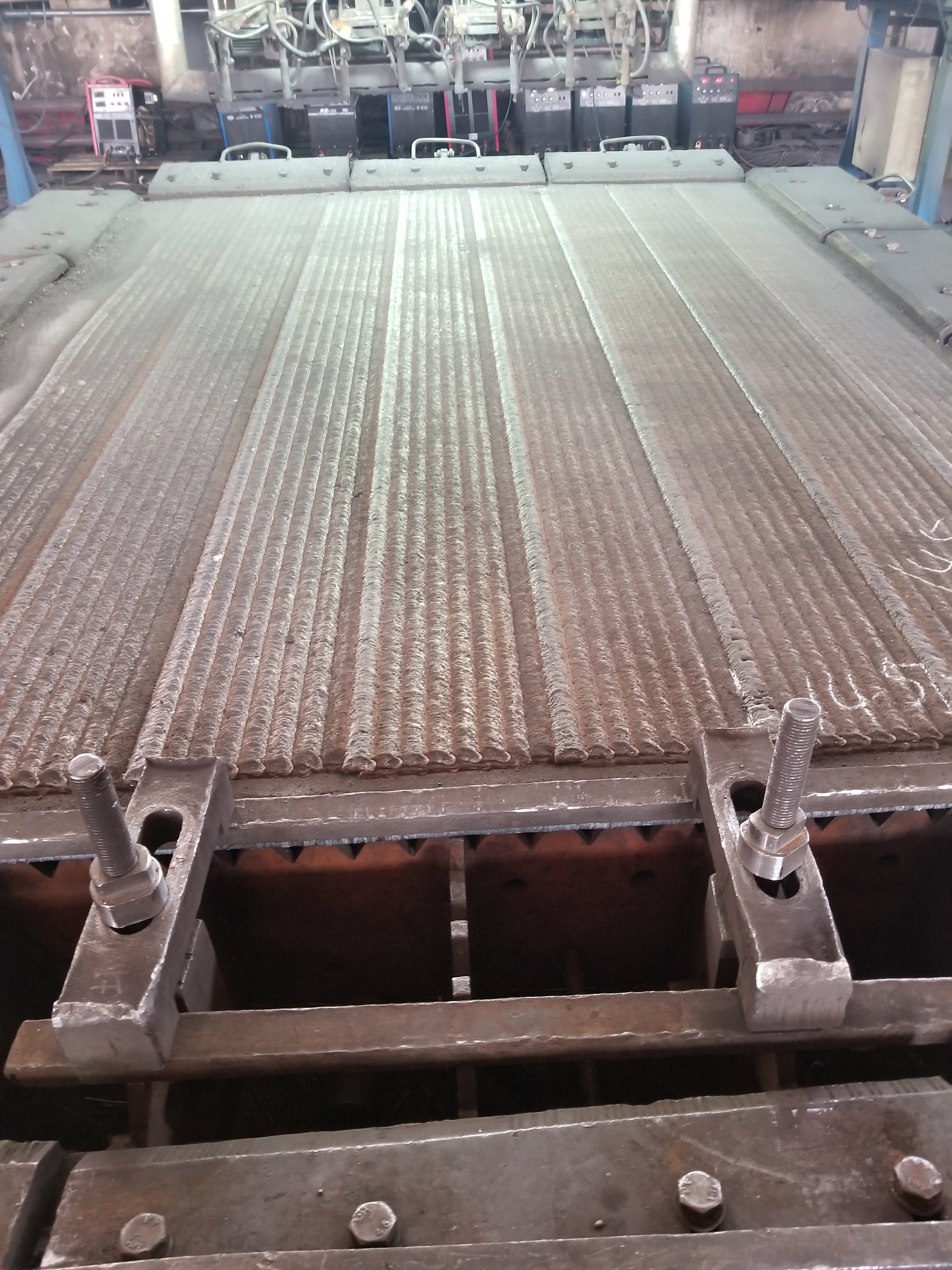
For industries exposed to severe abrasive wear, selecting the right chromium carbide wear plate is an important purchasing decision. Mining, cement, metallurgy, power generation, quarrying, and bulk material handling equipment can all experience rapid wear when conventional steel is exposed to hard and abrasive materials.
However, choosing a chromium carbide wear plate should not be based only on the product name or a single hardness value. Two plates may both be marketed as chromium carbide wear plates while having significant differences in overlay composition, carbide structure, thickness, substrate quality, bonding, dimensional accuracy, and manufacturing consistency.
For industrial buyers, evaluating these factors before procurement can help reduce the risk of premature wear, inconsistent batches, installation problems, and unexpected maintenance costs.
This guide explains the key quality indicators buyers should examine when evaluating chromium carbide wear plates before placing an order.
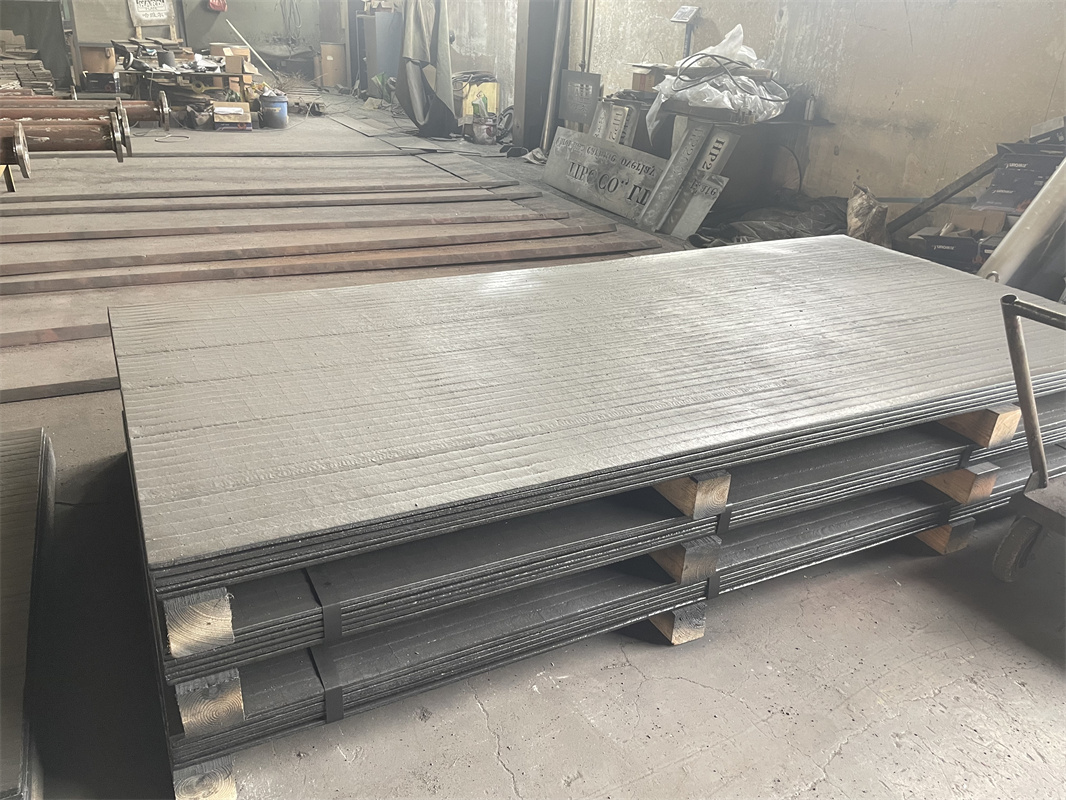
What Is a Chromium Carbide Wear Plate?
A chromium carbide wear plate is a composite wear-resistant material that combines a steel substrate with a chromium carbide-rich hardfacing layer.
The two layers serve different purposes.
The chromium carbide overlay provides the primary resistance against abrasive wear. The hard carbide phases help protect the surface when abrasive particles continuously slide or impact against the plate.
The steel substrate provides structural support and contributes to the overall mechanical performance of the component.
Because the plate relies on both the overlay and substrate, its quality cannot be determined by surface hardness alone.
A reliable evaluation should consider the entire material structure and manufacturing process.
Why Quality Evaluation Matters Before Procurement
Wear-resistant plates are often installed in equipment that operates continuously under demanding conditions.
If the material does not meet the required specifications, the consequences may include:
-
Premature wear
-
Unexpected cracking
-
Uneven wear
-
Poor installation results
-
Frequent component replacement
-
Increased maintenance labor
-
Production downtime
-
Higher total operating costs
These problems can be particularly expensive in mining and mineral processing because replacing a large liner or chute may require significant equipment shutdown time.
Quality evaluation before procurement therefore provides an opportunity to identify potential problems before the material reaches the production site.
1. Check the Chemical Composition
Chemical composition is one of the first technical factors buyers should examine.
The performance of chromium carbide wear plates is closely related to the formation of carbide phases within the hardfacing layer.
Chromium and carbon are particularly important because they contribute to the formation of chromium carbide structures.
Depending on the product grade and manufacturing process, other alloying elements may also influence the properties of the overlay and matrix.
Before purchasing, ask the manufacturer for:
-
Chemical composition specifications
-
Applicable material grade
-
Carbon content
-
Chromium content
-
Other relevant alloying elements
-
Chemical analysis or inspection documentation when required
A supplier should be able to provide technical information that allows the buyer to confirm whether the product meets the agreed specification.
Chemical composition should not be considered independently, but it provides an important foundation for evaluating material consistency.
2. Verify Surface Hardness
Hardness is one of the most commonly used indicators when evaluating a chromium carbide wear plate.
A harder surface can generally provide strong resistance against many forms of abrasive wear.
However, buyers should avoid evaluating a product based on a single hardness number.
Instead, confirm:
-
Specified hardness range
-
Test method
-
Testing location
-
Number of test points
-
Measurement consistency
-
Applicable product grade
Hardness may vary slightly across a plate, so testing multiple locations can provide a more useful representation of material consistency.
It is also important to remember that very high hardness does not automatically mean the plate will perform better in every application.
Impact conditions, carbide structure, substrate properties, and wear mechanism also need to be considered.
3. Examine the Carbide Microstructure
The microstructure of the hardfacing layer is one of the most important quality indicators.
Chromium carbide wear plates rely on hard carbide phases to resist abrasive material removal.
Therefore, buyers should consider:
-
Carbide formation
-
Carbide distribution
-
Carbide morphology
-
Matrix structure
-
Overall microstructural consistency
A suitable microstructure helps the hardfacing layer resist abrasive particles during operation.
For technical procurement projects, metallographic examination can provide useful information about the overlay structure.
Depending on the project requirements, buyers may request metallographic analysis or representative microstructure data from the manufacturer.
4. Check Overlay Thickness
Overlay thickness directly affects the available wear allowance.
A plate with an insufficient wear layer may reach its service limit earlier than expected, even if the surface hardness is satisfactory.
Before procurement, confirm:
-
Nominal overlay thickness
-
Permitted thickness tolerance
-
Total plate thickness
-
Base plate thickness
-
Measurement method
Thickness should be evaluated according to the intended application.
For example, a high-wear mining chute may require a different overlay configuration from a component exposed to moderate abrasion.
The correct thickness is therefore determined by expected wear rate, required service life, equipment geometry, and installation limitations.
5. Evaluate Overlay-to-Substrate Bonding
The hardfacing layer must remain properly bonded to the steel substrate throughout the operating period.
Poor bonding or defects at the interface can reduce the reliability of the wear component.
During quality evaluation, buyers should pay attention to:
-
Bonding condition
-
Interface continuity
-
Delamination
-
Excessive separation
-
Internal defects
-
Cracks extending into critical areas
Depending on the project requirements, suitable inspection methods may be used to evaluate the condition of the overlay and substrate interface.
For critical applications, buyers should discuss the appropriate inspection standard with the manufacturer before production begins.
6. Inspect Surface Condition
A visual inspection can reveal obvious manufacturing problems before the plates are shipped.
Inspect the surface for:
-
Large cracks
-
Excessive surface defects
-
Abnormal porosity
-
Severe irregularities
-
Unwanted contamination
-
Inconsistent overlay appearance
It is important to distinguish between acceptable surface characteristics and defects that could affect service performance.
Chromium carbide hardfacing can naturally display surface patterns associated with the deposition process. Not every visible line or surface variation indicates a quality problem.
For this reason, acceptance criteria should be established before procurement rather than judged solely by visual appearance after delivery.
7. Evaluate Crack Characteristics
Cracks deserve special attention when inspecting chromium carbide wear plates.
Hardfacing overlays can contain surface crack patterns associated with the manufacturing and stress-relief behavior of the deposited layer. Some crack patterns can be acceptable within the design of the product, while other defects may be unacceptable.
The important question is therefore not simply:
"Does the plate have cracks?"
Instead, buyers should determine:
"Are the observed cracks within the manufacturer's specified acceptance criteria for this product and application?"
Factors to consider include:
-
Crack orientation
-
Crack density
-
Crack length
-
Crack depth
-
Crack distribution
-
Whether cracks extend into the substrate
-
Applicable quality requirements
A qualified manufacturer should be able to explain the expected characteristics of its CCO product and distinguish normal hardfacing behavior from unacceptable defects.
8. Verify Plate Dimensions
Dimensional accuracy is particularly important when wear plates are used as replacement liners.
A plate that does not match the equipment dimensions can create installation problems and additional fabrication work.
Before procurement, confirm:
-
Length
-
Width
-
Total thickness
-
Overlay thickness
-
Flatness
-
Hole position
-
Hole diameter
-
Edge condition
-
Shape tolerance
For customized components, dimensional drawings should be approved before production.
This is especially important for large mining liners, curved components, chute liners, and prefabricated wear parts.
9. Check Flatness and Deformation
The hardfacing process can introduce thermal stresses into the plate.
As a result, flatness and deformation should be evaluated according to the product specification.
Excessive deformation can cause:
-
Installation difficulties
-
Gaps between the liner and equipment
-
Additional fitting work
-
Uneven mechanical loading
-
Increased installation time
For replacement liners, dimensional consistency can be just as important as material performance.
Buyers should therefore confirm the allowable flatness and dimensional tolerances before ordering large quantities.
10. Evaluate the Steel Substrate
The substrate should not be overlooked simply because the overlay provides the main wear protection.
The steel base supports the hardfacing layer and contributes to the structural performance of the finished plate.
Depending on the application, buyers should evaluate:
-
Steel grade
-
Thickness
-
Mechanical properties
-
Toughness requirements
-
Weldability
-
Surface condition
-
Compatibility with the installation method
A mining application involving significant impact may place greater demands on the substrate than a low-impact sliding-abrasion application.
The overlay and substrate should therefore be evaluated as a complete material system.
11. Review Manufacturing Consistency
For a single replacement plate, consistency may be less obvious.
For large-volume procurement, however, manufacturing consistency becomes extremely important.
If multiple batches are required, buyers should look for consistent:
-
Chemical composition
-
Hardness
-
Overlay thickness
-
Carbide structure
-
Plate dimensions
-
Surface condition
-
Substrate properties
Inconsistent plates can produce different service lives within the same equipment system.
This can make maintenance planning more difficult and reduce the predictability of operating costs.
A reliable manufacturer should have established production and quality-control procedures to maintain consistency between batches.
12. Ask About Quality Inspection
A professional wear plate supplier should be able to explain how its products are inspected.
Depending on the product and application, quality control may involve:
-
Chemical analysis
-
Hardness testing
-
Dimensional inspection
-
Visual inspection
-
Thickness measurement
-
Metallographic examination
-
Surface inspection
-
Non-destructive testing where applicable
Not every application requires every inspection method.
For standard industrial applications, routine inspection may be sufficient. For critical mining or engineered wear components, additional testing may be appropriate.
The inspection plan should therefore be agreed according to the application and procurement requirements.
13. Request Material and Inspection Documentation
Technical documentation provides buyers with traceability and helps verify whether the delivered product matches the agreed specification.
Depending on the project, useful documentation may include:
-
Product data sheet
-
Material specification
-
Chemical composition report
-
Hardness test results
-
Dimensional inspection report
-
Inspection certificate
-
Manufacturing batch information
-
Product drawings
-
Installation recommendations
For large projects or repeat orders, maintaining these records can also make future replacement procurement easier.
14. Evaluate Cutting and Fabrication Quality
Chromium carbide wear plates are often cut and fabricated before installation.
Poor cutting can result in:
-
Excessive heat-affected areas
-
Edge defects
-
Incorrect dimensions
-
Poor fit-up
-
Additional grinding or rework
Buyers purchasing pre-cut or prefabricated wear components should therefore inspect the finished dimensions and edge condition.
If the supplier is responsible for cutting according to engineering drawings, dimensional inspection should be included in the acceptance process.
15. Check Welding and Installation Compatibility
A high-quality wear plate still needs to be installed correctly.
Before procurement, confirm whether the selected plate is compatible with the intended installation method.
Common methods may include:
-
Perimeter welding
-
Plug welding
-
Stud welding
-
Countersunk bolting
-
Mechanical fastening
The appropriate method depends on the equipment structure and application.
Installation guidance should also address welding procedures, heat input, joint preparation, and any application-specific restrictions.
Hard-plate® provides CCO wear plates and customized wear-resistant components for industrial applications, with installation approaches selected according to equipment requirements.
16. Compare Product Quality With Application Requirements
Not every chromium carbide wear plate needs the same specification.
For example, a liner used in a low-stress abrasion environment may have different requirements from a crusher component exposed to heavy impact.
Before comparing suppliers, define the actual application:
| Application Factor | Information to Confirm |
|---|---|
| Material handled | Ore, rock, coal, limestone, etc. |
| Particle size | Average and maximum size |
| Wear mechanism | Sliding, impact, erosion, or combined |
| Material velocity | Approximate flow speed |
| Impact level | Low, medium, or strong |
| Operating temperature | Normal and maximum |
| Required service life | Target replacement interval |
| Plate thickness | Required total and overlay thickness |
| Equipment geometry | Flat, curved, formed, or custom |
| Installation | Welding, bolting, studs, etc. |
Without this information, it can be difficult to determine whether a particular plate specification is actually suitable.
17. Avoid Selecting Based on Hardness Alone
One of the most common procurement mistakes is comparing chromium carbide wear plates solely by hardness.
Hardness is important, but it does not describe the complete performance of the material.
Two products with similar hardness values can still have differences in:
-
Chemical composition
-
Carbide distribution
-
Matrix structure
-
Overlay thickness
-
Substrate properties
-
Bonding
-
Manufacturing consistency
A better procurement evaluation considers the complete material system.
The key question should be:
Does the plate's complete structure and specification match the actual wear conditions?
18. Evaluate Supplier Manufacturing Capability
The quality of a chromium carbide wear plate is closely related to the manufacturer's process control.
When evaluating a supplier, buyers can consider:
-
Manufacturing experience
-
Production capacity
-
Hardfacing technology
-
Quality-control procedures
-
Testing capabilities
-
Customization capabilities
-
Batch consistency
-
Technical support
-
Previous industrial applications
This is particularly important for OEM projects and large-volume procurement.
A supplier capable of producing consistent plates according to approved specifications can help reduce variation during equipment maintenance and replacement.
A Practical Pre-Procurement Inspection Checklist
Before approving a chromium carbide wear plate supplier, buyers can use the following checklist:
Material
-
Confirm product grade.
-
Review chemical composition.
-
Verify substrate specification.
-
Confirm overlay thickness.
Performance
-
Check hardness.
-
Review carbide microstructure if required.
-
Confirm suitability for the expected wear mechanism.
-
Verify temperature limitations.
Manufacturing Quality
-
Inspect surface condition.
-
Check overlay consistency.
-
Evaluate bonding condition.
-
Confirm dimensional tolerances.
-
Check flatness.
Documentation
-
Request technical data sheets.
-
Review inspection reports.
-
Confirm batch traceability.
-
Approve engineering drawings for customized parts.
Fabrication
-
Confirm cutting requirements.
-
Verify hole dimensions and positions.
-
Review welding requirements.
-
Confirm installation method.
Supplier Capability
-
Evaluate production capacity.
-
Review quality-control procedures.
-
Confirm customization capabilities.
-
Assess technical support.
How to Compare Two Chromium Carbide Wear Plate Suppliers
When comparing suppliers, avoid looking only at quotation price.
A more complete evaluation can include:
| Evaluation Factor | Supplier A | Supplier B |
|---|---|---|
| Product specification | Compare | Compare |
| Chemical composition | Compare | Compare |
| Hardness | Compare | Compare |
| Overlay thickness | Compare | Compare |
| Carbide structure | Compare | Compare |
| Substrate | Compare | Compare |
| Dimensional tolerance | Compare | Compare |
| Inspection documentation | Compare | Compare |
| Customization | Compare | Compare |
| Lead time | Compare | Compare |
| Service support | Compare | Compare |
| Total cost of ownership | Compare | Compare |
This approach helps buyers distinguish between a genuinely competitive product and a low-cost product with a less suitable specification.
What Quality Means in Practical Terms
For an industrial buyer, material quality ultimately needs to translate into reliable equipment performance.
A high-quality chromium carbide wear plate should provide:
Consistent material properties
The chemical composition, hardness, overlay thickness, and substrate should remain within the agreed specification.
Reliable wear protection
The hardfacing structure should be appropriate for the intended abrasive environment.
Stable dimensions
The finished plate should meet the required dimensional tolerances for fabrication and installation.
Predictable service
The material should deliver consistent performance across batches when operating conditions remain comparable.
Suitable documentation
The manufacturer should be able to provide sufficient technical and inspection information for procurement and quality control.
These factors are more meaningful than a single headline specification.
Final Thoughts
Evaluating chromium carbide wear plate quality before procurement requires a comprehensive approach.
Chemical composition, hardness, carbide microstructure, overlay thickness, bonding, substrate properties, surface condition, dimensions, flatness, fabrication quality, and manufacturing consistency all contribute to the final performance of the product.
For severe industrial applications, buyers should also evaluate whether the selected plate actually matches the equipment's wear mechanism. A plate that performs well under severe sliding abrasion may not be the best solution for an application dominated by heavy impact.
The most reliable procurement process is therefore based on technical specifications, application requirements, inspection data, and supplier manufacturing capability rather than price or hardness alone.
Before placing a large order, industrial buyers should establish clear acceptance criteria, review technical documentation, and confirm the required plate configuration with the manufacturer.
For mining, cement, metallurgy, power generation, and bulk material handling applications, a properly evaluated chromium carbide wear plate can provide reliable protection for high-wear equipment and contribute to longer maintenance intervals and lower lifecycle costs.
Table of Contents
- What Is a Chromium Carbide Wear Plate?
- Why Quality Evaluation Matters Before Procurement
- 1. Check the Chemical Composition
- 2. Verify Surface Hardness
- 3. Examine the Carbide Microstructure
- 4. Check Overlay Thickness
- 5. Evaluate Overlay-to-Substrate Bonding
- 6. Inspect Surface Condition
- 7. Evaluate Crack Characteristics
- 8. Verify Plate Dimensions
- 9. Check Flatness and Deformation
- 10. Evaluate the Steel Substrate
- 11. Review Manufacturing Consistency
- 12. Ask About Quality Inspection
- 13. Request Material and Inspection Documentation
- 14. Evaluate Cutting and Fabrication Quality
- 15. Check Welding and Installation Compatibility
- 16. Compare Product Quality With Application Requirements
- 17. Avoid Selecting Based on Hardness Alone
- 18. Evaluate Supplier Manufacturing Capability
- A Practical Pre-Procurement Inspection Checklist
- How to Compare Two Chromium Carbide Wear Plate Suppliers
- What Quality Means in Practical Terms
- Final Thoughts