
 EN
EN
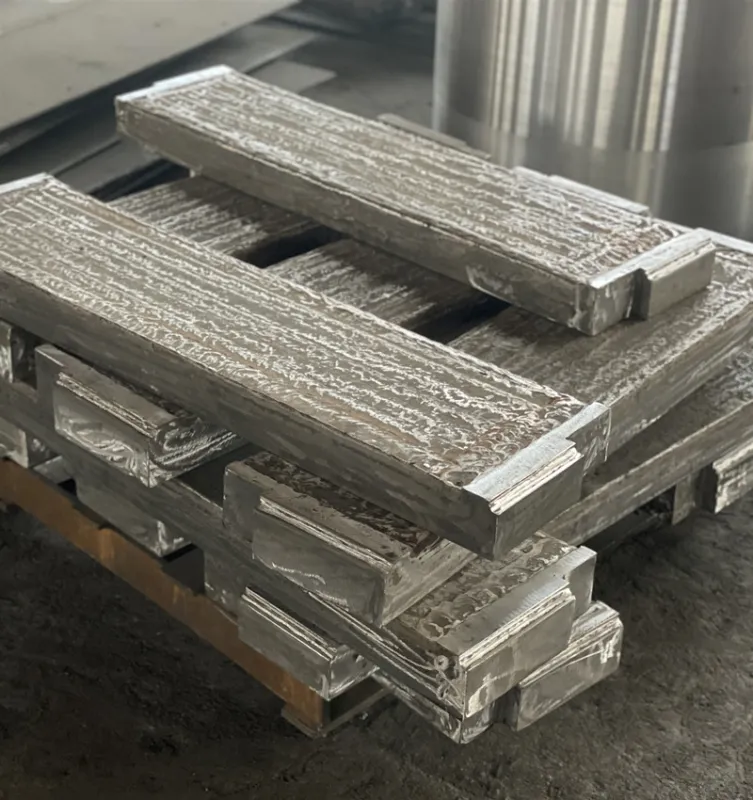
Understanding Total Cost of Ownership for Weld Overlay Wear Plates
Defining Total Cost of Ownership in Industrial Wear Applications
When looking at total cost of ownership (TCO) for industrial wear parts, most people forget it's not just about what something costs when bought. The real picture involves how well materials hold up over time, how often replacements are needed, plus all those headaches from equipment breaking down before its time. Recent studies from 2024 show some interesting numbers here. For mining conveyor systems specifically, around one third (that's 34%) of the overall TCO goes toward maintenance alone. And then there's the unexpected stoppages too which tack on roughly another quarter (28%) to what companies end up spending across the lifespan of these systems.
Case Studies Demonstrating Extended Wear Life in Mining Operations
A study of 12 iron ore processing facilities revealed that retrofitting with weld overlay wear plates reduced liner replacement costs by $740k annually (Ponemon 2023). Maintenance cycles in primary crusher applications extended by an average of 17 months, with one site achieving 83% lower TCO over seven years compared to carbon steel liners.
Superior Performance in High-Abrasion Environments
Evaluating Performance with Smooth Chromium Carbide Weld Overlay Wear Plates
Weld overlay plates with smooth surfaces can last anywhere from two to three times longer against wear compared to regular steel when used in those tough slurry transport systems according to the latest material durability findings from 2024. What makes these plates stand out is their super slick surface that cuts down on friction. Tests show this actually brings drag down around 18 percent compared to older hardfacing techniques, which means pumps don't have to work as hard to move materials through those long ore pipelines. Another big plus is how the metal actually bonds at the molecular level with the base plate material. This strong connection stops peeling or flaking even when things get pretty rough, handling impacts as high as 50 Joules without any problems. For companies dealing with abrasive materials day in and day out, this kind of durability makes all the difference.
Material Science Behind Improved Durability and Fabrication Efficiency
Advanced deposition techniques produce a 5-7mm overlay with less than 3% porosity, achieving 95% metallurgical bond strength. The columnar chromium carbide structure resists micro-crack propagation, while the low-carbon steel base maintains structural toughness. Field data shows 22% faster installation due to pre-engineered weld prep designs, improving fabrication efficiency without compromising durability.
Maximizing Cost-Effectiveness Through Extended Service Life and Reduced Waste
Minimizing Material Waste in Processing Plants Using Weld Overlay Wear Plates
The 2024 Industrial Efficiency Report shows that weld overlay plates cut down on material waste by around 60% in mineral processing. These plates have a special chromium carbide layer that stands up to wear and tear much better than standard materials. When rocks get crushed and screened, this durability helps maintain the quality of what comes out at the end. Another big plus is how these plates stop tiny bits of worn-out lining from mixing into the final product. This means fewer batches need to be thrown away or redone, which saves money for companies running gravel pits and mines across the country.
Extending Liner Life to Boost Operational Uptime and Reduce Replacement Frequency
Weld overlay systems installed on iron ore transfer chutes typically run between 12,000 to 18,000 operating hours before needing replacement, which works out to roughly 40 percent more lifespan compared to standard quenched steel options. Field tests conducted over recent years indicate that this extended durability translates into significant cost savings for maintenance crews, cutting down on replacement work by around $52 per square meter each year. What's more, equipment stays online at impressive rates, with most facilities reporting close to 98.6% uptime throughout their operations cycle. Another major benefit comes from reduced deformation issues. When components stay aligned properly, there's far less unplanned downtime caused by misalignment problems. According to industry audits completed in 2023, such alignment issues account for nearly a quarter of all wasted energy across bulk material handling systems.
Real-World ROI: Case Studies from Industrial Applications
Steel mill case study: Doubling wear life with Weld Overlay Plate retrofit
A North American steel mill doubled crusher liner life from 6 to 12 months after retrofitting with weld overlay plates, eliminating two annual shutdowns. The $220,000 investment yielded $580,000 in annual savings from reduced labor and production losses—achieving 163% ROI within 18 months.
Aggregate plant reduces liner replacements by 60% using overlay technology
A gravel processing plant cut chute liner replacements from five to two per year by adopting chromium-carbide weld overlay plates. This strategic upgrade reduced labor costs by 74% while sustaining 98% throughput capacity during peak seasons.
Innovation Driving the Future of Weld Overlay Wear Plates
The evolution of weld overlay wear plates is accelerating through technological advances that enhance performance in extreme environments while improving economic efficiency. Manufacturers are applying precision engineering to create solutions that outperform legacy materials and reduce lifecycle costs.
Advancements in deposition techniques enhancing durability
Laser cladding now produces overlays 30% thicker with 70% fewer defects than conventional methods (2025 industry analysis). Automated systems with real-time monitoring ensure uniform carbide distribution, critical for impact resistance. These innovations allow precise control over hardness gradients, enabling customization based on specific abrasion-to-impact demands.
Predictive modeling for optimizing wear life and maintenance planning
AI-powered wear simulation tools predict degradation within 5% accuracy over 18-month cycles. Integrated with real-time sensor data from crushers and conveyors, these models enable adaptive maintenance scheduling. In a 2024 pilot at a copper processing facility, this approach reduced unplanned downtime by 58%, demonstrating the value of predictive lifecycle management.
FAQ
What is Total Cost of Ownership (TCO) in industrial wear applications?
Total Cost of Ownership (TCO) refers to the complete cost of owning industrial wear parts, factoring in purchase price, durability, frequency of replacements, and costs associated with equipment downtime.
How do weld overlay wear plates impact maintenance costs?
Weld overlay wear plates are highly abrasion-resistant, significantly reducing maintenance stops and repairs. This results in lower maintenance costs over the life of the equipment.
Are the higher upfront costs of weld overlay wear plates justified?
Despite their higher initial cost, weld overlay wear plates typically result in reduced replacement frequency and maintenance costs, often leading to breakeven within 14 months and substantial ROI ongoing.
How do weld overlay wear plates contribute to sustainability?
Weld overlay plates reduce material waste by extending the service life of parts and improving recyclability, contributing to more sustainable industrial processes.
Table of Contents
- Understanding Total Cost of Ownership for Weld Overlay Wear Plates
- Superior Performance in High-Abrasion Environments
- Maximizing Cost-Effectiveness Through Extended Service Life and Reduced Waste
- Real-World ROI: Case Studies from Industrial Applications
- Innovation Driving the Future of Weld Overlay Wear Plates
- FAQ