
 EN
EN
What Is Chromium Carbide Overlay (CCO) and How Does It Work?
Understanding Weld Chromium Carbide Overlay (CCO) Technology
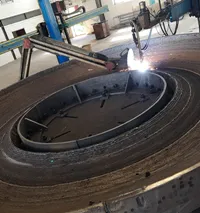
CCO wear plates basically consist of regular mild steel with a thick layer of high chromium carbide alloy bonded to the top through welding processes. The two part construction takes advantage of what each material does best steel provides good structural strength while the carbide coating brings that super hard surface needed for tough wear conditions. We're talking about hardness ratings over 60 HRC here, making these plates ideal for places where materials are constantly grinding away at equipment surfaces such as in mining operations or around crushers. During production, the carbide layer actually creates tiny Cr7C3 particles throughout the metal matrix. These microscopic structures form a protective barrier that stands up pretty well against both sliding friction and those occasional knocks and bumps that happen in industrial settings. Real world testing has demonstrated that CCO coated components last roughly eight times longer than standard steel parts when exposed to severe abrasion environments like coal transfer systems according to research published back in 2015 on ScienceDirect.
Composition and Properties of Common Standard Wear Steels
Common wear plates such as AR400 and SA6000 are made from quenched and tempered alloy steels that have been hardened to Brinell hardness numbers ranging from around 360 to 540. The latest edition of the Material Selection Guide from 2024 mentions that AR400 offers a good mix of hardness levels between 360 and 440 BHN while still being workable enough for projects where shaping or welding is needed. For materials like SA6000 and other similar options, manufacturers focus on achieving higher surface hardness above 500 BHN using special heat treatments. But there's a tradeoff here too since getting that extra hardness tends to make the material less tough when it comes to impacts.
Performance Comparison: CCO vs. Standard Wear Plates in Real-World Conditions
Abrasion Resistance: CCO Superiority in High-Wear Environments
Chromium Carbide Overlay (CCO) wear plates really stand out when dealing with abrasive conditions. They hit hardness levels above 60 HRC, way beyond what standard steels such as AR400 can manage at around 45 to 50 HRC. What does this mean practically? Mining conveyor belts working with silica rich ores last 3 to 5 times longer when these plates are used. A recent look at dragline excavators from 2023 actually showed operators saving about $740,000 each year on maintenance costs per machine. And there's another benefit too: because of their special chromium carbide structure, these plates cut down gouging wear by roughly 70% compared to regular quenched steel alternatives. For companies operating heavy machinery in tough environments, this kind of performance makes all the difference.
Surface Finish and Material Flow Efficiency (e.g., RapidFlow)
CCO’s 0.8–1.6 µm surface roughness minimizes material adhesion, improving flow rates by 22% in iron ore transfer chutes. Field data from bulk material handlers shows friction coefficients drop from 0.65 (AR steel) to 0.38 (polished CCO), reducing energy costs by $18/ton.
Cost Efficiency and Lifecycle Value Analysis
Initial Cost vs. Long-Term Savings with CCO Wear Plates
CCO plates do cost around 30 to 50 percent more initially compared to regular AR400 steel, but they last much longer because they resist wear so well. In places where things get really rough on equipment, these plates need replacing only once every three to five times what standard materials would require. Looking at actual field data from mining operations back in 2023 shows just how big this difference is. The study found that CCO liners stayed functional for over three and a half times longer than the AR400 versions, which translates into saving about fifty-seven thousand dollars each year on maintenance for individual machines. And when we look at specific applications such as coal chutes or handling molten slag, the advantage becomes even clearer. Regular steel components in these areas typically break down every three months or so, requiring constant attention and downtime.
How to Choose the Right Wear Plate for Your Application
Matching Material to Wear Type: Abrasion vs. Impact Dominance
CCO wear plates really stand out in those tough abrasive environments we see in mining conveyor systems. They pack quite a punch with their high chromium carbide content around 45 to 62 HRC, cutting down on material loss by roughly four times what we'd get from regular AR400 steel. On the flip side, standard quenched and tempered steels such as SA6000 handle heavy impacts much better, making them ideal for things like rock crusher liners because of how they flex under stress. Looking at some recent findings from a 2023 study on wear patterns, facilities dealing with over 70 percent sliding or scratching wear reported about 32 percent longer service life when switching to CCO materials. And interestingly enough, when operations faced mostly impact forces, there was actually a 19 percent drop in cracking incidents when AR grade plates were used instead.
Selection Criteria: CCO, AR400, SA6000, and Alternative Liners
| Factor | CCO | AR400/SA6000 | Ceramic Liners |
|---|---|---|---|
| Optimal Wear Type | Severe abrasion | Moderate impact | Corrosion + abrasion |
| Temperature Limit | 750°F (400°C) | 900°F (480°C) | 1200°F (650°C) |
| ROI Threshold | >2,000 annual hours | <1,500 hours | Specialized uses |
Best Practices to Maximize Service Life and Reduce Downtime
Precision welding techniques prevent delamination in CCO plates—improper heat input during installation accounts for 58% of early failures (Industrial Maintenance Report 2024). For AR-grade steels, staggered bolt patterns reduce stress concentration by 27% in chute liners. Proactive thickness monitoring every 250 operational hours extends replacement cycles by 30–40% across all plate types.
Frequently Asked Questions (FAQ)
What is the primary advantage of Chromium Carbide Overlay (CCO) compared to standard wear plates?
The primary advantage of CCO wear plates is their superior abrasion resistance, with hardness levels exceeding 60 HRC, making them ideal for high-wear environments such as mining and coal transfer applications.
How does the manufacturing process affect the performance of CCO wear plates?
The manufacturing process, particularly submerged arc welding techniques, determines the microstructure and carbide content of CCO plates, directly impacting their wear resistance and hardness levels.
When is it cost-effective to choose CCO wear plates over standard wear steels?
CCO wear plates become cost-effective within 12-18 months in severe abrasion scenarios, offering long-term savings due to reduced replacements and downtime.
Which applications benefit most from using standard AR400 or SA6000 wear plates?
Standard AR400 or SA6000 plates are better suited for environments with moderate impact and mixed wear conditions, such as rock crusher liners and loader buckets.
Table of Contents
- What Is Chromium Carbide Overlay (CCO) and How Does It Work?
- Performance Comparison: CCO vs. Standard Wear Plates in Real-World Conditions
- Cost Efficiency and Lifecycle Value Analysis
- How to Choose the Right Wear Plate for Your Application
-
Frequently Asked Questions (FAQ)
- What is the primary advantage of Chromium Carbide Overlay (CCO) compared to standard wear plates?
- How does the manufacturing process affect the performance of CCO wear plates?
- When is it cost-effective to choose CCO wear plates over standard wear steels?
- Which applications benefit most from using standard AR400 or SA6000 wear plates?