
 EN
EN
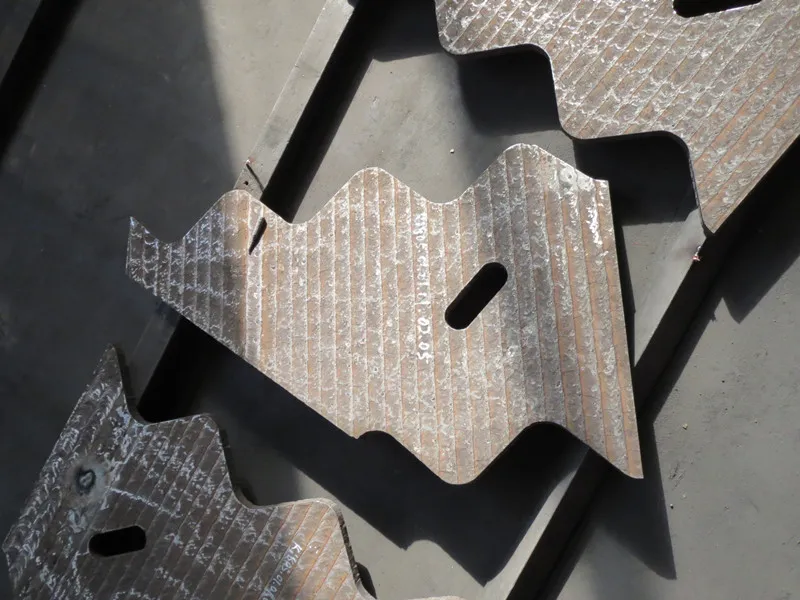
Metallurgical Foundation of Chromium Carbide Hardfacing Overlay
Cr³C² Carbide Distribution and >600 BHN Hardness Mechanism
The chromium carbide hardfacing overlay gets its remarkable surface hardness from the way Cr3C2 carbides are distributed across the material. When deposited properly, these hypereutectic chromium carbides spread evenly through the base metal matrix, creating tiny structural defenses that stop wear from penetrating deep into the surface. The actual Cr3C2 crystals have a hardness rating over 1,400 HV, which means the overall composite material can reach hardness levels above 600 BHN on the Brinell scale. Maintaining proper heat control during the welding process is critical because it keeps the right balance between carbides and the surrounding metal structure. This balance ensures the material stays hard enough to do its job but still has enough toughness to avoid cracking when subjected to stress. For industrial rollers working under intense pressure, this kind of construction makes all the difference in resisting permanent shape changes even after prolonged exposure to heavy loads.
Bond Integrity: Interface Metallurgy and Dilution Control
When it comes to bond strength, what really matters is how metals interact at their interfaces. Keeping dilution below 10% base metal contamination makes all the difference for preserving those important carbide structures while still getting good metallurgical bonds. According to recent industry reports from Ponemon in 2023, when manufacturers get dilution right, they see about a two-thirds drop in overlay spalling issues. What happens in the fusion area is pretty fascinating actually. Controlled diffusion creates these gradual microstructural changes that help the material handle stress better during repeated heating and cooling cycles. Techniques such as modified short arc welding have become game changers too. They cut down on heat exposure which stops those unwanted brittle phases from forming. The result? Overlays perform much more consistently because the carbides stay connected across the entire surface, sitting nicely within a flexible metal matrix that can withstand real world conditions.
Abrasion Resistance and Service Life Extension
Superior Slide, Gouging, and Erosive Wear Resistance vs. Conventional Hardfacing
The Cr3C2 microstructure found in hypereutectic materials offers three different ways to resist wear and tear. When things slide against each other, the dense network of carbides stops microcutting from happening, which is something that doesn't happen with regular overlay coatings since their softer parts tend to give way easily. When there are gouging impacts, these carbides actually soak up and redirect the energy, so less damage happens underneath the surface. Tests using ASTM G65 standards show that when dealing with tiny particles causing erosion, we see between 78% and 92% less material loss compared to old school alloys. All this good performance comes down to how well the carbide phase handles loads and naturally stops cracks from spreading throughout the material.
Quantified Roller Life Extension and Downtime Reduction in VRM Applications
When applied to vertical roller mills (VRMs), chromium carbide overlay really makes a difference in extending equipment life. Compared to regular hardfacing options, we're talking about anywhere from 2.3 to 3.5 times longer service life. For cement raw mill rollers specifically, this means operators see lifespan improvements exceeding 200% on average. That translates into roughly 6,000 extra operating hours before needing any kind of refurbishment work. Maintenance schedules get dramatically lighter too, with annual planned downtime reductions falling somewhere between 40% and 60%. Looking at a five year period, most facilities manage to avoid around 15 to 28 complete maintenance shutdowns for each set of rollers. According to Ponemon's 2023 study, this saves approximately $740,000 worth of lost production time across that timeframe. Beyond just saving money upfront, there's also the long term financial advantage of delaying capital investments while keeping production levels steady throughout operations.
Operational and Economic Impact of Chromium Carbide Hardfacing Overlay
Energy Efficiency Gains from Stable Surface Geometry and Reduced Reconditioning Frequency
Chromium carbide overlay improves energy efficiency through two synergistic mechanisms:
- Stable roller geometry maintains optimal alignment and grinding pressure in VRMs, reducing friction-induced parasitic power consumption caused by surface irregularities.
- Extended maintenance intervals, with components enduring 3–5º longer service life before reconditioning, eliminate frequent production stoppages and associated energy ramp-up losses. Industry studies confirm this reduces annual milling energy demand by 7–12%.
The overlay’s surface integrity prevents progressive efficiency degradation—ensuring equipment operates at design specifications throughout its service life. Reduced thermal cycling from fewer welding repairs further contributes to net energy conservation.
| Metric | Improvement Range | Impact |
|---|---|---|
| Energy Consumption | 7–12% Reduction | Lower utility costs |
| Maintenance Frequency | 60–70% Reduction | Reduced labor and material expenses |
| Production Availability | 15–20% Increase | Higher throughput revenue |
These gains directly enhance ROI while supporting sustainability goals through measurable resource conservation.
Design and Application Best Practices for Optimal Performance
Getting chromium carbide hardfacing overlays right demands careful attention to every step of the process. Start by optimizing roller geometry using CAD models to get a good handle on where stress will build up and how wear might develop over time. When welding, keep things tight on environmental conditions too important stuff here. Humidity needs to stay under 50%, and temps should be somewhere between 15 and 30 degrees Celsius otherwise we risk those pesky hydrogen cracks forming. Heat input matters big time as well aiming for around 0.8 to 1.2 kJ per millimeter helps maintain that sweet spot below 10% dilution while preserving the Cr7C3 structure. After welding, dont forget about stress relief treatment at temperatures between 550 and 600 degrees Celsius for roughly two hours per inch of material thickness this really boosts the bond strength between layers. And before calling it done, run ultrasonic tests to catch any hidden flaws bigger than half a millimeter deep. Stick to all these steps and maintenance intervals can stretch out by anywhere from 300 to 400 operating hours in VRM setups, which means better protection against abrasion and much longer service life overall.
FAQ
What is the primary benefit of chromium carbide hardfacing?
The primary benefit of chromium carbide hardfacing is its superior wear resistance due to the dense network of Cr3C2 carbides. This allows components to have a significantly longer service life and reduced wear and tear.
How does chromium carbide overlay affect energy efficiency?
Chromium carbide overlay improves energy efficiency by maintaining stable roller geometry, reducing friction-induced power consumption, and extending maintenance intervals, which reduces the energy ramp-up losses associated with frequent production stoppages.
What are the ideal conditions during the welding process for chromium carbide overlay?
During the welding process for chromium carbide overlay, it is essential to maintain environmental conditions with humidity under 50% and temperatures between 15 and 30 degrees Celsius. Heat input should also be controlled, aiming for around 0.8 to 1.2 kJ per millimeter to prevent hydrogen cracks and maintain the integrity of the overlay.