
 EN
EN
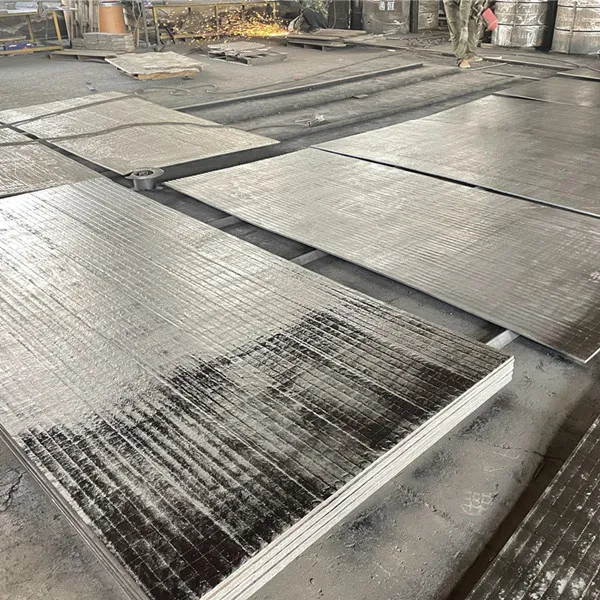
Base Metal Compatibility and Substrate Preparation for Optimal Hardfacing Overlay Adhesion
Material compatibility between the base metal and hardfacing overlay dictates adhesion strength and service longevity. Carbon content exceeding 0.25% heightens dilution risks and hydrogen cracking susceptibility by 47% (Welding Journal 2023), while alloying elements like chromium require precise heat control to prevent brittle phase formation.
Carbon and Alloy Content Effects on Dilution, Metallurgical Bonding, and Cracking Risk
High-carbon substrates (>0.30% C) accelerate diffusion-driven dilution, compromising overlay hardness by up to 15 HRC and increasing crack propagation risk. Manganese-nickel alloys improve bonding integrity through carbide stabilization, reducing residual stress by 30% in impact applications.
Surface Conditioning Best Practices: Grit Blasting, Machining, and Defect Elimination
| Preparation Method | Key Metric | Performance Impact |
|---|---|---|
| Grit Blasting | 3.5–4.5 mil profile | +90% adhesion strength |
| Precision Machining | Ra ≤ 250 µin | Eliminates 99% of stress risers |
Defect-free surfaces require removing oil, rust, and mill scale to SA 2.5 near-white metal standards. Post-blast verification prevents entrapped contaminants that cause overlay spalling.
Welding Process Selection and Parameter Control for Consistent Hardfacing Overlay Quality
Comparing SMAC, FCAW, and PTA: Heat Input, Penetration Depth, and Microstructural Integrity
Getting good results from hardfacing overlays really depends on picking the right welding method for the job. Shielded Metal Arc Welding or SMAW is pretty portable which makes it convenient for field work, though welders often run into problems with too much dilution when working on thicker materials, sometimes over 25%. Flux Cored Arc Welding gives better deposition rates around 18 kilograms per hour but tends to put more heat into the material, which can actually break down those important carbides we're trying to preserve. Plasma Transferred Arc welding stands out because it doesn't penetrate very deeply, usually between half a millimeter to just over a millimeter, and creates almost no dilution at all. This helps keep that tough wear resistant structure intact in the overlay. According to recent research published by ASM International last year, parts made with PTA welding maintain about 30 percent more carbide content compared to similar parts made using FCAW techniques.
| Process | Heat Input (kJ/mm) | Dilution Risk | Carbide Retention |
|---|---|---|---|
| SMAC | 1.2–1.8 | High | Low |
| FCAW | 1.5–2.2 | Medium | Medium |
| PTA | 0.8–1.4 | Low | High |
Key Variable Management: Voltage, Travel Speed, and Wire Feed Rate Impact on Overlay Uniformity
Keeping welding parameters under real time control helps avoid those pesky defects we all know too well, such as porosity issues or when the metal just doesn't lay down evenly. When voltage starts fluctuating beyond about plus or minus 5%, the arc becomes unstable and creates those nasty inclusion traps nobody wants. Welders have noticed that going slower than 20 centimeters per minute concentrates heat in one spot, which can lead to stress cracks especially problematic in high carbon overlays. With wire feed systems, bumping up the speed by around 10% does boost deposition rates, but watch out because this often leads to incomplete fusion problems. Maintaining consistent wire feed rates below approximately 9 meters per minute is essential for getting that uniform bead shape needed for proper multi layer construction work. The numbers don't lie either industry research indicates that if any of these variables deviate more than 8%, the lifespan of the overlay gets cut roughly in half according to field observations.
Wear Mechanism Alignment: Selecting the Right Hardfacing Overlay Alloy for Service Conditions
Matching hardfacing overlay alloys to specific wear mechanisms prevents premature failure in heavy equipment. Incorrect material selection accelerates component degradation and increases operational costs.
Abrasive Wear Environments: Chromium Carbide vs. Tungsten Carbide Hardfacing Overlay Systems
For high-abrasion applications like ore processing or earthmoving:
- Chromium carbide overlays resist sliding abrasion in crusher liners and conveyor screws due to their dense carbide network
-
Tungsten carbide systems excel in gouging abrasion scenarios, such as mining bucket teeth, offering superior high-temperature stability
Critical factor: Tungsten composites maintain hardness above 500°C but risk cracking under impact (ASTM G65 testing). Chromium alloys provide better weldability but may underperform in severe impact-abrasion hybrids.
Impact, Thermal Fatigue, and Galling Scenarios: Austenitic Manganese and Nickel-Based Hardfacing Overlay Alloys
Components facing mechanical shock or cyclic heating require toughness-focused alloys:
- Austenitic manganese overlays work-harden under impact, ideal for rail crossing frogs and shredder hammers—extending service life 200% versus standard steels in quarry operations
-
Nickel-based alloys resist thermal fatigue and metal-to-metal adhesion in hot extrusion dies, with galling resistance 3× higher than cobalt alternatives (ASM Handbook 2022)
Implementation tip: Austenitic grades need impact activation to achieve full hardness, while nickel alloys require strict interpass temperature control below 150°C.
Thermal Management Strategies to Prevent Cracking and Preserve Hardfacing Overlay Integrity
Effective thermal management is non-negotiable for hardfacing overlay integrity, with poor practices contributing to 67% of premature failures costing operators over $740k annually (Ponemon 2023). Controlling temperature cycles prevents hydrogen-induced cracking and preserves carbide distribution within the overlay microstructure.
Preheat, Interpass Temperature, and Post-Weld Heat Treatment Protocols for High-Carbon Hardfacing Overlays
When working with high carbon overlays containing over 3% carbon content, it's generally recommended to apply a preheat temperature range between 300 to 400 degrees Fahrenheit. This helps control the cooling rate after welding which is important because we want to avoid forming too much martensite during the process. Keep an eye on those interpass temperatures too they should stay under 600 degrees Fahrenheit. Most experienced welders will grab an infrared thermometer for this part since going too hot can cause problems with material dilution. Now for really important parts where quality matters most, consider doing some post weld heat treatment. The standard approach here involves heating the component up to around 1100-1200 degrees Fahrenheit and holding it there for approximately two hours for every inch thick the material is. This treatment typically cuts down residual stresses by about 80%, yet still keeps the hardness level above 55 HRC which is pretty good considering what we're trying to achieve.
Monitoring and Controlling Residual Stresses in Multi-Pass Hardfacing Overlay Applications
Multi-pass overlays accumulate tensile stresses exceeding 100 ksi without intervention. Implement these proven stress-reduction techniques:
| Method | Stress Reduction Mechanism | Application Context |
|---|---|---|
| Peening | Induces surface compression | Between passes on martensitic alloys |
| Controlled Cooling | Limits thermal gradients | Thick-section (>2") overlays |
| Interlayer Annealing | Resets stress history | Critical wear zones |
Ultrasonic testing validates stress levels below 35 ksi before returning equipment to service.
FAQs
What is the importance of surface preparation in hardfacing overlays?
Proper surface preparation, such as grit blasting and machining, is essential to enhance adhesion strength and eliminate stress risers, thereby extending the service life of overlays.
How does chromium carbide compare to tungsten carbide in wear applications?
Chromium carbide overlays resist sliding abrasion and provide better weldability, while tungsten carbide systems excel in gouging abrasion scenarios and offer high-temperature stability.
Why is thermal management critical in hardfacing applications?
Effective thermal management prevents hydrogen-induced cracking, preserves carbide distribution, and is vital to avoid premature failures and significant operational costs.
Table of Contents
- Base Metal Compatibility and Substrate Preparation for Optimal Hardfacing Overlay Adhesion
- Welding Process Selection and Parameter Control for Consistent Hardfacing Overlay Quality
- Wear Mechanism Alignment: Selecting the Right Hardfacing Overlay Alloy for Service Conditions
- Thermal Management Strategies to Prevent Cracking and Preserve Hardfacing Overlay Integrity
- FAQs