
 EN
EN
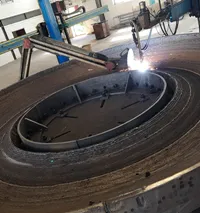
Verify Supplier Credentials: Certifications, Experience, and Field-Validated CCO Wear Grinding Tables
ISO 9001 and EN 10204 Compliance – Beyond Paper Certification
Having valid certifications is important, but what really matters is how seriously suppliers take quality day to day. ISO 9001:2015 shows they have a proper system for managing quality across their operations. The EN 10204 3.1/3.2 Material Test Reports tell us exactly what kind of material we're getting, including details about the chromium carbide overlay and other metal properties. Don't just look at papers though. Make sure they can show actual test results too. Things like checking hardness levels with Vickers tests or looking at the microstructure through scanning electron microscopy give real proof that standards aren't just written down somewhere. Companies that actually implement and audit their quality controls see about 37 percent fewer problems when products reach customers, according to research from Ponemon Institute last year. That makes all the difference in avoiding costly defects later on.
Proven Track Record with Mining & Cement OEMs: Reference Projects and Failure-Avoidance Case Studies
Experience with Original Equipment Manufacturers (OEMs) in high-abrasion environments is the strongest predictor of real-world CCO wear grinding table performance. Request documented case studies demonstrating:
- Failure avoidance in critical applications such as raw mill feed chutes or clinker crushers
- Lifespan benchmarks exceeding 24 months in cement vertical roller mills under continuous operation
- Custom engineering solutions, including thermal expansion compensation or impact-resistant segmentation
Suppliers without OEM partnerships often lack application-specific insights—leading to misaligned material selection, mounting design, or maintenance planning. Given that unplanned equipment downtime costs mining operations over $740k per hour (Ponemon Institute, 2023), field-validated expertise isn’t optional—it’s essential.
Assess Technical Capability: Customization, Material Science, and Engineering Support for CCO Wear Grinding Tables
Chromium Carbide Overlay (CCO) Grade Selection: Matching ASTM A532 Class I vs. II to Application Stress Profiles
Getting the right Chromium Carbide Overlay (CCO) grade chosen properly makes all the difference when it comes to how long grinding tables last. ASTM A532 Class I plates stand out because they handle fine particle abrasion really well, think things like cement raw meal. These plates typically have a hardness range between 58 and 64 HRC. Then there are Class II options that offer something different. They distribute carbides more evenly across the surface which helps them withstand impacts better. This makes them great for situations like aggregate crushing where equipment faces shocks above 30 Joules regularly. When looking at what works best, operators need to carefully consider their specific operating conditions and match the CCO class accordingly for optimal results.
| Stress Factor | Class I Recommendation | Class II Recommendation |
|---|---|---|
| Abrasion Dominance | Primary ore grinding | Secondary crushing stages |
| Impact Exposure | Limited (<15J) | Frequent (>30J) |
| Temperature Extremes | Stable (<400°C) | Fluctuating (400–600°C) |
Misalignment carries steep consequences: Class I plates subjected to repeated impact loads lose up to 40% of their expected service life (Ponemon Institute, 2023).
Design Integration Expertise: Mounting Interfaces, Thermal Expansion Compensation, and Modular Replacement Planning
Good engineering support makes sure that CCO wear grinding tables don't just fit together but actually work well together over time. When mounting these components, precision machining creates interfaces that spread out stress instead of letting it build up in one spot where cracks might start forming. Thermal expansion joints need to handle those size changes we see when temperatures fluctuate between normal operations ranges. These dimensional shifts usually fall somewhere between 0.5 and 1.2 mm per meter. Without proper accommodation for this movement, equipment tends to warp much faster during extended use periods. We've seen field data showing around 70% more warping issues in systems without adequate expansion allowance. Another advantage comes from modular design approaches. Instead of replacing entire tables when certain areas wear down, technicians can swap out just the damaged sections. This modular approach cuts maintenance downtime significantly compared to complete table replacements, sometimes reducing stoppages by nearly two thirds. Before finalizing any installation plans, it's important to check if thermal cycling models have been tested against real world performance metrics collected over at least a year from similar setups elsewhere in the industry.
Validate Real-World Performance: Third-Party Testing, Lifecycle Data, and Application-Specific Benchmarking
Taber Abraser vs. Slurry Jet vs. In-Service Monitoring: Interpreting Wear Resistance Metrics for CCO Wear Grinding Tables
Lab tests give us useful information, though they don't tell the whole story. Take the Taber Abraser test specified in ASTM D4060 standards. It measures how materials withstand dry abrasion when rubbed against rubber wheels in controlled conditions. Then there's slurry jet testing under ASTM G73 guidelines which looks at what happens when materials face fast moving particles suspended in water. These tests produce consistent numbers like weight loss measured in milligrams or erosion depth in millimeters. But here's the catch neither approach really mimics what happens on actual equipment during daily operations. Real world situations involve all sorts of stressors working together cyclic impacts, heat changes over time, and chemicals attacking surfaces simultaneously. That's why field monitoring matters so much. We've seen cases where lab results showed less than 2 mm of erosion per year, but in practice, equipment failed quickly because tiny cracks formed under constant impact in grinding circuits. When looking at potential suppliers, always check if they back up their lab findings with at least a year's worth of real world data from similar environments. This helps ensure their claims about material durability actually hold up under the specific conditions our facilities encounter day after day.
Field Lifespan Benchmarks: Cement Mill vs. Aggregate Crusher Environments (24+ Month Operational Data)
Looking at long term operation stats shows just how much environment affects performance. Take cement mills for example, where CCO tables have to deal with all sorts of alkaline slurries while sitting through heat ranges from around 80 to 120 degrees Celsius. This creates pretty consistent surface wear across these components, which typically last between 28 and 36 months before needing replacement. The situation changes completely when we look at aggregate crushers though. These machines face totally different challenges like granite or quartz particles larger than 50 mm in size, constant temperature fluctuations, and intense impact forces throughout their operation cycle. As a result, parts in this equipment tend to wear out faster, usually lasting only 18 to 22 months on average. When evaluating component longevity, several key factors stand out as particularly important...
| Environment | Primary Degradation Mode | Avg. Lifespan | Failure Trigger |
|---|---|---|---|
| Cement Mill | Abrasive corrosion | 28–36 months | Surface pitting >15 mm depth |
| Aggregate Crusher | Impact fatigue | 18–22 months | Edge spalling >30% of surface |
This ~35% lifespan variance underscores why application-specific validation—not generic specifications—is the only reliable basis for supplier evaluation. Always benchmark supplier claims against independently verified data from your exact material processing context.
Frequently Asked Questions (FAQ)
What are the key certifications a supplier should have for CCO wear grinding tables?
Suppliers should have ISO 9001:2015 certification for quality management systems, and EN 10204 3.1/3.2 Material Test Reports detailing material properties, including chromium carbide overlay specifics.
Why is field-validated expertise important in selecting suppliers?
Field-validated expertise ensures suppliers have real-world application insights critical for optimal performance and avoidance of issues like costly equipment downtime.
How does the choice between Class I and Class II CCO grades affect performance?
Class I is ideal for abrasion-dominant environments like primary ore grinding, whereas Class II offers better impact resistance suitable for secondary crushing stages.
Why is design integration essential for CCO wear grinding tables?
Design integration ensures mounting interfaces spread stress evenly, thermal expansion is properly managed, and modular design allows efficient maintenance.
What should be considered in lifecycle benchmarking for CCO wear grinding tables?
Consider both lab tests and real-world monitoring to ensure material durability, accounting for environment-specific stressors and degradation modes.
How do cement mill and aggregate crusher environments differ?
Cement mills deal with abrasive corrosion and have longer component lifespans, while aggregate crushers face intense impacts and temperature fluctuations leading to shorter lifespans.
Table of Contents
- Verify Supplier Credentials: Certifications, Experience, and Field-Validated CCO Wear Grinding Tables
- Assess Technical Capability: Customization, Material Science, and Engineering Support for CCO Wear Grinding Tables
- Validate Real-World Performance: Third-Party Testing, Lifecycle Data, and Application-Specific Benchmarking
-
Frequently Asked Questions (FAQ)
- What are the key certifications a supplier should have for CCO wear grinding tables?
- Why is field-validated expertise important in selecting suppliers?
- How does the choice between Class I and Class II CCO grades affect performance?
- Why is design integration essential for CCO wear grinding tables?
- What should be considered in lifecycle benchmarking for CCO wear grinding tables?
- How do cement mill and aggregate crusher environments differ?