
 EN
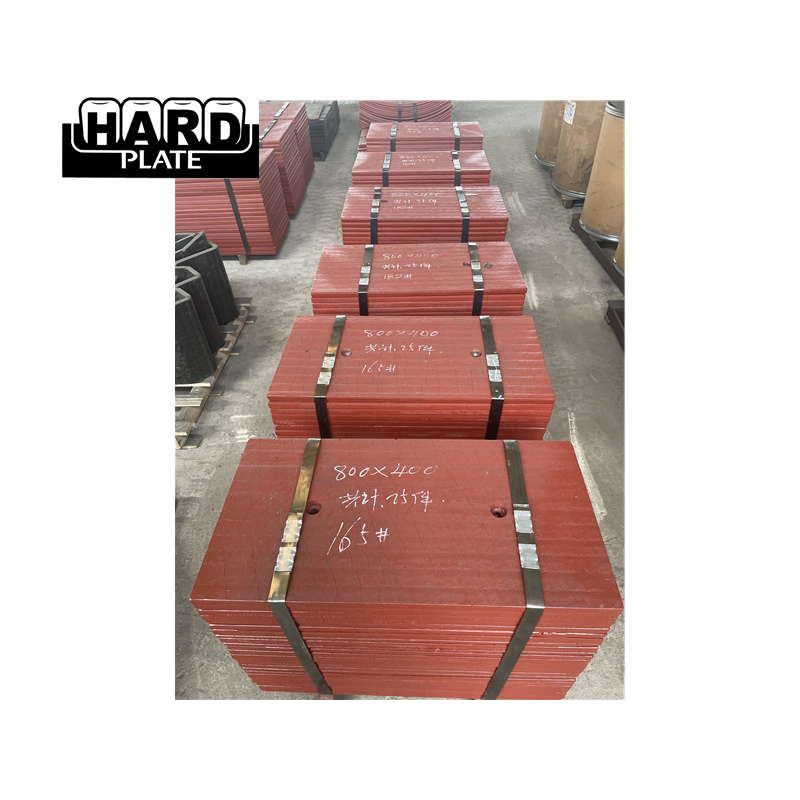
Heavy industrial equipment often operates under severe mechanical and abrasive conditions. Mining machinery, cement processing equipment, steel production systems, agricultural machinery, and bulk material handling equipment can all be exposed to continuous abrasion, impact, erosion, and friction.
When these forces repeatedly act on critical components, conventional materials can gradually lose surface material. Once wear reaches a critical level, equipment performance may decline, maintenance requirements can increase, and components may eventually need replacement.
Hardfacing parts provide a practical way to improve the wear resistance of critical equipment components. Instead of replacing an entire component with a more expensive specialty material, a wear-resistant hardfacing layer can be applied to the surfaces most exposed to wear.
This approach can extend component service life, reduce replacement frequency, and help maintain equipment performance in demanding operating environments.
What Are Hardfacing Parts?
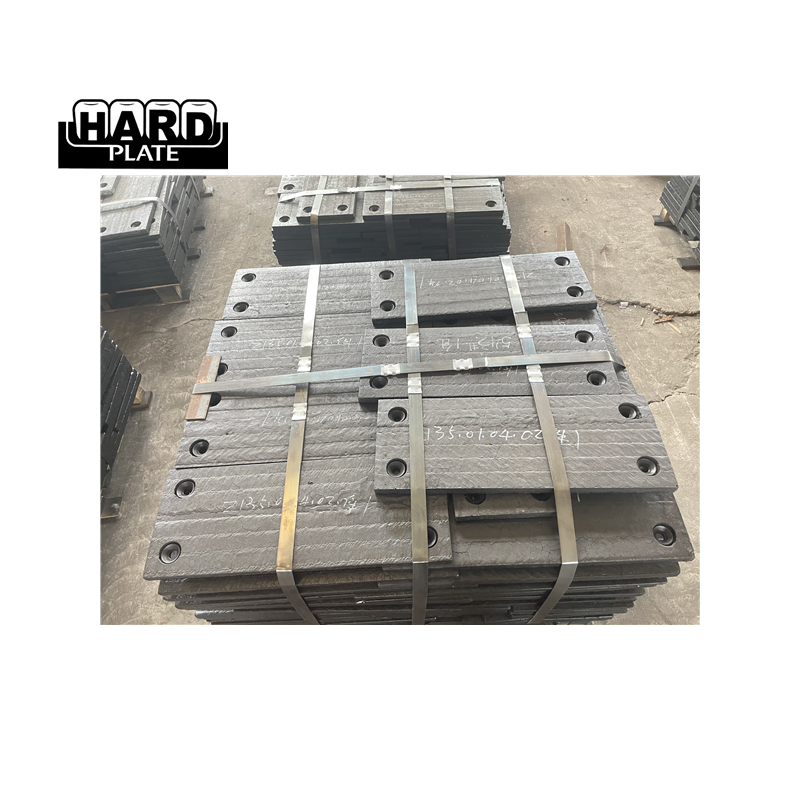
Hardfacing parts are industrial components that incorporate a wear-resistant surface layer designed to protect against severe wear.
Hardfacing can be applied to new components during manufacturing or to existing components during repair and refurbishment.
The underlying component provides the required structural or mechanical function, while the hardfacing layer protects the working surface.
Depending on the application, hardfacing parts can include:
-
Wear plates
-
Crusher components
-
Chute components
-
Hopper parts
-
Conveyor components
-
Cutting edges
-
Blades
-
Rollers
-
Buckets
-
Feed components
-
Mining machinery parts
-
Custom wear components
Hardfacing materials may contain hard phases such as chromium carbides or other wear-resistant alloy structures.
How Hardfacing Improves Equipment Lifespan
The primary purpose of hardfacing is to slow down surface degradation.
During operation, abrasive particles contact the working surface repeatedly.
Without specialized protection, the base material may gradually lose thickness.
A hardfacing layer creates a more wear-resistant surface that absorbs much of this damage.
The result can include:
-
Longer component service life
-
Fewer replacement cycles
-
Lower maintenance frequency
-
Reduced equipment downtime
-
Better protection of the underlying structure
-
More predictable maintenance planning
The effectiveness of hardfacing depends on matching the material and process to the actual wear mechanism.
How Hardfacing Improves Equipment Performance
Hardfacing does more than extend the physical life of a component.
When critical working surfaces maintain their designed dimensions for longer, equipment can operate more consistently.
Excessive wear can alter:
-
Component geometry
-
Material flow
-
Cutting performance
-
Contact surfaces
-
Equipment clearances
-
Mechanical alignment
By slowing surface wear, hardfacing can help maintain the original functional characteristics of the component for a longer period.
1. Protection Against Abrasive Wear
Abrasive wear occurs when hard particles repeatedly contact or move across a component surface.
Typical abrasive materials include:
-
Iron ore
-
Rock
-
Coal
-
Sand
-
Gravel
-
Slag
-
Mineral concentrates
Hardfacing provides a wear-resistant surface designed to withstand this repeated contact.
For components exposed primarily to sliding abrasion, selecting an appropriate hardfacing composition and thickness can significantly influence service life.
2. Protection Against Impact Wear
Some components experience repeated impact from large or heavy particles.
Examples include:
-
Crusher components
-
Excavator buckets
-
Rock handling equipment
-
Feed systems
-
Material transfer components
Impact-heavy applications require more than surface hardness.
The hardfacing layer must work together with the underlying substrate to withstand repeated mechanical loading.
A material with very high hardness may not always be the optimal solution when impact is severe.
3. Protection Against Erosion
Fine particles moving at high velocity can gradually remove surface material through erosion.
This can occur in:
-
Pneumatic conveying
-
Powder handling
-
High-speed material transfer
-
Mineral processing systems
Hardfacing can provide a more durable surface in areas where conventional materials experience rapid erosive wear.
4. Protection Against Combined Wear
Industrial components frequently experience multiple wear mechanisms at the same time.
For example, a component may experience:
Impact → Sliding → Abrasion → Erosion
The hardfacing specification should therefore be based on the dominant combination of wear mechanisms rather than a single laboratory property.
Understanding the actual operating environment is essential when selecting a suitable hardfacing system.
Common Applications of Hardfacing Parts
Hardfacing technology can be applied to many types of industrial components.
Mining Equipment
Mining equipment handles some of the most abrasive materials in industry.
Hardfacing parts can be used for:
-
Crusher components
-
Chutes
-
Buckets
-
Wear plates
-
Feed components
-
Conveyor parts
-
Excavation components
The goal is to protect high-wear surfaces while reducing maintenance interruptions.
Cement Equipment
Cement production involves continuous handling of abrasive raw materials.
Potential applications include:
-
Chute components
-
Hopper parts
-
Grinding-related components
-
Conveyor parts
-
Material transfer components
The required hardfacing specification depends on the material characteristics and operating temperature.
Quarrying Equipment
Quarry machinery frequently handles large rock and aggregate.
High-impact and abrasive conditions can rapidly wear:
-
Buckets
-
Crusher components
-
Chutes
-
Deflector plates
-
Feed components
Hardfacing can help extend the usable life of these components.
Steel and Metallurgical Equipment
Steel plants can expose components to abrasive materials, slag, heat, and mechanical loading.
Depending on the operating conditions, hardfacing parts may be used in:
-
Material handling systems
-
Slag handling equipment
-
Transfer components
-
Processing machinery
-
Wear protection assemblies
Temperature must be considered when selecting the hardfacing material.
Hardfacing Material Selection
The material used for hardfacing has a major influence on component performance.
Common hardfacing systems may include:
-
Chromium carbide-based materials
-
High-alloy hardfacing materials
-
Iron-based alloys
-
Tungsten carbide systems
-
Other specialized wear-resistant alloys
The appropriate choice depends on:
-
Abrasion severity
-
Impact intensity
-
Operating temperature
-
Material characteristics
-
Required service life
-
Component geometry
-
Fabrication requirements
The highest hardness is not necessarily the best choice for every application.
Chromium Carbide Hardfacing
Chromium carbide-based hardfacing is widely considered for severe abrasive environments.
The hard carbide phases provide resistance against:
-
Scratching
-
Cutting
-
Grinding
-
Sliding abrasion
The metallic matrix supports the carbide structures and contributes to the integrity of the overlay.
This type of hardfacing can be particularly useful when components are exposed to continuous contact with hard mineral materials.
Tungsten Carbide Hardfacing
Tungsten carbide systems can provide extremely high resistance to certain abrasive conditions.
They may be considered for applications involving highly aggressive wear where the operating environment and component requirements are compatible with tungsten carbide solutions.
However, material selection should account for the specific balance between abrasion and impact.
Hardness vs Toughness
One of the most important considerations in hardfacing is the relationship between hardness and toughness.
Hardness
Higher hardness can help resist abrasive material removal.
Toughness
Toughness helps the component withstand mechanical shock and impact without premature cracking or failure.
An application involving continuous sliding abrasion may prioritize wear resistance.
An application involving large particle impact may require a different balance.
Therefore, hardfacing should be selected based on the actual wear mechanism rather than hardness alone.
The Importance of Hardfacing Thickness
The thickness of the hardfacing layer determines the available wear allowance.
As the component operates, the surface gradually wears away.
A thicker layer may provide longer service life, but excessive thickness can create:
-
Higher material cost
-
Increased component weight
-
Additional fabrication requirements
-
Dimensional limitations
The ideal thickness should be determined according to the expected wear rate and required operating interval.
Hardfacing Layer and Base Material
Hardfacing performance depends on the relationship between the overlay and the underlying component.
The base material provides:
-
Structural support
-
Mechanical strength
-
Toughness
-
Dimensional stability
The hardfacing layer provides:
-
Surface wear resistance
-
Abrasion protection
-
Extended working life
A reliable hardfacing part requires appropriate compatibility between these two components.
New Manufacturing vs Component Repair
Hardfacing can be used in two main situations.
New Component Manufacturing
A wear-resistant layer can be applied during production before the component enters service.
This allows the manufacturer to optimize:
-
Hardfacing location
-
Overlay thickness
-
Surface geometry
-
Welding process
-
Final dimensions
Repair and Refurbishment
Existing components can sometimes be rebuilt through hardfacing.
This can restore worn surfaces and extend the useful life of expensive components.
Repair can be particularly valuable when:
-
The component has a high replacement cost.
-
The structural base remains usable.
-
Wear is concentrated on specific surfaces.
-
Replacement lead times are long.
The suitability of repair depends on the remaining structural condition of the component.
Customized Hardfacing Parts
Not every industrial component has a standard shape.
Customized hardfacing parts can be manufactured according to:
-
Engineering drawings
-
Equipment dimensions
-
Wear locations
-
Installation requirements
-
Operating conditions
Customization can include:
-
Component dimensions
-
Hardfacing areas
-
Overlay thickness
-
Material specification
-
Mounting holes
-
Edge preparation
-
Surface geometry
This allows wear protection to be concentrated on the surfaces that require it most.
How to Identify Areas That Need Hardfacing
Not every surface requires the same level of protection.
High-wear areas can often be identified through:
-
Visual inspection
-
Thickness measurements
-
Maintenance records
-
Wear mapping
-
Failure analysis
-
Operating data
Common high-wear locations include:
-
Material impact zones
-
Cutting edges
-
Chute bottoms
-
Transfer points
-
Hopper outlets
-
Crusher surfaces
-
Contact zones
Protecting these areas strategically can provide better cost efficiency than applying hardfacing indiscriminately.
Consider Operating Temperature
Temperature can influence hardfacing performance.
Some industrial components operate under elevated temperatures, particularly in:
-
Cement plants
-
Steel mills
-
Metallurgical processes
-
Slag handling
-
High-temperature material transfer
Before selecting a hardfacing material, determine:
-
Normal operating temperature
-
Maximum temperature
-
Exposure duration
-
Temperature fluctuations
The selected system should be appropriate for the complete operating environment.
Consider Corrosion
Certain applications expose components to both abrasion and corrosion.
Examples can include:
-
Wet mineral processing
-
Slurry transportation
-
Chemical material handling
-
Moist bulk material systems
When corrosion contributes to component degradation, the hardfacing solution should be evaluated for the combined environment.
A material that performs well against abrasion may not automatically provide sufficient resistance under corrosive conditions.
Fabrication and Welding Requirements
Hardfacing parts often require specialized fabrication procedures.
Depending on component design, processes may include:
-
Cutting
-
Welding
-
Grinding
-
Machining
-
Forming
-
Drilling
The hardfacing layer can be significantly harder than conventional steel, which may affect fabrication procedures.
Welding parameters should be controlled to maintain the integrity of the hardfacing layer and the base component.
For customized parts, fabrication requirements should be confirmed before production begins.
Quality Control for Hardfacing Parts
Quality control is essential for consistent hardfacing performance.
Important inspection factors can include:
-
Overlay thickness
-
Surface hardness
-
Chemical composition
-
Carbide distribution
-
Bonding condition
-
Crack characteristics
-
Component dimensions
-
Flatness
-
Surface condition
Depending on the application, additional testing may be required.
Consistent manufacturing is especially important when the same component is purchased repeatedly.
How Hardfacing Parts Reduce Lifecycle Costs
The economic value of hardfacing comes from extending component service life.
Consider two components:
Standard component:
Frequent replacement → More labor → More downtime → Higher maintenance cost
Hardfaced component:
Longer service interval → Fewer replacements → Less downtime → Lower lifecycle cost
The initial cost of a hardfaced component may be higher than a conventional component, but its total cost can be lower when service life and downtime are included.
A useful evaluation is:
Total lifecycle cost ÷ operating hours
This provides a more meaningful comparison than purchase price alone.
Hardfacing Parts vs Full Component Replacement
When a component becomes worn, there may be two possible approaches:
-
Replace the entire component.
-
Repair or reinforce the worn surface through hardfacing.
Hardfacing may be economically attractive when the structural base remains in good condition.
Potential advantages include:
-
Lower material consumption
-
Reduced replacement cost
-
Shorter maintenance periods
-
Extended component life
-
Reduced waste
However, severely damaged components may require complete replacement.
A technical assessment should be performed before deciding whether refurbishment is appropriate.
Hardfacing Parts Selection Checklist
Before ordering a hardfacing component, provide the manufacturer with:
| Parameter | Information to Provide |
|---|---|
| Component type | Crusher, chute, bucket, blade, etc. |
| Application | Mining, cement, quarrying, etc. |
| Material handled | Ore, rock, coal, slag, etc. |
| Particle size | Average and maximum |
| Material hardness | Available data |
| Wear mechanism | Abrasion, impact, erosion, etc. |
| Material velocity | Normal and maximum |
| Impact conditions | Drop height and intensity |
| Operating temperature | Normal and maximum |
| Required service life | Hours or tons processed |
| Base material | Existing or required grade |
| Hardfacing material | Required or recommended |
| Overlay thickness | Target specification |
| Component dimensions | Drawing or measurements |
| Installation | Welding, bolting, or other method |
Complete application information allows the hardfacing design to be matched more accurately to the operating conditions.
Common Mistakes When Using Hardfacing Parts
Applying Hardfacing Without Identifying the Wear Mechanism
The material should be selected according to the actual type of wear.
Choosing the Hardest Available Material
Maximum hardness does not always provide the best performance when impact is significant.
Ignoring the Base Component
The substrate must provide adequate structural support for the hardfacing layer.
Applying the Same Hardfacing Everywhere
Different areas may require different wear protection depending on their operating conditions.
Using Excessive Overlay Thickness
Extra thickness increases cost and weight and may not always provide proportional service-life benefits.
Neglecting Fabrication Requirements
Hardfacing materials can require specific cutting and welding procedures.
Measuring Only Purchase Price
Service life, maintenance labor, and downtime should all be included in the cost evaluation.
How to Maximize Hardfacing Part Performance
Several practices can improve the long-term performance of hardfacing components.
Match the Material to the Wear Condition
Evaluate abrasion, impact, erosion, temperature, and corrosion before selecting the hardfacing system.
Focus Protection on Critical Surfaces
Apply additional wear protection where the highest material loss occurs.
Control Overlay Thickness
Use an appropriate wear allowance based on expected service life.
Maintain Proper Installation
Correct welding, fitting, and alignment help ensure that the component performs as intended.
Monitor Wear Regularly
Inspection data can help identify changing wear patterns and optimize future component specifications.
Use Historical Operating Data
Previous service-life and failure data can help improve material selection and component design.
When Should You Consider Customized Hardfacing Parts?
Customized hardfacing parts are particularly useful when:
-
Standard components do not fit the equipment.
-
Wear is concentrated in specific areas.
-
The equipment handles highly abrasive materials.
-
Replacement components have long lead times.
-
The original component can be refurbished.
-
Different areas require different wear protection.
-
Installation time needs to be minimized.
Custom manufacturing allows the hardfacing layer and component geometry to be designed around the actual application.
Conclusion
Hardfacing parts can play an important role in extending the service life and maintaining the performance of heavy industrial equipment.
By adding a wear-resistant surface to critical components, hardfacing helps protect the underlying material from abrasion, impact, erosion, and other demanding wear mechanisms.
The most effective solution depends on several factors, including material characteristics, wear mechanism, impact intensity, hardness, toughness, overlay thickness, substrate properties, temperature, corrosion, and component geometry.
Hardfacing is not simply a matter of applying the hardest possible material. The hardfacing layer, base material, manufacturing process, and operating conditions must work together as a complete system.
When properly engineered, hardfacing parts can reduce replacement frequency, minimize maintenance downtime, improve equipment reliability, and lower total lifecycle costs. For industries operating under severe wear conditions, application-specific hardfacing can therefore be an effective strategy for achieving longer component life and more consistent equipment performance.
Table of Contents
- What Are Hardfacing Parts?
- How Hardfacing Improves Equipment Lifespan
- How Hardfacing Improves Equipment Performance
- 1. Protection Against Abrasive Wear
- 2. Protection Against Impact Wear
- 3. Protection Against Erosion
- 4. Protection Against Combined Wear
- Common Applications of Hardfacing Parts
- Hardfacing Material Selection
- Chromium Carbide Hardfacing
- Tungsten Carbide Hardfacing
- Hardness vs Toughness
- The Importance of Hardfacing Thickness
- Hardfacing Layer and Base Material
- New Manufacturing vs Component Repair
- Customized Hardfacing Parts
- How to Identify Areas That Need Hardfacing
- Consider Operating Temperature
- Consider Corrosion
- Fabrication and Welding Requirements
- Quality Control for Hardfacing Parts
- How Hardfacing Parts Reduce Lifecycle Costs
- Hardfacing Parts vs Full Component Replacement
- Hardfacing Parts Selection Checklist
- Common Mistakes When Using Hardfacing Parts
- How to Maximize Hardfacing Part Performance
- When Should You Consider Customized Hardfacing Parts?
- Conclusion